
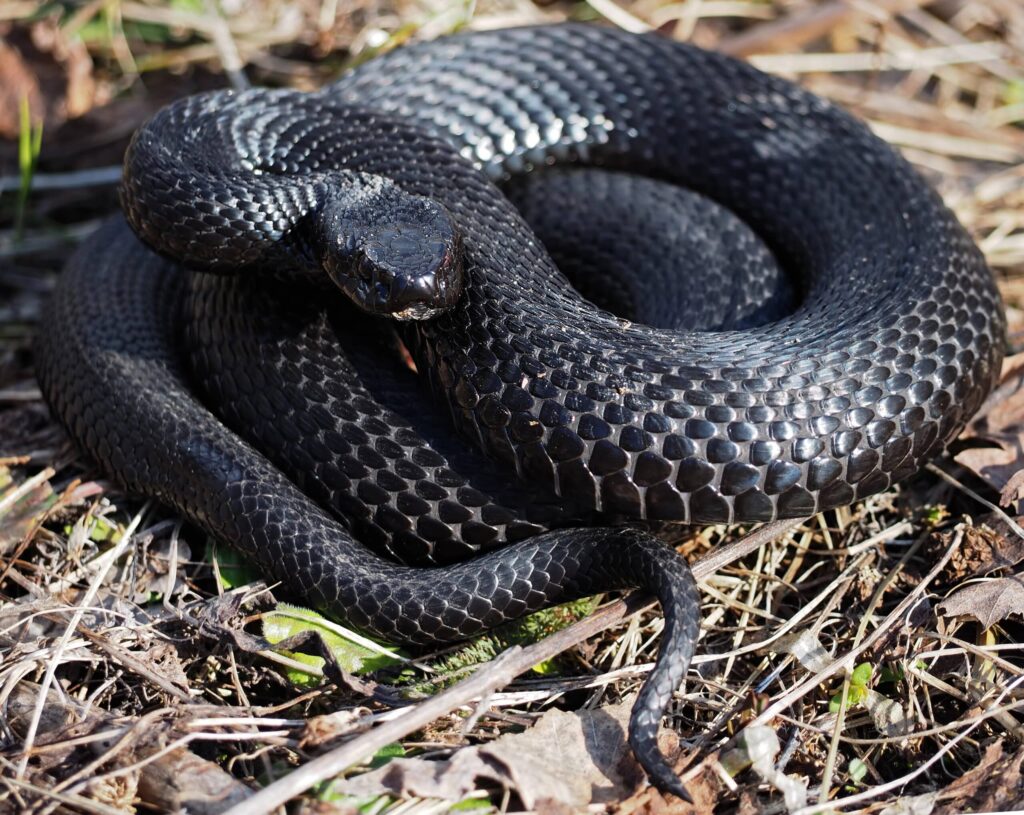
If you live in Georgia, spotting a long, dark snake in your yard can quickly turn into a stressful moment. Many homeowners assume the worst and think rattlesnake or copperhead. In reality, most black snakes found across Georgia are non-venomous snakes that play a helpful role in the local ecosystem.
Still, seeing one near your home, apartment complex, or commercial property raises fair concerns. You want to know which species of snakes you are dealing with and whether it poses a risk to your family, pets, employees, or tenants. Proper identification is the first step toward making a smart decision.
Across the southeastern United States, several dark-colored snakes share similar features. This guide explains how to identify a black snake safely, the most common black snakes in Georgia, and what to do next if one shows up on your property.
Key Takeaways
- Most black snakes in Georgia are non-venomous and help control small mammals, amphibians, and invertebrates.
- The southern black racer and eastern rat snake are among the most common black species in the southeastern United States.
- Behavior, body shape, and location are safer identification clues than color alone.
- Professional snake removal and exclusion reduce repeat sightings around homes and commercial buildings.
How to Identify a Black Snake Safely
Correct identification of a black snake should always begin from a safe distance. In Georgia and throughout the eastern United States, several species appear glossy black or dark brown, so careful observation matters.
Observe From a Safe Distance
Never attempt to pick up or corner a black snake. Most non-venomous snakes, including the southern black racer, will flee when given space. This species, scientifically known as Coluber constrictor priapus, is fast and alert.
Venomous species, such as a rattlesnake or cottonmouth, are more likely to stand their ground and display defensive behavior. If you cannot confidently rule out a venomous snake, contact a professional trained in wildlife removal.
Look at Body Shape and Color
Color alone does not confirm identification. Many adult black rat snakes, also called eastern rat snakes, appear glossy black. Juveniles often appear blotched with dark brown patterns, then darken with age.
The black pine snake, or Pituophis melanoleucus, tends to be heavier-bodied and may retain visible blotched markings. A black kingsnake has a shiny black body with light speckling. In contrast, the southern black racer is slender, smooth-scaled, and often jet black with a white chin.
Notice Behavior and Habitat
Behavior gives strong clues. A black racer moves quickly and may lift its head slightly above the ground while traveling. It rarely coils tightly for long.
Eastern rat snakes, also classified as Pantherophis alleghaniensis, are excellent climbers. If you see a snake in a tree or near a roofline hunting bird eggs or small mammals, it is likely a rat snake. Water near wetlands may point toward a water snake or black swamp snake rather than a land-based species.
Common Black Snakes Homeowners See in Georgia
Georgia’s mix of forests, neighborhoods, farmland, and wetlands supports a wide range of snakes. Many of the black species found here also live throughout the southeastern United States and other parts of North America.
Southern Black Racer
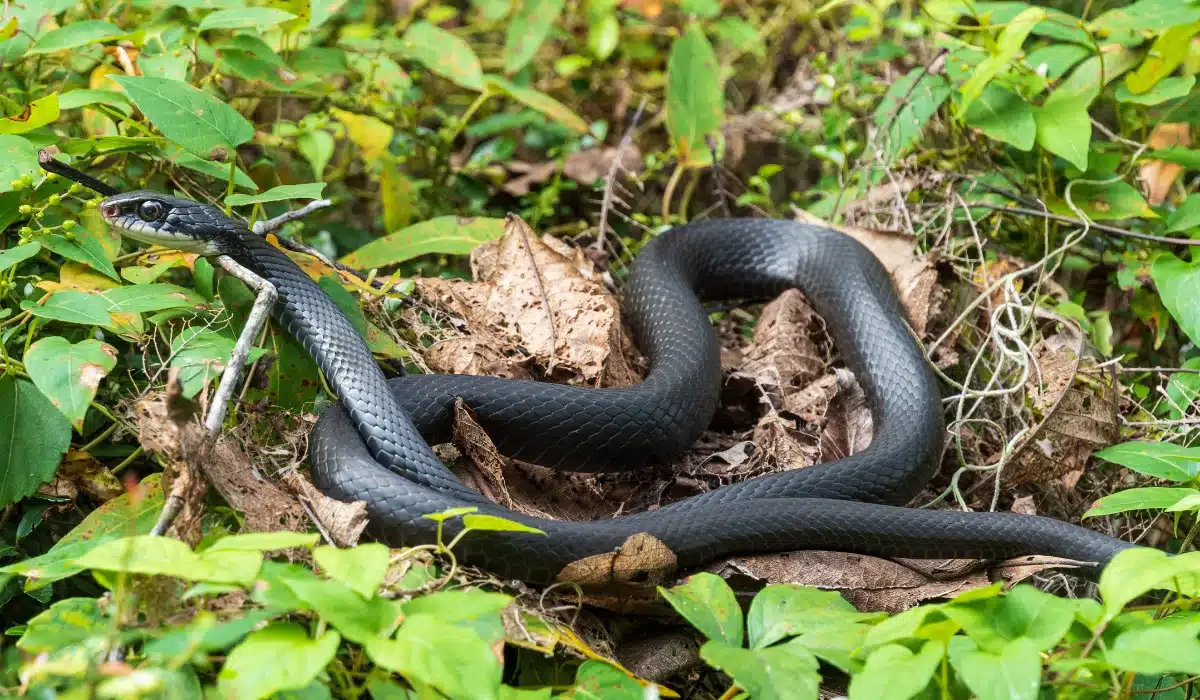
The southern black racer is one of the most common snakes in Georgia and Florida. As a subspecies of Coluber constrictor, it is non-venomous and highly active during the day.
Southern black racers feed on small animals, amphibians, invertebrates, and even other snakes. They may vibrate their tails in dry leaves, which can sound similar to a rattlesnake. Despite the noise, they do not have a rattle and prefer to escape.
Eastern Rat Snake
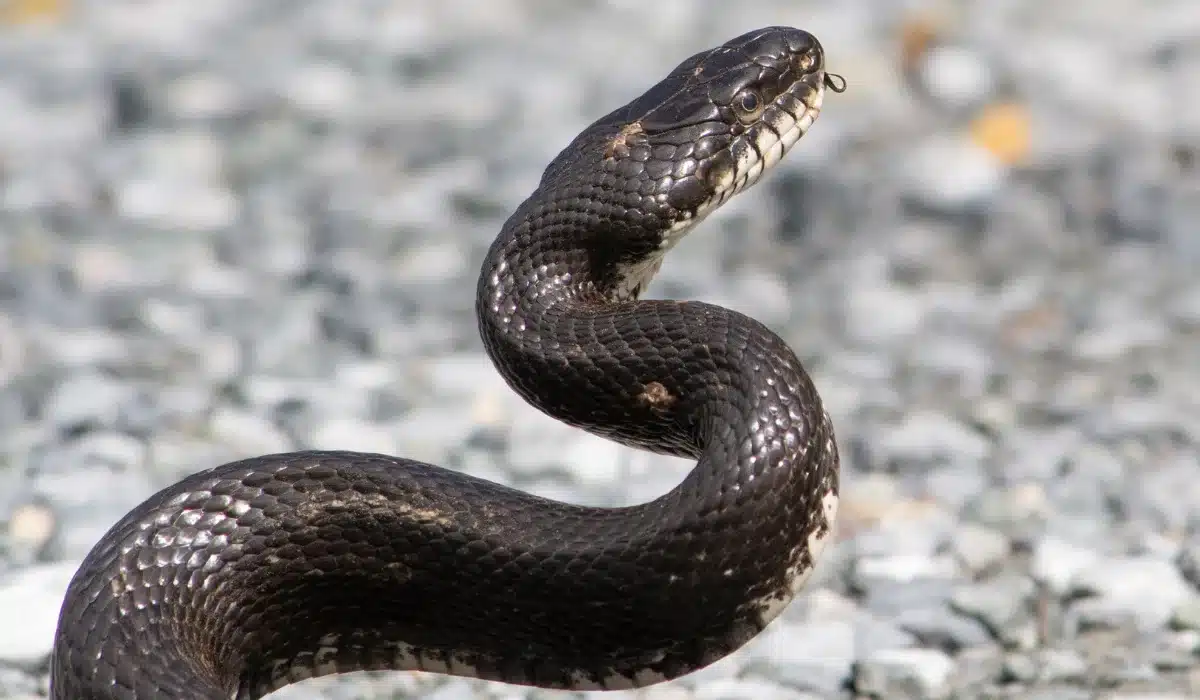
Black rat snakes, often called eastern rat snakes, are widespread across Georgia, South Carolina, and Mississippi. Adults are typically black, while younger snakes appear blotched in gray or dark brown.
The eastern rat snake helps control rodent populations around homes, barns, and commercial facilities. They eat small mammals and bird eggs, which often brings them close to attics or rooflines.
Black Kingsnake
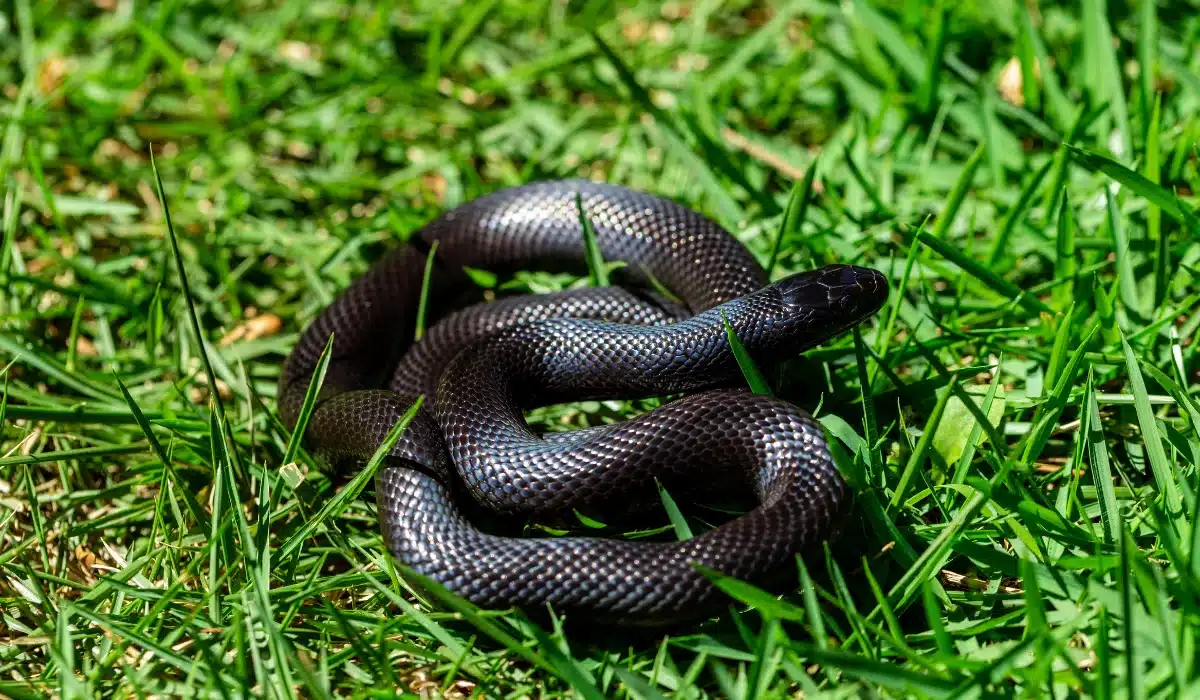
The black kingsnake is another non-venomous option seen in Georgia. It has a glossy black appearance with small white or yellow speckles along its body.
Black kingsnakes are known for eating other snakes, including venomous species such as copperhead snakes and even young rattlesnake individuals. Their presence supports local natural resources by helping manage other snake populations.
Black Swamp Snake and Water Snake Species
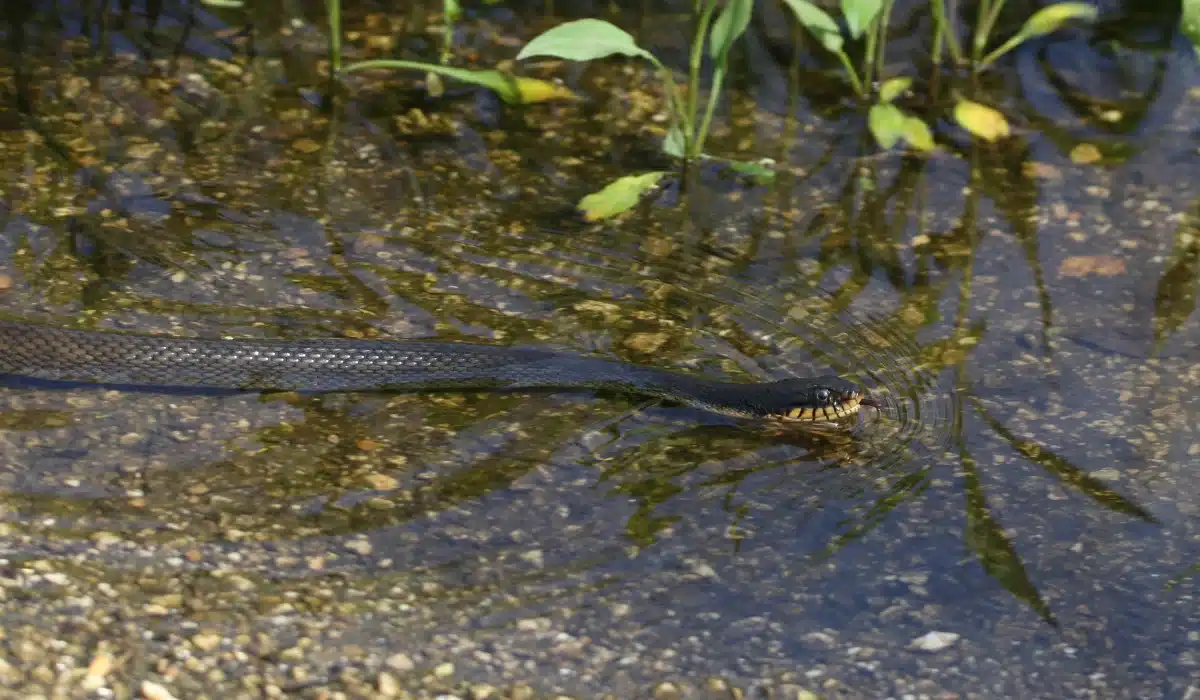
Near ponds, drainage systems, and wetlands, homeowners may encounter black swamp snakes or plain-bellied water snakes. A water snake can appear dark brown or nearly black, especially when wet.
Water snake species are often mistaken for cottonmouths. Unlike exotic species such as a python from Australia or New Guinea, these snakes are native to the southeastern United States. The eastern indigo snake, or Drymarchon couperi, is another large, jet black species found in parts of Georgia and Florida and is protected in many areas.
Other Dark-Colored Snakes
Several other snakes may appear dark under certain lighting. The coachwhip, corn snake, brown snake, garter snake, ring-necked snake, and eastern hog-nosed snake can all display darker tones.
The black pine snake and even a large eastern indigo snake can resemble a python in size, but they are native to North America. None of Georgia’s native species is related to the Australian or New Guinea python species commonly discussed in wildlife documentaries.
What to Do Next if You Spot One
Seeing a black snake on your Georgia property does not always require immediate removal. The next step depends on location and risk level.
Stay Calm and Keep Your Distance
Most non-venomous snakes, including the southern black racer and black rat snakes, want to avoid conflict. Keep children and pets indoors until the snake leaves.
Do not attempt to kill or trap the snake. Misidentifying a species such as a cottonmouth or rattlesnake can lead to injury.
Inspect Your Property for Attractants
Snakes follow food sources. Rodent activity, open crawl spaces, stacked firewood, and dense landscaping create shelter and hunting grounds.
Commercial properties across Georgia should monitor for small mammals and structural gaps. Reducing these attractants supports long-term pest control and lowers the chance of repeat sightings.
Call for Professional Snake Removal
If a snake enters your home, warehouse, or multifamily property, contact a professional. Trained technicians understand regional species and can correctly identify subspecies.
A professional snake removal service confirms whether you are dealing with a southern black racer, eastern rat snake, black kingsnake, black swamp snake, or another species. They also inspect for entry points and recommend exclusion work.
Book a Snake Inspection and Home Exclusion in Georgia
Black snake sightings are common throughout Georgia, especially in neighborhoods near wooded areas and wetlands. While most are harmless, repeated encounters often point to larger issues, such as rodent activity or structural gaps.
At Nextgen Pest Solutions, our thorough inspection looks at attic vents, crawl spaces, foundation cracks, and landscaping. Exclusion work seals these access points and reduces conditions that attract small mammals and amphibians.
If you are unsure whether you are seeing a southern black racer, eastern rat snake, black pine snake, or another species, professional guidance matters.
Contact us to schedule us for expert snake removal, wildlife removal, and pest control services in Georgia. Our team will inspect your property, remove the snake safely, and help prevent future problems.
FAQs
What is the most common black snake in Georgia?
The southern black racer is one of the most common black snakes in Georgia. The eastern rat snake is also frequently seen. Both are non-venomous and help control rodents and other small animals around homes and businesses.
Are black snakes in Georgia dangerous?
Most black snakes in Georgia are non-venomous snakes and are not dangerous to people when left alone. Venomous species like rattlesnakes or cottonmouths have distinct behaviors, but professional identification is always recommended if you are unsure.
Should I remove a black snake from my yard?
If the snake is outdoors and poses no threat, it may leave on its own. If it enters your home or keeps returning, professional snake removal and exclusion services can address the root cause and reduce future encounters.