
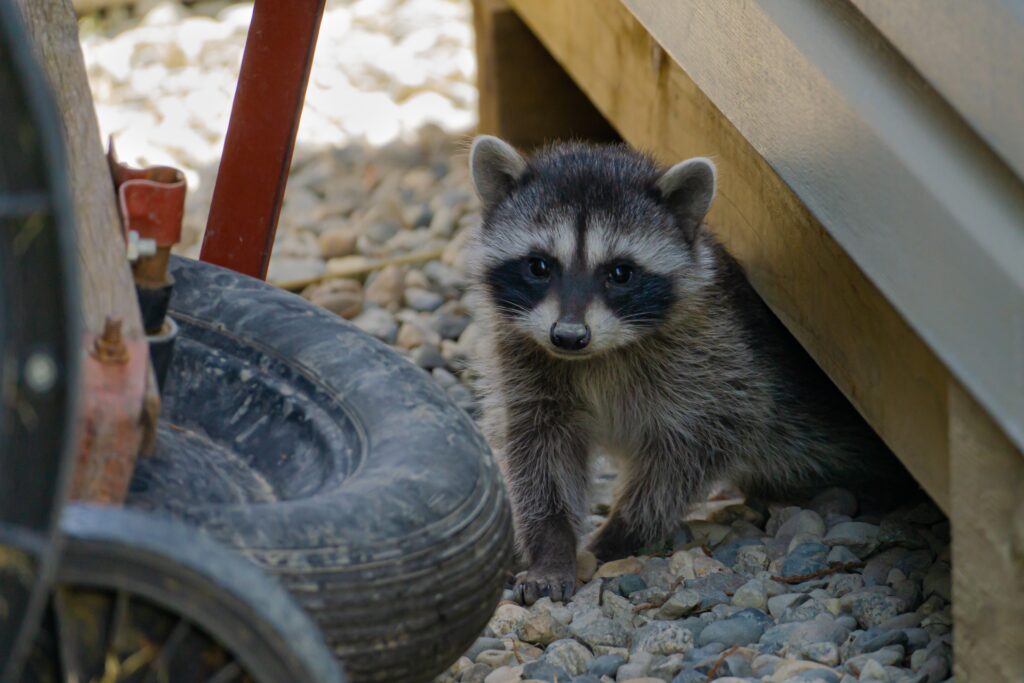
Raccoons are common in Roswell, especially in wooded neighborhoods, along creeks, and near trash cans. Many homeowners and property managers see signs of activity but are not sure what they mean. One strong sign is a raccoon latrine.
A raccoon latrine is a spot where raccoons defecate in the same place. These communal sites build up fast and may go unnoticed until odors or stains appear. Identifying a raccoon latrine early can help prevent a larger infestation, reduce exposure to harmful pathogens, and signal the need for professional raccoon removal.
In North Fulton areas like Roswell, raccoon activity increases when food is easy to reach. Recognizing raccoon feces is the first step in protecting your property.
Key Takeaways
- Raccoons use the same latrine site repeatedly, creating visible buildup and strong odors.
- Raccoon droppings often contain undigested food and may carry raccoon roundworm, depending on exposure and conditions.
- Common locations include woodpiles, roofs, and the base of trees around Roswell homes.
- Professional wildlife removal is generally the safest way to handle cleanup and raccoon removal.
How to Recognize a Raccoon Latrine
Latrine sites stand out once you know the signs. They form when raccoons return to the same spot, creating a buildup of droppings over time.
Appearance of Raccoon Droppings
Raccoon droppings are dark, tubular, and look like small dog waste. You may see seeds, berries, or insect parts in raccoon poop. Fresh raccoon scat may look moist, while older scat dries out and turns lighter.
Because raccoons eat many types of food, their droppings vary in texture. This variation helps distinguish raccoon feces from those of other wild animals in Roswell, especially when you also see a consistent latrine site.
Strong Odor and Repeated Use
A raccoon latrine develops a strong smell as waste builds up. You may notice odors around decks, attics, or yards where raccoons are active.
Stains or discoloration can appear on surfaces. In some cases, raccoon urine is present alongside droppings, adding to contamination and making the area easier to spot.
Health Concerns Linked to Latrines
Raccoon latrine areas pose health risks, especially if contaminated material is disturbed. Raccoon feces can contain Baylisascaris procyonis, a parasite called raccoon roundworm.
The CDC states that exposure to roundworm eggs can cause illness if ingested, though the risk depends on the level of exposure.
Other pathogens, such as leptospirosis, may also be present.
Young children and pets are at higher risk if they come into contact with contaminated soil or surfaces, so proper cleanup and disinfection steps are recommended.
Where to Look Around a Roswell Home
Raccoon latrine locations follow patterns. In Roswell neighborhoods, raccoons choose safe, elevated areas near food sources like trash cans or pet feeding spots.
Roofs and Attic Spaces
Raccoons frequently create a raccoon latrine on roofs or inside attics. These elevated areas protect them from predators and give easy access to the home.
If you hear movement at night or notice staining near rooflines, this can point to raccoon activity. Attic insulation can become contaminated and may need professional cleanup.
Base of Trees and Wooded Areas
The bases of trees are common latrine sites, especially near wooded areas in Roswell. These spots provide cover and sit along regular raccoon travel paths.
Raccoon feces may collect near tree roots or along fence lines. These areas can spread roundworm eggs into the soil, which may pose risks to pets and young children.
Decks, Patios, and Woodpiles
Raccoons often use sheltered areas like decks and woodpiles, especially when they are close to a food source. These spaces offer protection and access to nearby trash cans or stored materials.
Woodpiles can serve as both shelter and a repeated latrine site. Ongoing droppings in these areas may indicate raccoon activity that requires attention.
What Can Be Mistaken for One
Not all animal droppings indicate a raccoon latrine. Several wild animals in Georgia leave similar signs, which can cause confusion.
Dog or Cat Waste
Dog waste is often mistaken for raccoon droppings, but dogs do not use communal sites. It is usually scattered rather than concentrated.
Cats may bury their waste, unlike raccoons, which leave droppings exposed. A visible, repeated buildup is the key difference.
Skunks and Other Wildlife
Skunks also leave droppings that resemble raccoon feces, though they are typically smaller and more scattered.
Other wildlife may leave waste near food, but raccoons are more likely than many species to reuse the same latrine site.
Rodent or Small Animal Activity
Rodents leave much smaller droppings that resemble pellets. These are often found in large quantities but differ in size and composition from raccoon scat.
If you are unsure, a pest control professional can help confirm the source before starting raccoon or wildlife removal.
Choosing the Right Raccoon Latrine Solution in Roswell
A raccoon latrine is more than just a nuisance. It signals ongoing wildlife activity and health risks for people on the property. From raccoon droppings in the yard to attic contamination, these issues require a careful, professional approach.
At Nextgen Pest Solutions, our team follows a proven wildlife control process that includes inspection, raccoon removal, and prevention. We focus on identifying entry points, removing the animals, and preventing future activity through exclusion and follow-up services.
If you are dealing with a raccoon latrine in Roswell, do not wait for the problem to get worse. Contact us today and let our team handle the issue safely.
FAQs
What does a raccoon latrine look like?
A raccoon latrine is a concentrated area of droppings found in the same spot. You may see multiple piles of raccoon feces with visible food debris and a strong odor, often near trees, roofs, or woodpiles.
Is raccoon poop dangerous to humans?
Yes, raccoon poop can carry raccoon roundworm and other pathogens, including leptospirosis. Contact with roundworm eggs can cause health risks, especially with repeated exposure, particularly for young children, so you should always avoid direct handling.
Can I clean up a raccoon latrine myself?
Do not clean a raccoon latrine without proper protective gear. Use disposable gloves, a respirator, and disinfectant methods to reduce exposure to harmful pathogens. Professional wildlife removal services are generally the safest option for raccoon latrine cleanup and removal.