 Limited Time: Get $25 Off Your First Service

What Are Carpet Beetles and Are They Dangerous?
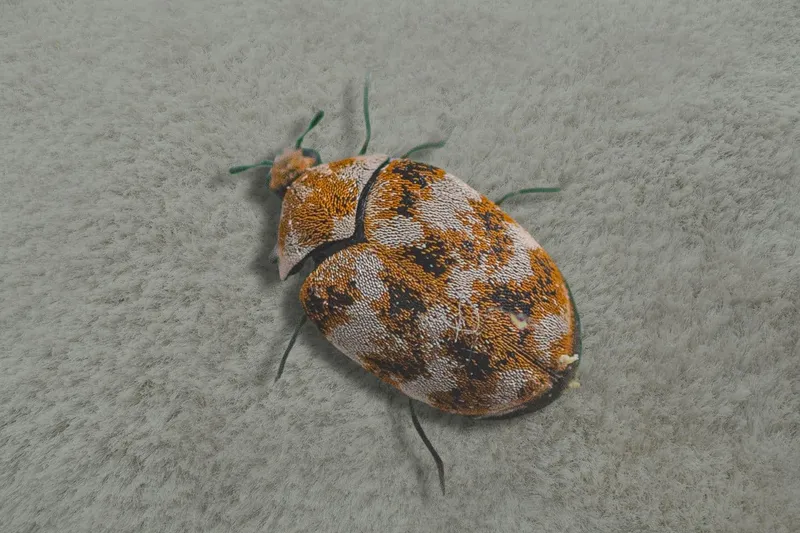
Carpet beetles are not generally dangerous to humans because they do not bite or sting. However, their larvae can cause skin irritation or allergic reactions in some people, and they can damage carpets, clothing, furniture, and other materials containing animal fibers. While finding one adult carpet beetle is usually not a reason to worry, repeated sightings of larvae, shed skins, or damaged fabrics may indicate an infestation that needs attention.
Understanding the difference between harmless adult beetles and fabric-damaging larvae can help you determine whether carpet beetles in your house are a minor nuisance or a problem worth addressing.
What Are Carpet Beetles?
Carpet beetles are small insects belonging to the Dermestidae family. They commonly enter homes through open windows, doors, and other openings, sometimes arriving on flowers or infested materials.
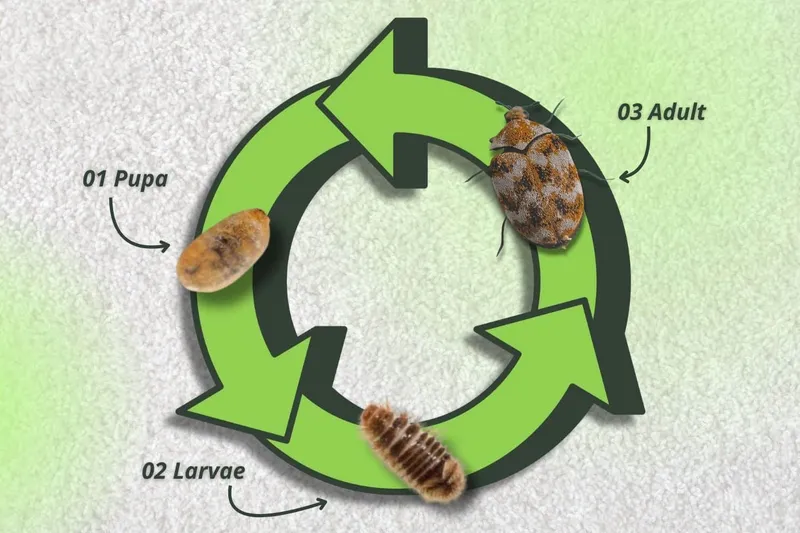
Adult carpet beetles are typically oval-shaped and measure about 1/16 to 1/8 inch long, although their size varies by species. They may appear black, brown, or patterned with white, yellow, and orange scales.
Carpet beetle larvae look different from adults. They are elongated, often brownish, and covered with fine hairs or bristles. They tend to remain hidden in dark, undisturbed areas where food is available.
The distinction matters because adult carpet beetles generally feed on pollen and nectar, while larvae are responsible for most household damage.
Carpet beetles are common household pests, particularly where wool, fur, feathers, pet hair, or other animal-derived materials accumulate.
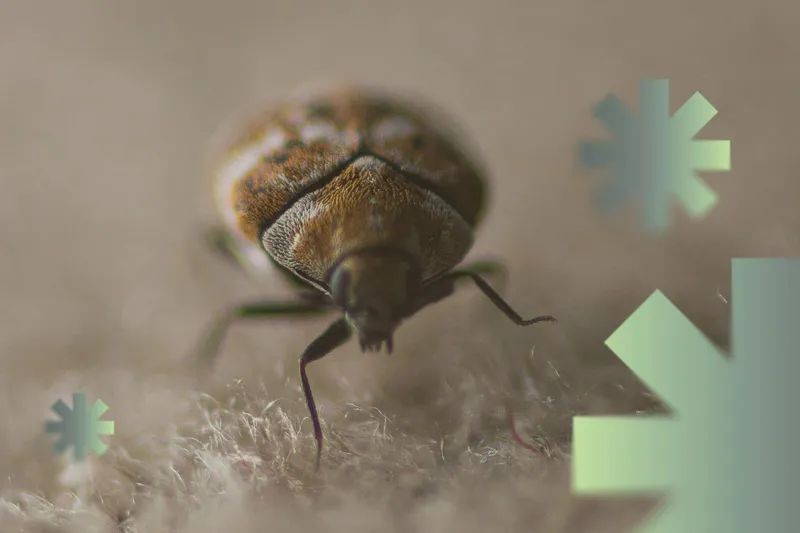
A detailed macro photograph of a brown tick on a light surface with graphic elements.
AAre Carpet Beetles Dangerous to Humans?
Carpet beetles are not considered a major direct health threat to humans. They do not feed on blood or attack people, but their larvae can trigger skin reactions in susceptible individuals.
Do Carpet Beetles Bite or Sting?
No, carpet beetles do not bite or sting humans.
Unlike bed bugs, carpet beetles do not feed on human blood. However, people sometimes mistake skin irritation caused by carpet beetle larvae for insect bites.
If you notice itchy red bumps or a rash, the presence of carpet beetles alone does not prove they are responsible. Other insects, allergies, and skin conditions can produce similar symptoms.
For help identifying the differences, read our guide on carpet beetles vs. bed bugs.
Can Carpet Beetle Larvae Cause Skin Irritation?
Yes. Carpet beetle larvae have tiny hairs that can irritate the skin of sensitive individuals.
This reaction is sometimes called carpet beetle dermatitis. Symptoms may include:
- Itchy, red patches of skin
- Small bumps that resemble insect bites
- Localized irritation after contact with infested fabrics
- Allergic skin reactions in susceptible individuals
Larval hairs may remain in blankets, clothing, upholstery, and other materials even after the insects have moved elsewhere.
According to information from the University of Kentucky Department of Entomology, carpet beetle larvae can cause irritation that is sometimes confused with bites from other household pests.
Carpet beetles are not known for transmitting diseases to humans. If skin symptoms persist, spread, or become severe, consult a healthcare professional rather than assuming carpet beetles are the cause.
Are Carpet Beetles Harmful to Pets?
Carpet beetles are not generally dangerous to dogs or cats because they do not bite, sting, or parasitize pets.
However, larval hairs may cause irritation in sensitive animals following contact with infested bedding or fabrics. Evidence of reactions in pets is less well established than contact dermatitis in humans, so unexplained itching should not automatically be attributed to carpet beetles.
Pet bedding, blankets, and areas where fur accumulates may also provide food sources for carpet beetle larvae.
If you find carpet beetles near your pet’s sleeping area, wash washable bedding according to its care instructions and vacuum nearby carpets, furniture, and baseboards.
Persistent scratching, hair loss, or skin irritation should be evaluated by a veterinarian to rule out fleas, allergies, and other possible causes.
Are Black and Varied Carpet Beetles Dangerous?
Black carpet beetles and varied carpet beetles are not dangerous to humans in the way biting or stinging pests can be. Both can become household pests because their larvae feed on susceptible materials.
Black carpet beetles (Attagenus unicolor) are typically dark brown to black as adults. Their larvae are elongated, brownish, and may have a distinctive tuft of hairs near the rear of the body.
Varied carpet beetles (Anthrenus verbasci) are smaller, rounded beetles with mottled white, brown, and yellowish scales. Their larvae have bristly bodies and feed on animal-derived materials.
Both species can damage wool clothing, rugs, upholstery, and stored items.
Although their appearance differs, neither species is known for biting humans. The main concerns remain possible irritation from larval hairs and damage caused by feeding larvae.
Correct identification is useful because different beetles found indoors may require different control methods.
What Damage Can Carpet Beetles Cause in Your Home?
Carpet beetles can cause significant property damage when larvae feed undisturbed for extended periods.
Their preferred food sources include materials containing keratin and other animal-derived substances. Unlike termites or wood-boring beetles, carpet beetles are primarily associated with damage to fabrics and stored animal products.
Damage to Clothing, Carpets, and Furniture
Carpet beetle larvae may damage:
- Wool carpets and rugs: Irregular patches of missing fibers, particularly around edges or beneath furniture.
- Clothing: Small holes or worn areas in wool sweaters, coats, and other susceptible garments.
- Furniture: Damage to upholstery or padding containing animal-based materials.
- Stored fabrics: Wool blankets, felt, and garments left undisturbed in closets or storage boxes.
- Animal products: Fur, feathers, leather, and other susceptible materials.
Carpet beetles do not normally feed on clean synthetic fabrics or plant-based cotton alone. However, heavily soiled materials containing food residues, perspiration, or animal-derived substances may become attractive to larvae.
The University of California Integrated Pest Management Program identifies animal-based fabrics and stored materials as important food sources for carpet beetles.
Why Carpet Beetle Larvae Cause Most of the Damage
Adult carpet beetles usually feed outdoors, while developing larvae consume susceptible household materials.
Larvae prefer dark, protected locations such as beneath furniture, inside closets, along carpet edges, and behind baseboards.
Because they can remain hidden, feeding damage may accumulate before homeowners notice an infestation.
The presence of larvae, shed skins, and irregular fabric damage is more concerning than simply finding an adult beetle near a window.
How Do You Know If You Have a Carpet Beetle Infestation?
The most reliable signs of a carpet beetle infestation are larvae, shed larval skins, and damage to animal-based fabrics.
Common signs include:
- Live carpet beetle larvae: Small, hairy insects found beneath furniture, in closets, or near stored fabrics.
- Carpet beetle cast skins: Empty, brownish larval skins left behind as the insects grow.
- Irregular holes in clothing: Damage to wool, fur, silk, and other susceptible materials.
- Damaged carpets or upholstery: Worn patches around edges, seams, and protected areas.
- Repeated adult sightings: Beetles appearing around windows or indoor lights, especially when other infestation signs are present.
Carpet beetle cast skins are particularly useful clues because larvae molt multiple times while developing.
An isolated adult carpet beetle does not necessarily confirm an infestation. However, finding larvae and damaged fabrics in the same area suggests active feeding.
Inspect nearby closets, rugs, furniture, and other undisturbed spaces to identify where the insects may be developing.
Should You Be Worried About Carpet Beetles in Your House?
Having carpet beetles in your home is not always a serious problem. The level of concern depends on whether you find occasional adults or evidence of active larval feeding.
| What you find | What it may mean | Recommended action |
|---|---|---|
| One adult beetle near a window | Possibly entered from outdoors | Remove it and monitor |
| Several adults appearing repeatedly | Possible indoor breeding source | Inspect nearby materials |
| Carpet beetle larvae or cast skins | Larvae may be developing indoors | Locate and clean affected areas |
| Holes in clothing or carpets with larvae present | Possible active fabric damage | Inspect stored items and address the infestation |
| Repeated larvae after cleaning | A feeding source may remain hidden | Consider a professional inspection |
Carpet beetles can appear even in clean homes. Open windows, fresh flowers, stored fabrics, and accumulated animal hair can provide opportunities for insects to enter or develop.
Rather than worrying about every beetle, focus on whether larvae are present and whether household materials are being damaged.
How to Prevent Carpet Beetles From Damaging Your Home
Preventing carpet beetle problems starts with reducing accessible food sources and regularly checking susceptible household materials.
Practical prevention steps include:
- Vacuum carpets and upholstery regularly. Pay attention to carpet edges, baseboards, furniture undersides, and other areas where lint or pet hair accumulates.
- Inspect stored clothing. Check wool sweaters, blankets, coats, and other animal-fiber materials for larvae or damage.
- Store clean fabrics in sealed containers. Wash or professionally clean susceptible garments before long-term storage.
- Remove accumulated lint and pet hair. Clean closets, air vents, and other undisturbed areas where organic debris collects.
- Check flowers and incoming materials. Adult carpet beetles may enter homes on flowers or infested household items.
- Address suspected infestations promptly. Identify the feeding source rather than relying only on surface cleaning or insecticide sprays.
Vacuuming and proper storage can reduce carpet beetle activity, but persistent infestations may require a more thorough inspection.
For additional prevention and treatment information, see our guide on how to get rid of beetles.
When to Contact a Pest Control Professional
If carpet beetle larvae continue appearing despite cleaning, or you notice repeated damage to clothing, rugs, and upholstery, a professional inspection may help identify hidden feeding sources.
Nextgen Pest Solutions provides beetle control services to help homeowners identify beetle activity and determine appropriate treatment options.
Contact Nextgen if you are concerned about an ongoing carpet beetle infestation or unexplained fabric damage in your home.
Frequently asked questions
Frequently Asked Questions
Get a free inspection when you book a pest control service.
Can Carpet Beetles Harm You While You Sleep?
Carpet beetles do not bite sleeping people, although contact with larval hairs in bedding may cause skin irritation in susceptible individuals.
Are Carpet Beetles a Sign of a Dirty House?
No, carpet beetles can occur in clean homes, although accumulated lint, pet hair, and neglected fabrics can support larval development.
Can You Have Carpet Beetles Without Carpet?
Yes, carpet beetles can live in homes without carpets because their larvae may feed on wool clothing, upholstery, feathers, fur, and other animal-derived materials.
Will Carpet Beetles Go Away on Their Own?
An occasional adult may disappear without treatment, but an established infestation can persist while larvae have access to suitable food sources.
Can Carpet Beetles Damage Wood?
Carpet beetles do not bore into or feed on sound wood, so damage involving wood tunnels or frass may indicate a different pest.