 Limited Time: Get $25 Off Your First Service

Carpet Beetle vs. Bed Bug: How to Tell the Difference
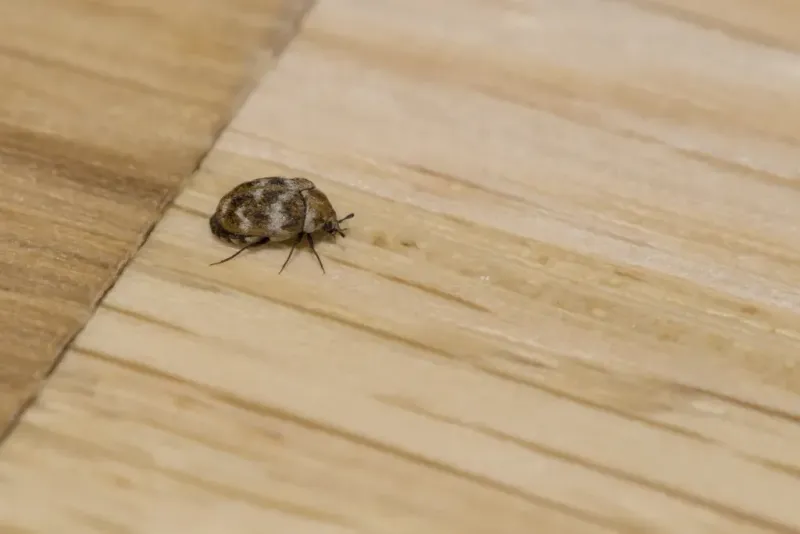
Carpet beetles are rounded, hard-shelled insects whose hairy larvae damage fabric, while bed bugs are flat, oval, reddish-brown insects that feed on blood. Knowing these differences helps you identify the pest and choose the right treatment.
TL;DR: Carpet beetles do not bite, but their larvae have tiny hairs that can irritate skin and cause a rash-like reaction, while bed bugs bite to feed on blood and may leave itchy welts. Hairy larvae, shed skins, and damaged wool or other natural fabrics point to carpet beetles, while dark fecal spots, pale shed skins, and live bugs near sleeping areas point to bed bugs. The two need different treatments, so if you cannot confidently identify the insect or signs keep returning, a professional inspection is the most reliable next step.
Key Takeaways
- Adult carpet beetles are rounded or oval, 1.5 to 5 mm, and black, brown, or patterned, with wings under hard wing covers. Bed bugs are flat, oval, reddish-brown, about 4 to 7 mm, and wingless.
- Bed bugs do not have a larval stage, while carpet beetle larvae are hairy or bristly. Bed bug nymphs are smaller, pale, flatter versions of the adults.
- Carpet beetle larvae cause most of the damage to wool, silk, and other animal-derived materials, while bed bugs feed on blood and do not damage fabric.
- Neither the look nor the pattern of a rash can reliably confirm which insect is responsible, so rely on fecal spots, shed skins, and live insects, and seek medical advice if skin symptoms persist or worsen.
- Carpet beetles are controlled by vacuuming, removing lint and infested fabrics, and finding the source. Bed bugs need inspection, high-heat drying for about 30 minutes, containment, and often professional treatment.
Carpet Beetle vs. Bed Bug: Key Differences
The easiest way to distinguish a carpet beetle from a bed bug is by examining its body shape, color, and physical features. Their feeding habits and the evidence they leave behind also provide useful clues.
| Feature | Carpet Beetle | Bed Bug |
|---|---|---|
| Size | Adults commonly 1.5–5 mm | Adults approximately 4–7 mm |
| Body shape | Rounded or oval | Flat and oval |
| Color | Black, brown, or patterned | Brown to reddish-brown |
| Wings | Adults have wings beneath hard wing covers | Wingless |
| Immature stage | Hairy or bristly larvae | Small, pale nymphs |
| Feeding habits | Larvae feed on animal-derived materials | Feed on blood |
| Human bites | Do not bite | Bite humans and animals |
| Infestation signs | Fabric damage, larvae, shed skins | Dark fecal spots, shed skins, live bugs |
Both insects can appear in bedrooms, but finding one near your bed does not automatically mean you have a bed bug infestation.
What Do Carpet Beetles and Bed Bugs Look Like?
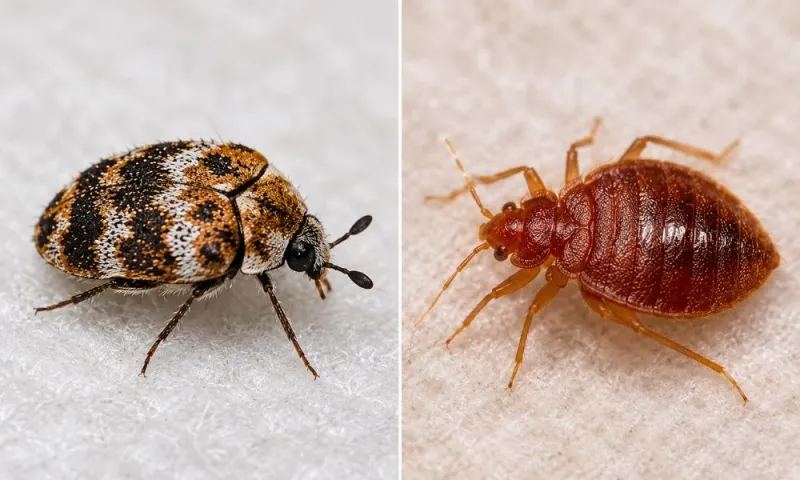
Although both insects are small, their physical characteristics make them distinguishable when examined closely. Carpet beetles are among several bugs that look like bed bugs, especially when homeowners discover unfamiliar insects around their sleeping areas.
Adult Carpet Beetles vs. Bed Bugs
Adult carpet beetles are small, oval-shaped insects with hard wing covers. Depending on the species, they may appear black, dark brown, or patterned with white, yellow, and brown scales.
Bed bugs have broader, flattened bodies with visible abdominal segments. They are typically reddish-brown, although their appearance changes after feeding. Unlike carpet beetles, bed bugs cannot fly.
A black carpet beetle may be mistaken for a bed bug because of its dark coloration. However, its harder, more rounded body and wing covers help distinguish it from a bed bug.
Carpet Beetle Larvae vs. Bed Bug Nymphs
Carpet beetle larvae and bed bug nymphs have noticeably different appearances.
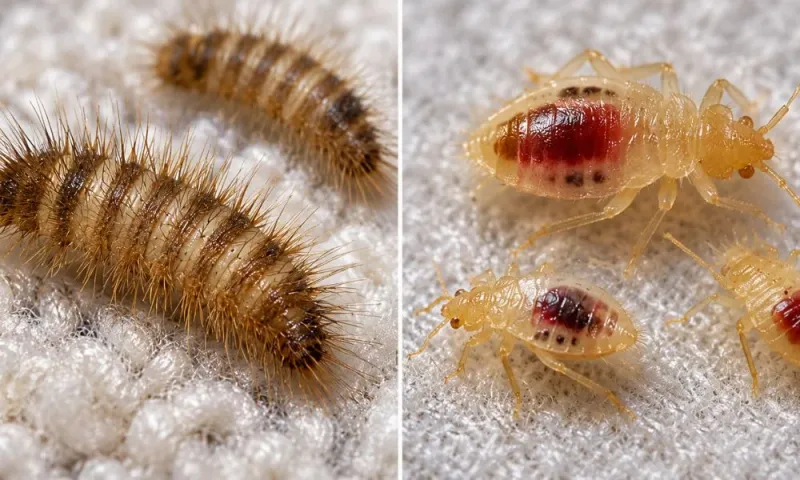
Carpet beetle larvae are elongated and covered with fine hairs or bristles. Some species have tapered bodies and distinctive tufts of hairs near the rear.
Bed bug nymphs are smaller, flatter versions of adult bed bugs. They are often pale or translucent before feeding and become more noticeable after consuming blood.
An important distinction is that bed bugs do not have a larval stage. They develop from eggs into nymphs before becoming adults, while carpet beetles undergo separate larval and pupal stages.
According to the University of California Integrated Pest Management Program, carpet beetle larvae are responsible for most damage to susceptible fabrics and other animal-derived materials.
If you find a small, fuzzy insect near your mattress, carpet beetle larvae are one possibility. However, identification should be confirmed using additional physical characteristics.
Carpet Beetle Shell vs. Bed Bug Shell: How to Identify Shed Skins
Both pests shed their outer coverings as they develop, but the remains look different.
Carpet beetle larvae leave behind brownish, hairy or bristly shed skins. These casings may be found in closets, along baseboards, beneath furniture, or around infested fabrics.
Bed bug nymphs leave behind pale, translucent exoskeletons shaped like small bed bugs. Their shed skins are commonly found near hiding places, including mattress seams, bed frames, and furniture joints.
A carpet beetle shell usually has a more elongated, hairy appearance, while a bed bug shell has a flatter, segmented shape.
Finding shed skins can indicate insect activity, but the type of casing should be identified before selecting a treatment.
Signs of Carpet Beetles vs. Bed Bugs in Your Bed
Finding insects in your bedroom can be concerning, especially when they resemble bed bugs. However, the evidence surrounding the insect often reveals which pest is present.
Signs of Carpet Beetles in Your Bedroom
Carpet beetles can enter bedrooms and may be found around mattresses, upholstered furniture, rugs, and stored clothing.
Common signs include:
- Hairy larvae or shed skins near furniture and baseboards
- Irregular holes or damaged areas in wool, silk, or other susceptible materials
- Larvae beneath beds, inside closets, or around accumulated lint and pet hair
- Adult carpet beetles near windows and light sources
Carpet beetle larvae may occur in beds when suitable materials or debris are available, but they do not feed on human blood.
For more information about their behavior and potential damage, read our guide explaining what carpet beetles are and whether they are dangerous.
Signs of Bed Bugs in Your Bedroom
Bed bugs typically hide close to places where people sleep or rest.
Common infestation signs include:
- Live bed bugs in mattress seams, bed frames, and nearby furniture
- Small, dark fecal spots on bedding or surrounding surfaces
- Pale shed skins from developing nymphs
- Tiny eggs or eggshells in protected cracks and crevices
Bed bugs may also hide behind headboards, along furniture joints, and inside other narrow spaces.
The presence of fecal spots, shed skins, and live insects is more useful for identification than skin irritation alone.
Carpet Beetle vs. Bed Bug Bites: What’s the Difference?
Bed bugs bite humans to feed on blood, while carpet beetles do not bite.
Bed bug bites may cause itchy, red welts or swelling. However, reactions vary between individuals, and some people experience little or no visible reaction.
Carpet beetle larvae can cause skin irritation when their tiny hairs contact sensitive skin. This reaction, sometimes called carpet beetle dermatitis, may resemble insect bites even though no biting occurs.
The main differences are:
- Bed bugs: Bite to obtain blood and may cause itchy skin reactions.
- Carpet beetles: Do not bite, but larval hairs may trigger irritation or allergic reactions.
The Centers for Disease Control and Prevention explains that reactions to bed bug bites vary, and some people may not develop visible symptoms.
Neither the appearance nor the pattern of a rash can reliably confirm which insect is responsible. Learn more about what bed bug bites look like and the signs that may accompany an infestation.
If skin symptoms persist, worsen, or become severe, seek medical advice rather than relying on pest identification alone.
How to Get Rid of Carpet Beetles and Bed Bugs
Carpet beetles and bed bugs require different treatment approaches because their feeding habits, hiding places, and infestation sources are different.
Getting Rid of Carpet Beetles
To control carpet beetles:
- Vacuum carpets, baseboards, closets, and upholstered furniture thoroughly.
- Inspect wool clothing, blankets, rugs, and other susceptible materials for larvae and damage.
- Wash or professionally clean infested fabrics according to their care instructions.
- Remove accumulated lint, pet hair, and debris that may support larvae.
- Inspect stored fabrics and locate the source of the infestation.
Regular cleaning and removing infested materials can help prevent recurring carpet beetle problems. If you continue finding larvae or damaged fabrics, identifying the infestation source is important.
Nextgen Pest Solutions offers professional beetle control services to help address beetle activity and reduce the risk of recurring infestations.
Getting Rid of Bed Bugs
Bed bugs often require a more comprehensive treatment approach.
Start by inspecting mattresses, bed frames, headboards, and nearby furniture. If possible, capture an insect specimen for accurate identification.
Wash and dry suitable bedding and clothing using appropriate heat settings. A clothes dryer on high heat for approximately 30 minutes can kill bed bugs on many dryer-safe items.
Avoid moving potentially infested belongings into other rooms, as this can spread the infestation.
The U.S. Environmental Protection Agency recommends an integrated pest management approach that combines inspection, appropriate nonchemical methods, and carefully selected treatments.
Do not rely on rubbing alcohol, household foggers, or unverified home remedies to eliminate bed bugs. Established infestations may require professional treatment and follow-up inspections.
Need Help Identifying or Removing These Pests?
Not sure whether you’re dealing with carpet beetles or bed bugs? Nextgen Pest Solutions can help identify the problem and recommend an appropriate treatment. Explore our beetle control services or professional bed bug control to get help with your infestation.
Frequently asked questions
Frequently Asked Questions About Carpet Beetles vs. Bed Bugs in Georgia
Get a free inspection when you book a pest control service.
How can I tell if I have carpet beetles or bed bugs?
Bed bugs are flat, reddish-brown insects that hide near beds and may leave bites or blood spots. Carpet beetle larvae are hairy, feed on natural fibers, and may leave holes or shed skins. Check mattress seams, baseboards, closets, and damaged fabrics for clues.
Do carpet beetles bite like bed bugs?
No. Carpet beetles do not bite people. Their larvae have tiny hairs that can irritate skin and cause bumps or a rash-like reaction. Bed bugs feed on human blood and may leave itchy welts, often in clusters or lines.
Where should I look for carpet beetles and bed bugs in a bedroom?
Check mattress seams, bed frames, and nearby furniture for bed bugs. For carpet beetles, inspect baseboards, carpet edges, closets, stored fabrics, and window sills. Shed skins, fabric damage, blood spots, or live insects can help identify the pest.
Can carpet beetles damage bedding and clothing?
Yes. Carpet beetle larvae can damage wool, carpets, clothing, bedding, and other natural-fiber materials. Look for irregular holes, shed larval skins, and activity in closets or undisturbed storage areas. Bed bugs do not normally eat or damage fabric.
When should I call pest control for bed bugs or carpet beetles?
Consider a professional inspection when you cannot confidently identify the pest, signs keep returning, or bed bugs are suspected. Bed bugs and carpet beetles require different control methods, so confirming the pest first helps avoid ineffective treatment.