

Common rodents in Sandy Springs, Georgia, include roof rats, Norway rats, and house mice. Roof rats typically nest in attics, Norway rats burrow near foundations, and house mice hide in kitchens, walls, and storage areas. Other rodents, including voles, chipmunks, and muskrats, are found outdoors. Signs of rodent activity include droppings, scratching noises, gnaw marks, and damaged insulation. Identifying the species early helps homeowners choose the right removal methods and prevent further damage.
TL;DR: The rodents most often found in Sandy Springs homes are roof rats, Norway rats, and house mice, and deer mice and several outdoor species turn up too. Height and location separate them: roof rats nest in attics, Norway rats burrow near foundations and in crawl spaces, and house mice stay in kitchens and walls. Droppings are the fastest check, since mouse droppings are about ¼ inch and pointed, while Norway rat droppings are ¾ inch or more with blunt ends. Mice fit through a dime-size gap and rats through a quarter-size one. Call a professional if you see fresh droppings, chewed wiring, or repeat activity.
Key Takeaways:
- Roof rats, Norway rats, and house mice are the most common rodents found in homes in Georgia.
- Outdoor species, such as voles, gophers, chipmunks, and muskrats, damage lawns and gardens.
- Droppings are the fastest way to tell rats from mice: mouse droppings are small and pointed, rat droppings are larger with blunt ends.
- Where the activity is tells you as much as what it looks like. Attic means roof rat, crawl space means Norway rat, cupboard means mouse.
- Rodents can chew through electrical wires, spread fleas, and contaminate food, posing significant health risks.
- Deer mice have a brown back and white belly, and their droppings and nests warrant extra caution because of hantavirus.
This guide is about working out which one you have. Identification comes first, because roof rats, Norway rats, and mice each need different placements, different entry points, and different treatment. Once you know, our complete guide to getting rid of rats covers the removal process.
Video Guide: Identifying Common Rodent Types
This short video covers 20 common rodent species, including the ones that turn up in Sandy Springs homes, showing the differences in size, color, and behavior. Watching it before an inspection makes it much easier to describe what you’re seeing to a technician.
Roof Rats: Agile Climbers And Attic Invaders

Roof rats are common in Sandy Springs and across North America. They are sleek with large ears, pointed noses, and long tails. These strong climbers prefer high places, such as attics, ceilings, and rooftops. They use tree limbs and power lines to reach homes.
In the Metro Atlanta area, roof rats primarily feed on fruit, nuts, seeds, and pet food. They build nests from shredded paper and insulation, leaving droppings and gnaw marks on the surrounding area. Their chewing damages insulation, beams, and wires, and can cause fires.
The clearest tell is elevation. If the noise is overhead and the droppings are in the attic or along rafters, you’re dealing with roof rats rather than Norway rats, and the entry point will be at roof level rather than ground level.
Norway Rats: Burrowing Pests That Thrive Near Water

Norway rats are larger and more bold than roof rats. They thrive near water such as creeks, storm drains, and damp basements. In Sandy Springs and Lawrenceville, people often find their burrows under sheds, patios, and foundations.
They do not climb well, but they dig well. Their tunnels weaken soil and can harm structures. They contaminate food and surfaces with droppings and urine. They can carry diseases like leptospirosis, so take action quickly to protect your family’s health.
Look for burrow entrances two to four inches across at the base of a foundation, under a shed, or along a fence line, usually with a smooth worn path leading in.
House Mice: Small Rodents With Big Impact

The house mouse is one of the smallest rodents in Georgia, but among the most persistent. With their large ears and grayish fur, they are easily identifiable. These tiny intruders can squeeze through entry points as small as a dime and quickly establish nests in walls or storage boxes.
Once inside, house mice multiply rapidly, resulting in a full-blown rodent infestation within weeks. They chew through food packaging, leave droppings near cupboards, and gnaw on electrical wires. These habits can cause fires and result in costly damage for homeowners across Sandy Springs and northern Atlanta.
Mice are also more curious than rats. They explore new objects rather than avoiding them, which is why you’ll see mouse activity spread across a kitchen while rat activity stays on a few fixed routes.
Deer Mice: Carriers Of Hantavirus
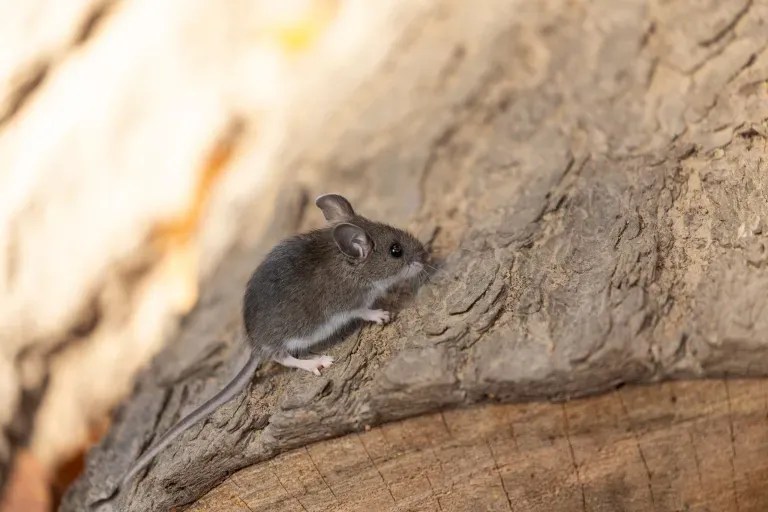
Deer mice are native to North America and often live in wooded or rural parts of Georgia. These small rodents have brown backs, white bellies, and large eyes. They prefer nesting in sheds, garages, and attics, especially during cooler months.
Although they look harmless, deer mice are known carriers of hantavirus. Deer mice can spread this virus through their droppings and nesting materials. In homes around Sandy Springs and Alpharetta, infestations often begin when mice seek warmth and shelter in crawl spaces or storage areas.
The two-tone coloring is the giveaway. A house mouse is uniformly gray; a deer mouse has a clearly brown back and a white belly with a sharp line between them. It matters, because deer mice warrant more caution around droppings and nesting material than house mice do. If you see signs of deer mice, do not disturb droppings or nests.
How to Identify Which Rodent You Have
Most people find evidence long before they see the animal. These three clues narrow it down quickly.
Droppings
The most reliable indicator, and the easiest to check.
| Size | Shape | Where you’ll find them | |
| House mouse | About ¼ inch | Small, pointed ends | Along walls, inside cupboards, behind appliances |
| Roof rat | About ½ inch | Curved, pointed ends | Attics, rafters, roof-level runways |
| Norway rat | ¾ inch or more | Larger, blunt ends | Near burrows, basements, along foundations |
Body shape and size
Roof rats are slim and dark gray with tails longer than their bodies. Norway rats are heavier and brown, with blunt noses and tails shorter than their bodies. House mice are much smaller with pointed snouts and proportionally large ears. Deer mice are mouse-sized but brown above and white below.
Where the activity is
Height tells you most of what you need. Attic, rafters, or trees touching the house means roof rats. Basement, crawl space, or burrows at the foundation means Norway rats. Kitchen cupboards and behind appliances usually means mice.
One size note for sealing: mice fit through a gap the size of a dime, rats through one the size of a quarter. That’s the standard to work to when you’re checking a house.
Recognizing Signs Of A Rodent Infestation
Early detection prevents costly damage. One way to identify rats vs. mice is by their behavior. Mice tend to be more curious and will explore your house, especially your kitchen or bathroom, while rats prefer to be left undisturbed in burrows underground, your home’s attic, or your basement.
Common signs include droppings, gnaw marks, and shredded nesting material. You may hear scurrying at night or see greasy rub marks along walls.
Other things to watch for: nests built from shredded insulation, paper, or fabric in quiet corners; torn pet food bags or chewed boxes in the pantry; and activity under or behind appliances. Rodents are most active at night, so scratching in an attic or crawl space after dark is often the first thing people notice.
Chewed wires are a serious warning sign. Rodents gnaw to wear down teeth, which can create hidden fire risks.
If you suspect damage, contact a licensed professional immediately. A quick inspection and exclusion help prevent the problem from spreading.
Voles, Chipmunks, Gophers, And Moles: Telling Outdoor Damage Apart
Not every rodent in Sandy Springs comes indoors. Several damage lawns and gardens instead, and because the damage looks similar at a glance, people often treat for the wrong animal. Here’s how to tell them apart.
Voles

What you’ll see: shallow surface runways about two inches wide, winding through turf like a maze, often most visible in early spring when the grass flattens. Look for clean-cut plant stems at ground level and small holes with no soil mound beside them.
What they’re doing: eating roots, bulbs, and bark. Vole damage to young trees shows as gnawing right at the soil line, which can girdle and kill a sapling.
Moles

What you’ll see: raised ridges of pushed-up soil snaking across the lawn, plus volcano-shaped mounds of fine soil.
Worth knowing: moles aren’t rodents at all, and they eat grubs and earthworms rather than plants. If your plants are intact but the lawn is ridged, you have moles, and the treatment is completely different. People routinely poison for voles when the actual animal is a mole.
Gophers

What you’ll see: large crescent or fan-shaped mounds of loose soil with the hole off to one side, usually plugged. Gopher mounds are noticeably bigger and more asymmetric than mole mounds.
Chipmunks

What you’ll see: burrow entrances about two inches across with no soil pile beside them, since chipmunks carry the excavated dirt away. Typically near foundations, retaining walls, decks, and patio edges. Damage is usually to bulbs and seedlings rather than turf.
Muskrats

What you’ll see: burrows dug into the banks of ponds, creeks, and drainage ditches, with slides or worn paths into the water and chewed aquatic vegetation nearby. In North Georgia wetlands, their tunneling causes bank erosion and can undermine landscaping or pond edges.
The quick version: ridges mean moles, surface runways mean voles, big asymmetric mounds mean gophers, clean holes without mounds mean chipmunks, and damage at a waterline means muskrats. Nextgen Pest Solutions provides wildlife services in Georgia for outdoor rodents and repair of the damage they leave.
Why Sandy Springs Homes Get Rodents
Three local conditions do most of the work.
Mild winters and humid summers. Georgia’s climate lets rodents breed nearly year round. Numbers build through summer in garages and crawl spaces, then push indoors when temperatures drop. There’s no winter die-off to reset the population.
Older housing stock. Many Sandy Springs homes have small foundation cracks and gaps around pipe and cable penetrations that have opened up over decades of settling. These are the entry points rodents use, and they’re easy to miss because they’re low, behind shrubs, or in a crawl space.
Wooded lots. The tree cover that makes these neighborhoods attractive is also a roof rat highway. Limbs touching a roofline are the most common entry route in this area, and they’re the one thing most homeowners never think to check.
Once You Know What You’re Dealing With
Identification determines everything that follows. Roof rats, Norway rats, and mice each need different trap placements, different entry points sealed, and different timing. Treating a roof rat problem like a mouse problem wastes weeks.
For the removal process itself trapping, the order to seal entry points in, and the common mistakes that make things worse see our complete guide to getting rid of rats.
If you’d rather have the identification done for you, our Sandy Springs team inspects and identifies the species before any treatment begins, which is the part that determines whether the treatment works.
