 Limited Time: Get $25 Off Your First Service

What Are the Signs of Rats in Johns Creek, Georgia Homes?

Common signs of rats in Johns Creek homes include dark droppings, gnaw marks on wood or wiring, scratching noises in walls or attics, and shredded nesting materials. Roof rats often hide in attics and roof spaces, while Norway rats prefer basements, crawl spaces, and areas near foundations. If you notice these warning signs, inspect potential entry points, secure food sources, and consider professional rodent control in Johns Creek to identify and address the infestation.
TL;DR: Common signs of rats in Johns Creek homes include dark droppings, gnaw marks, scratching noises in walls or attics, and shredded nesting materials, with roof rats favoring attics and Norway rats sticking closer to basements and foundations. Outdoor clues like chewed plants, burrows near the foundation, and greasy rub marks along siding often appear before rats move indoors. Small, isolated signs may respond to DIY cleanup and sealing, but persistent droppings or noises usually call for a professional inspection.
Key Takeaways
- Fresh droppings and gnaw marks are early indicators of rat activity.
- Roof rats, Norway rats, and brown rats are the most common species in Georgia homes.
- Listen for scurrying noises in walls, attics, and crawl spaces.
- Professional pest control helps eliminate rats and reduce the risk of repeat infestations.
Video Guide: How to Identify What Type of Rat You Have
If you’re unsure whether you’re dealing with roof rats, Norway rats, or house mice, this video can help you tell the difference. It highlights common features such as size, droppings, and nesting habits to help you better identify the type of rodent in your home. Seeing these examples helps homeowners understand which rat control method works best for their situation.
What Are the Most Common Signs of Rats in a Johns Creek Home?
The most common signs of rats in Johns Creek homes include droppings, gnaw marks, damaged wires, and scratching or scurrying sounds. Homeowners may also find nesting materials, such as shredded paper or insulation, in quiet areas such as basements or crawl spaces.
Droppings and Smudge Marks
Rat droppings are dark, capsule-shaped, and about one-half inch long. You often find them near food storage areas, pet food bowls, or along baseboards. Do not confuse them with mouse droppings, which are smaller and pointed. Smudge marks along walls or entry points form when rats rub their oily fur against surfaces.
Gnaw Marks and Property Damage
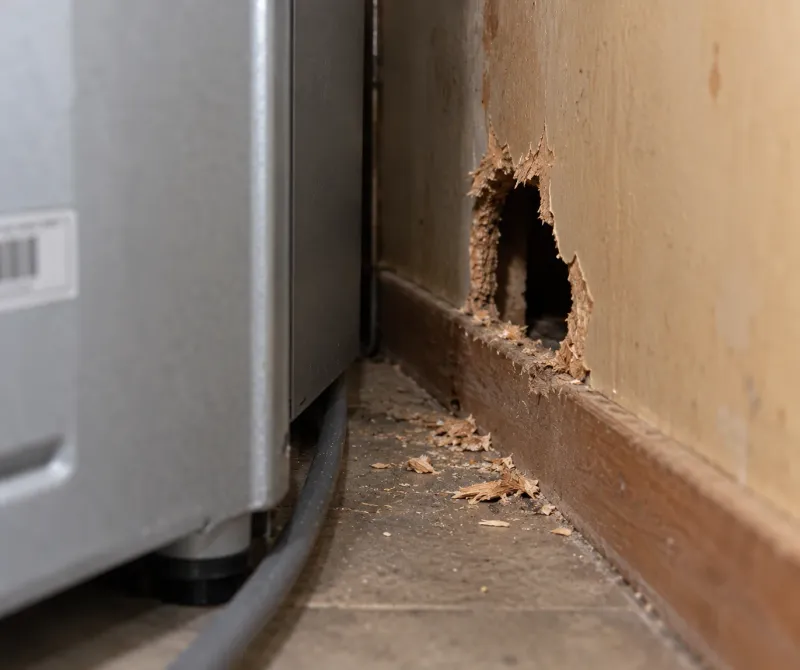
Gnaw marks on wires, furniture, and wood trim signal rat activity. Rats chew constantly to keep their teeth short. This habit can create fire risks if they come into contact with electrical wiring or appliances. Over time, chewing can weaken parts of your home, cause structural damage, and ruin stored items.
Odors and Nesting Materials
A strong, musky odor in enclosed spaces often indicates active rat nests. Homeowners may find shredded paper, insulation, or fabric used for nesting. Roof rats usually nest in higher areas, while Norway rats build nests near foundations, basements, or crawl spaces.
Even a small amount of damage can mean more rats are nearby. Professional pest control inspections help catch problems early and limit damage.
What Hidden Signs of Rats Should Johns Creek Homeowners Check For?
Rats often stay hidden until their numbers increase. Homeowners should check behind appliances, inside wall spaces, and under sinks for less apparent signs.
Listen for scurrying or squeaking sounds at night. Roof rats move through ceilings and attics, while Norway rats travel under floors or in basements. Watch for small holes or gnaw marks near pipes and vents. These areas often serve as entry points.
Pets may also react. Dogs and cats may paw at walls or stare at ceilings when they sense movement. Stains or damp areas near baseboards can also signal nesting or urine trails.
Where Should You Look for Rats Inside Your Johns Creek Home?
Rats prefer quiet, dark, and warm spaces. Common problem areas in Johns Creek homes include kitchens, basements, attics, garages, and crawl spaces.
High-Risk Indoor Locations
In kitchens, look for droppings near food packages, behind refrigerators, or under sinks. In basements and crawl spaces, check for tunnels, torn insulation, and nesting debris. Attics and utility rooms give roof rats warm spaces to nest year-round.
Because Georgia’s humidity supports rodent activity, keeping food sealed and areas dry helps reduce risk.
If you find evidence of rats in multiple rooms, our professional pest control services can treat your entire home and set up bait stations to prevent reinfestation.
What Outdoor Signs Suggest Rats Are Entering Your Johns Creek Home?
Outdoor signs often appear before rats move indoors. Chewed plants, burrows near the foundation, and narrow paths in mulch or grass usually point to rat activity.
Rats also leave greasy marks along siding and squeeze through gaps around vents, garages, and doors. Roof rats may climb trees or power lines and enter attics through roof edges or damaged soffits. Moist areas such as drainage ditches and clogged gutters attract rats by providing water and shelter.
Homes near wooded areas in Johns Creek, Duluth, or Cumming often see these signs more often.
How Do You Confirm That the Signs Point to Rats in Your Johns Creek Home?
Confirming a rat infestation often means matching droppings, gnaw patterns, and activity to the specific type of rodent. Norway rats leave larger droppings and prefer ground-level nesting, while roof rats produce smaller droppings and stay above ground. House mice tend to leave finer droppings and smaller gnaw marks.
Homeowners can use non-toxic bait stations or sticky traps in suspected areas to test for rodent activity. Take photos of any evidence, such as droppings, nests, or gnaw marks, to share with pest control experts for accurate identification.
If the evidence suggests ongoing activity, it’s time for a professional inspection. Our technicians provide thorough assessments across Johns Creek, Duluth, Cumming, and Marietta to determine the extent of a rat problem and recommend the safest solutions.
What Should You Do If You See These Signs of Rats in Your Johns Creek Home?
Immediate Steps for Homeowners
If you want to get rid of rats in your home, you can start by cleaning the affected areas carefully to remove droppings and food debris. Store food and pet food in sealed containers and take out garbage daily. Seal entry points with steel wool or metal flashing, and reduce moisture around basements and crawl spaces.
When DIY Works and When It Doesn’t
Small, isolated incidents may respond to simple DIY measures, such as setting traps or removing food sources, but larger infestations require professional pest control. Rats breed quickly and can cause property damage or spread diseases such as salmonella, leptospirosis, and hantavirus.
If you hear scurrying in the attic or find rat droppings after cleaning, call the professionals. Our trained exterminators provide safe, effective rat control for homes in Johns Creek.
Protecting Your Johns Creek Home from Rat Infestations
Rats can cause ongoing problems if they gain access to a home, especially when entry points and nesting areas go unnoticed. Addressing the issue early helps limit repairs, cleanup, and long-term disruption. A professional inspection can confirm the current situation and outline the next steps.
At Nextgen Pest Solutions, we provide professional rat control services for homeowners in Johns Creek and the surrounding areas.
Contact us today to schedule an inspection and get help resolving the problem.
Frequently asked questions
Frequently Asked Questions About Signs of Rats in Johns Creek, GA
Get a free inspection when you book a pest control service.
What are the most common signs of rats in a Johns Creek home?
Common signs include dark droppings, gnaw marks, scratching or scurrying sounds, greasy rub marks, and shredded nesting material. Check kitchens, attics, basements, garages, and crawl spaces, especially along walls and near food or water sources.
Where should I look for rats inside my home?
Check quiet, dark areas such as attics, crawl spaces, basements, garages, kitchens, and utility rooms. Look behind appliances, under sinks, near stored food, and around insulation for droppings, gnaw marks, nests, or other signs of rat activity.
How can I tell rats from mice in my Johns Creek home?
Rat droppings are generally larger than mouse droppings, and rats leave wider gnaw marks. Roof rats often stay in attics and upper areas, while Norway rats tend to stay near foundations, basements, or crawl spaces. Multiple signs can help confirm the rodent.
What should I do if I find signs of rats?
Remove accessible food, store pet food securely, clean affected areas carefully, reduce moisture, and inspect for entry points around pipes, vents, doors, and the roofline. Traps may help with limited activity, but persistent droppings or noises can indicate a larger infestation.
Should I worry if I see only one rat?
One rat sighting can indicate additional activity nearby, especially if you also find droppings, gnaw marks, or hear nighttime scratching. Inspect attics, crawl spaces, kitchens, and entry points for more evidence. A professional inspection can help determine the extent of the problem.