 Limited Time: Get $25 Off Your First Service

What Does Skunk Poop Look Like? A Skunk Scat Identification Guide
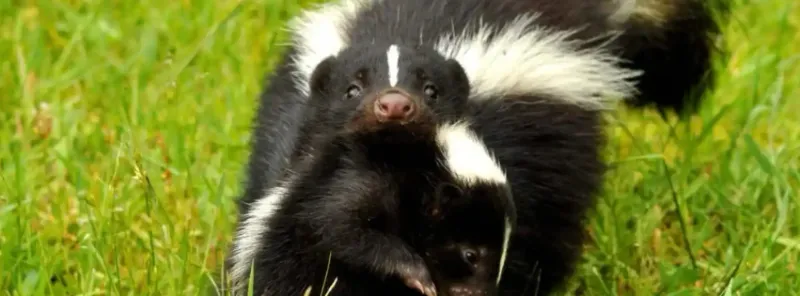
Skunk poops are tubular with blunt ends, roughly 1 to 2 inches long and about ½ inch across, and dark brown to black. The giveaway is what’s inside them. Poke one apart and you’ll find insect shells, seeds, fur, or feathers, because skunks eat almost anything.
TL;DR: Skunk poop is dark brown to black, tubular with blunt ends, 1 to 2 inches long, and about ½ inch across. Broken open, it contains insect shells, seeds, fur, or feathers, which is the fastest way to separate it from cat or dog waste. Skunks scatter droppings across open lawn, while raccoons return to a repeat latrine, usually somewhere raised. Cone-shaped holes in the lawn or an opening under a deck mean a skunk is denning nearby. Skunk feces can carry bacteria like salmonella and leptospirosis, so wear gloves and a mask, bag the waste, and call a professional if the skunk is under a structure.
Key Takeaways
- Skunk droppings are 1-2 inches long and about ½ inch wide
- Scat is usually dark brown or black with a strong, musty odor
- Droppings often contain visible remnants of the skunk’s diet
- Insect parts and seeds are the fastest way to separate skunk scat from cat or dog waste
- Scattered droppings across open lawn point to a skunk; a repeat latrine in a raised spot points to a raccoon
- Skunk feces can pose potential health risks if mishandled
- Cone-shaped holes in the lawn alongside the droppings mean a skunk is actively feeding on your property
If you’re finding them in your lawn or flower beds, a skunk is denning nearby. Here’s how to confirm it’s a skunk and not a cat or raccoon, and what to do next.
What Skunk Poop Looks Like:
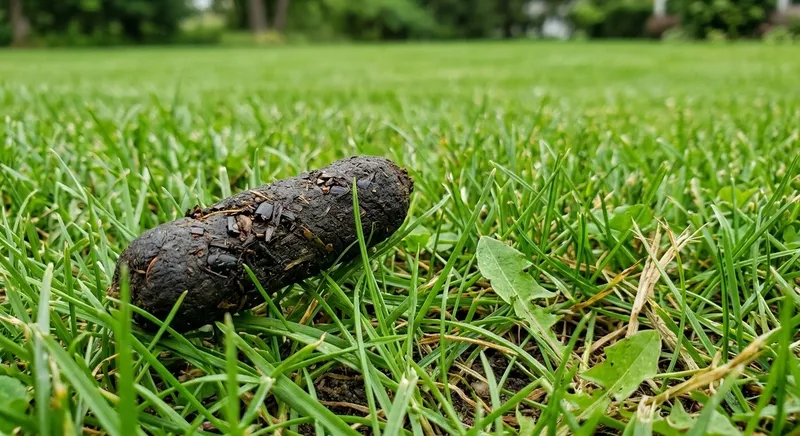
Typical skunk scat on turf: 1–2 inches long, dark, and left out in the open rather than buried.
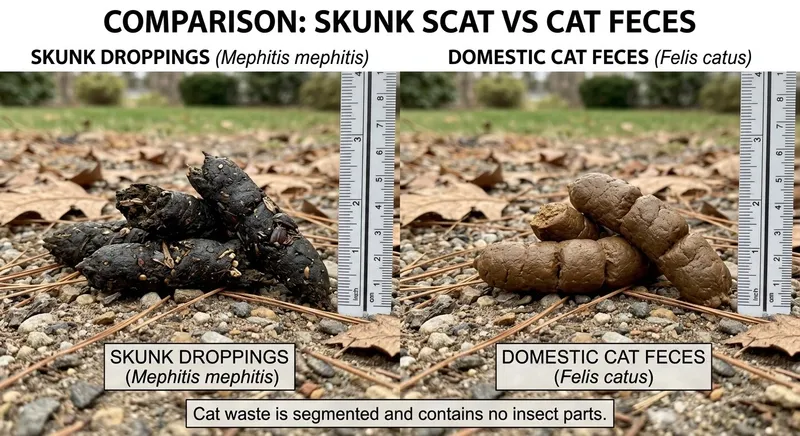
Cat feces is the most common misidentification. Cat waste is segmented and contains no insect parts.
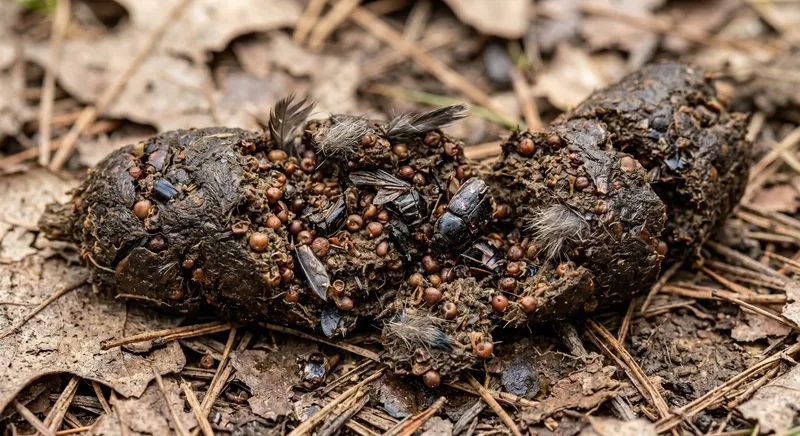
Broken open, skunk scat reveals beetle shells, berry seeds, and sometimes fur or feathers.
Skunk Poop Identification: Key Characteristics
Knowing how to spot skunk droppings is key for homeowners facing wildlife issues. This guide will help you identify skunk excrement and what to do next.
Size and Shape of Skunk Droppings
Skunk droppings are shaped like tubes with blunt ends. They are usually 1/4 to 1/2 inch wide and 1-2 inches long. Their twisted or rope-like shape sets them apart from other animal waste.
Color and Consistency of Skunk Scat
Skunk scat can be dark brown to black in color. Its texture changes with their diet. A diet rich in protein makes the scat hard and dry, while a diet full of fruits makes it soft and moist.
Odor and Visual Clues
Skunk scat smells strong and musty, thanks to sulfur compounds. This smell is unique but not as strong as their famous spray. Look for undigested insects, berry seeds, fur, or feathers in the droppings for visual clues.
Contents of Skunk Feces
Looking at what’s inside skunk feces can tell you about their diet. You might see:
- Insect exoskeletons
- Berry seeds
- Small bones
- Plant material
Knowing these traits is key for managing wildlife. If you’re not sure about animal droppings, it’s best to get help from a pro for safe removal.
How to Tell Skunk Poop from Other Animals
Skunk scat gets confused with cat waste more than anything else, because the two are almost identical in size. The difference is in the contents and the location.
| Length | Diameter | Shape | Telltale sign | |
|---|---|---|---|---|
| Skunk | 1–2″ | ~½” | Tubular, blunt ends | Insect parts and seeds inside; musky smell; scattered on open ground |
| Cat | 1–2″ | ~½” | Segmented | No insect parts; often buried or in loose soil |
| Raccoon | 2–3″ | ~½” | Tubular, blunt ends | Repeat latrine, usually raised on a stump, deck, or roof |
| Opossum | ~2″ | ~¾” | Twisted, curved | Larger, strong odor, 2–3 pieces per pile |
| Squirrel | ~⅜” | ~⅛” | Bean-shaped pellet | Much smaller; lightens to chalky as it ages |
| Rat | ½–¾” | ~¼” | Pellet, tapered | Much smaller; found along walls and runways |
| Dog | Varies | Larger | Uniform tube | No insect fragments |
The fastest test: break it open with a stick. Skunk scat is full of insect exoskeletons, berry seeds, and fur. Cat and dog waste has none of that.
The second fastest: look at where it is. Raccoons return to one latrine, usually somewhere elevated. Skunks leave droppings scattered across open lawn and garden beds.
Other Signs a Skunk Is Denning on Your Property
Scat is rarely the only evidence. Look for:
- Cone-shaped holes, 3 to 4 inches wide, punched into the lawn overnight. Skunks dig these hunting grubs, and a bad grub year means dozens of them.
- Rolled-back sod along the edges of beds and turf.
- A faint musk with no obvious spray incident. Skunks scent-mark around dens without a full discharge.
- Openings under decks, sheds, porches, and crawl spaces, typically 4 to 6 inches across, often with a worn dirt path leading in.
- Raided trash or pet food bowls overnight.
A skunk denning under a structure is the point at which this stops being a curiosity. Females den to raise litters of four to six, and the smell of a skunk that dies in a crawl space is far worse than a spray. If you’re seeing these signs together, professional skunk removal is the safer route than trying to trap or flush the animal yourself.
Understanding Skunk Behavior and Habitat
Skunk habits explain the droppings. Knowing when and where skunks feed tells you where to look and why the scat turns up where it does.
Nocturnal Nature of Skunks
Skunks are mostly active at night. In winter, they sleep for about a month. They only live together for warmth in the cold months. At night, they can travel from 0.5 to 2 miles, and males go up to 4 to 5 miles looking for a mate.
Common Skunk Habitats
The skunk habitat changes a lot, fitting into both wild and changed landscapes. In Pennsylvania, you can find from 2 to 50 skunks per square mile. Skunks often live near people, causing trouble when they dig under buildings or in lawns for bugs.
Skunk Diet and Foraging Patterns
Skunk foraging shows they eat almost anything. They eat pests like grasshoppers and beetles, and small animals like mice. Their eating habits change with the seasons, making yards and gardens good places to find food.
| Skunk Behavior | Details |
|---|---|
| Breeding Season | Late February to late March |
| Litter Size | 4 to 6 young per litter |
| Spray Range | 12-15 feet |
| Spray Replenish Time | 10-14 days |
“Skunks become a nuisance when they burrow under buildings and cause damage by digging in lawns to search for insect grubs.” – Wildlife Expert
Health Risks and Safe Disposal of Skunk Feces
Handling skunk poop can be dangerous. It may carry harmful bacteria like salmonella, E. coli, and leptospirosis. These can cause stomach problems, such as diarrhea, vomiting, and fever.
Skunk droppings might also have roundworms and tapeworms. These can lead to viral pneumonia and skin rashes.
Potential Diseases from Skunk Droppings
| Disease | Symptoms | Onset Time |
|---|---|---|
| Salmonella | Diarrhea, vomiting, fever, abdominal cramps | 12-72 hours |
| E. coli | Stomach problems, potential kidney complications | 1-10 days |
| Leptospirosis | Flu-like symptoms, liver and kidney damage | 2-30 days |
Proper Cleaning and Disposal Methods
It’s important to dispose of skunk poop safely. Always wear gloves and a mask when handling it. Use a shovel to pick up the droppings and put them in a sealed plastic bag.
Throw the bag away in the trash, not the compost. Clean the area well to get rid of smells and bacteria.
Protective Measures When Handling Skunk Scat
To avoid health risks from skunk feces, follow these steps:
- Wear protective gear: gloves, mask, and coveralls
- Use long-handled tools to avoid direct contact
- Clean tools with boiling water after use
- Wash hands thoroughly with soap and warm water
- Consider professional skunk removal and cleanup for large infestations
Skunk feces can also attract other pests and harm buildings over time. Quick and correct disposal is essential for a safe, healthy space.
Conclusion
Skunk droppings are 1 to 2 inches long, about half an inch across, dark, and full of seeds and insect parts. That last detail is what separates them from the cat waste they’re most often mistaken for.
Raccoon scat is longer and left in a repeat latrine, usually somewhere raised. Skunks scatter theirs across open lawn and garden beds.
Droppings break down in roughly two weeks to two months depending on weather, so fresh scat means recent activity. Clean it up with gloves and a sealed bag, and if you’re also seeing cone-shaped holes in the lawn or a hole under the deck, the skunk has moved in rather than passed through. If you’re not sure, or if the problem doesn’t go away, get help from wildlife control experts in your area.
Frequently asked questions
Skunk Poop FAQ: Identification, Health Risks, and Safe Disposal
Get a free inspection when you book a pest control service.
What does skunk poop look like?
Skunk droppings are tubular with blunt ends, 1 to 2 inches long and about ½ inch in diameter, and dark brown to black. They usually contain visible insect parts, seeds, fur, or feathers.
How can I identify skunk scat by its color and odor?
Skunk scat is dark brown or black. It smells strong, pungent, and musty because of sulfur compounds.
How do I tell skunk poop from cat poop?
They’re nearly the same size, so go by contents and placement. Skunk scat contains insect exoskeletons and seeds and is left in the open. Cat feces is segmented, contains no insect fragments, and is often buried or left in loose soil.
What are the potential health risks associated with skunk feces?
Skunk droppings can spread diseases like leptospirosis, listeriosis, and roundworm. It’s important to handle them safely and dispose of them correctly.
How should I dispose of skunk droppings safely?
Wear gloves and a mask. Use a shovel to pick up the droppings. Put them in a sealed plastic bag and throw the bag away in the trash. Clean the area well after.