
In Florida and Georgia, beetles are everywhere. With over 4,600 beetle species in Florida and around 200 species in Georgia, beetles are a persistent problem for homeowners across Florida and Georgia.
These pests come in many forms and impact homeowners in many ways. You might find them in your pantry, your garden, and even your wooden structures. While there are several beetle species that are perfectly harmless, many of them can cause serious damage to your property, landscaping, and food stores.
If you’re facing a beetle problem, it’s helpful to know how to get rid of them effectively and as quickly as possible. For the best results, consider contacting a professional pest exclusion service in Sandy Springs.

Key Takeaways
- Beetle infestations are a common occurrence in Florida and Georgia because of the warm weather and the large number of species in the region.
- Proper identification and targeted elimination of food, shelter, and breeding sites are crucial for fast and effective beetle control.
- Preventing future infestations means sealing entry points, storing food securely, and maintaining both home interiors and yards.
Why Beetle Infestations Are So Common in the Southeast
Beetles can be a huge problem, regardless of where you live in the United States. In the southeast, however, there are many conditions that make the problem even worse. Places like Florida and Georgia provide ideal climates, abundant food sources, and plenty of older structures for this insect to thrive on.
Here are some of the key reasons why beetle problems are so common in the Southeast.
- Year-Round Warmth: Most of the Southeast experiences mild winters that never get cold enough to kill off beetle populations. Not only does this mean beetles stay active longer, but it also means that their numbers keep growing year after year.
- Moisture and Wood Rot: Many beetle species thrive in damp and rotting wood, which is prevalent in the Southeast due to frequent heavy rainfall and severe storms. This leaves older buildings, crawlspaces, and structures near water especially vulnerable to beetle infestations.
- Gardening Culture: Florida and Georgia are also home to a rich gardening culture, where home and business owners take advantage of the warmer weather to create beautiful landscape yards and gardens. While a well-curated yard may be visually appealing, it doesn’t always last long once the beetles come out. Some species can make short work of any plant you decide to put in your yard. A couple of examples are Japanese and flea beetles.
- Unsealed Homes: Many structures found within Florida and Georgia lack proper exclusion for beetles. While it is mostly older buildings in cities like Savannah, Atlanta, Tampa, and Orlando, new buildings can also have poor defenses.

Most Common Beetles in Florida and Georgia
Protecting yourself against beetle infestations often starts with proper identification. To some degree, all beetles can be controlled with similar treatment methods, but their behaviors are unique, making certain approaches more effective on some species than others.
Here is a quick reference table with the most common species to look out for in Florida and Georgia.
Signs of a Beetle Infestation in Florida and Georgia
| Species | Description & Behavior | Typical Hiding or Feeding Zones | Signs of Infestation |
| Carpet Beetle | Small (2–5 mm), oval, often patterned; larvae feed on fabrics | Carpets, clothing, upholstered furniture, closets | Shed skins in corners, larvae in fabric folds, small holes in wool/silk, adult beetles near windows |
| Powderpost Beetle | Tiny (~1/8”), brown; larvae bore into hardwood, leaving frass | Hardwood floors, furniture, trim, joists | Fine powdery dust (frass), pinhead-sized holes, weakening/cracked wood |
| Pantry Beetles (Sawtoothed grain beetle, drugstore beetle) | Small, reddish-brown or tan; infest stored foods | Rice, flour, cereal, pet food, spices | Damaged packaging, larvae/webbing in dry goods, small beetles in pantries |
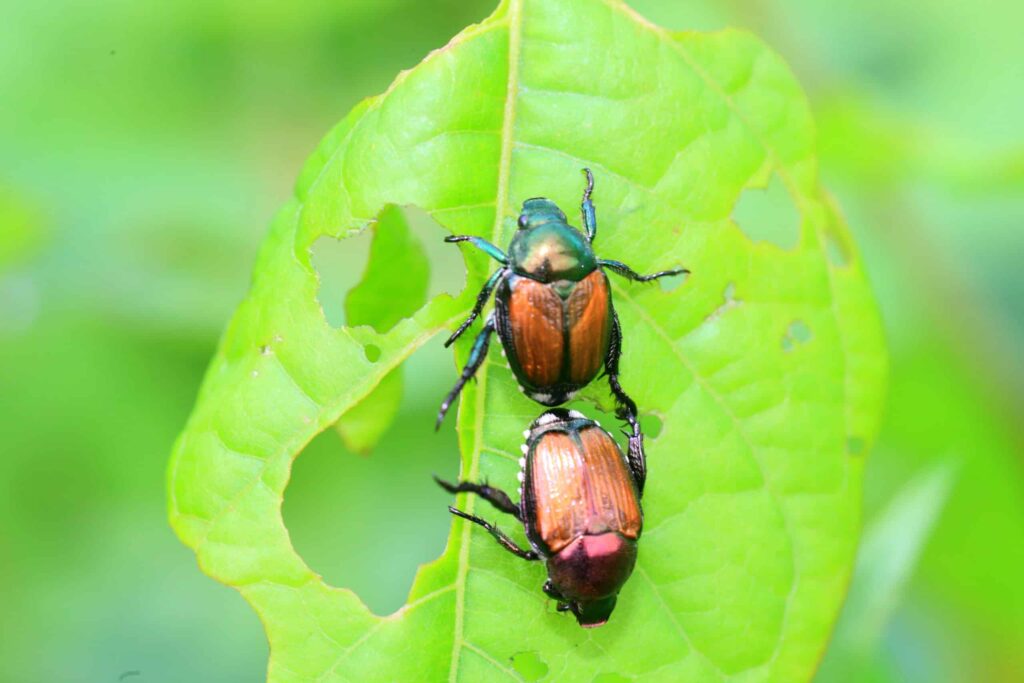
| Japanese Beetle | Metallic green/copper; feeds in groups on foliage | Gardens, roses, shrubs, lawns | Skeletonized leaves, stripped flowers, clusters of feeding beetles |
| May/June Beetle (White Grubs) | Adults are reddish-brown; larvae are C-shaped white grubs | Lawns, turfgrass, garden beds | Brown/thinning grass that lifts easily, grubs under sod, wildlife digging up lawns |
| Click Beetle | Long, flat body; flips with “click” sound; larvae called wireworms | Soil, roots, near foundations | Plant root damage, beetles around lights at night, occasional indoor sightings |
| Ground Beetle | Dark, fast-moving; beneficial predators but enter homes | Crawlspaces, basements, under mulch | Large numbers indoors during summer rains, beetles scurrying along walls/floors |
| Cigarette/Drugstore Beetle | Tiny, brown; infest dried goods and pills | Pantry, spice racks, medicine cabinets | Holes in packaging, beetles in flour/spices, damage to dried herbs/tobacco |
Beetle Removal Quick Tip for Florida & Georgia Homes
It is not uncommon in Florida and Georgia to see infestations caused by multiple beetle types at once. It is quite possible to find beetles both in your home and outdoors at the same time. The key to an effective elimination strategy is identifying all of the beetle species that you have. Since each requires a different approach, you’ll need to use a targeted plan for each one.

How to Get Rid of Beetles Fast: Step-by-Step
For beetle extermination in your home, business, or yard, follow the steps below.
Step 1: Identify the Beetle Species
There are a few effective ways to properly identify the beetles on your property. Before getting into the details, though, it’s essential to point out that a free inspection from a pest management firm is often the easiest and most surefire way to accurately identify all of the species on your property.
To narrow it down by yourself, first take note of where the beetles are most active. Do you see them in your kitchen, along windowsills, near baseboards, or in your garden? Since each species has different characteristics and inhabits various environments, this information can help in identifying the types of beetles you are dealing with.
Taking a photo of the beetles can help you compare them to an online reference or the description above. Beetles have distinct characteristics, and it’s usually quite easy to tell which species a beetle belongs to based on size, shape, and color.
Once you’ve identified all of the different beetles that are infesting your property, it’s time to develop a targeted action plan to get rid of them as quickly as possible.
Step 2: Eliminate Food and Shelter Sources
The next step is to get rid of as many food sources and hiding spots as you can. Beetles need these to survive, and by clearing them away, you’re cutting off their lifelines, making it easier for treatments to be effective.
Carpet Beetles: For carpet beetles, you want to remove any wool, silk, or clothing made from natural fibers that have already been infested. Doing this takes care of their hiding spots and makes it easier for you to target the source of the problem. You also want to vacuum along baseboards, under rugs, and in upholstered furniture, where you are likely to find carpet beetle larvae and eggs.
Pantry Beetles: For pantry beetles, the first step is to get rid of any food that they have already infested. For these beetles, food containers act as both a source of calories and shelter. Always carefully inspect bags of flour, boxes of cereal, pasta, and spices for signs of beetle activity, and get rid of any affected food that you find. Also consider using food storage containers with tightly fitting lids to avoid future infestations, and wipe shelves with soap and vinegar to remove pheromone trails.
Powderpost Beetles: If you were dealing with powderpost beetles, there isn’t much you can do to remove their food sources, because their food is likely hidden deep within your walls. However, you can remove sawdust and wood shavings from baseboards and flooring to uncover entry points where you can monitor for new frass deposits. Any new frass that you see is a direct indication that you are dealing with either a powderpost beetle or another type of wood-dwelling pest.
Japanese Beetles: It is very difficult to remove food sources for Japanese beetles. They feed on a wide range of plant types during the day, and their populations grow very quickly. If you notice Japanese beetles on your plants, it’s likely that they will skeletonize them in a matter of days or weeks, unless you take proactive measures to stop them. A few things you can do to slow their progress are to reduce garden debris, keep your yard as tidy as possible, and avoid leaving piles of grass clippings on the ground for too long.
May/June Beetles: May/June beetles are often confused with Japanese beetles, but there are a few important differences to know about. The larvae from these beetles can stay in the ground for a few years, feeding on grassroots and the roots of garden vegetables. One way to disrupt their development and feeding activity is to regularly rake and dethatch your lawn. It is also a good idea to remove any fallen fruit and seal off compost to discourage these beetles from laying more eggs on your property.
Click Beetles: Another type of beetle that feeds on plant and grass roots is the click beetle. The larvae live in the soil and attack plant roots, often killing off surface plants when the problem is not addressed. To discourage click beetles from entering your yard, avoid using bright lights outside during warm months, and reduce yard clutter as much as possible. Keeping soils well-drained is also helpful, since the larvae thrive in damp conditions.
Ground Beetles: Ground beetles are beneficial predators, but they can cause a lot of alarm when they invade homes and businesses. To keep them out, sealing gaps along windows, doors, and foundations is usually an effective approach. Ground beetles often hide in mulch beds, logs, and even stones. Minimizing these types of materials near any main structures can help keep their numbers low both inside and outside.
Cigarette Beetles: The main food source for cigarette beetles is dried plant material. They often infest dried herbs and spices, tea leaves, tobacco products, dried flowers, and any other stored plant materials that you have in your pantries and cupboards. If you find cigarette beetles, get rid of all the infested containers immediately and plan to replace them with glass airtight containers or something similar. It is also a good idea to clean shelves and surfaces in and around any infested areas.
Drugstore Beetles: Drugstore beetles are similar in size and shape to cigarette beetles, but they go after different types of food. The most commonly infested food sources from this type of beetle are grains, pet food, and even medications. When infestations are found, impacted food stores must be thrown away and a new storage system should be considered.
Step 3: Use the Right Treatment for the Right Beetle
As mentioned, all of the different beetle species common in Florida and Georgia require different solutions and methods. When you use techniques that are targeted to the specific beetles you are dealing with, you can get rid of infestations faster and reduce wasted effort.
Here’s how to handle the most common beetle species.
Carpet Beetles:
- One of the best ways to get rid of carpet beetles quickly is to apply insecticidal dusts like boric acid along high-traffic areas. It can be applied in cracks, crevices, and along baseboards.
- Applying residual sprays to upholstered furniture seams, carpets, and along closet edges is another effective method and should be used alongside powder treatments for maximum effect.
- It is also a good idea to wash and dry infested clothing and bedding on high heat settings, which can help eliminate larvae and eggs.
- For pantry beetles, pheromone traps can be an effective way to attract and capture adult beetles. For eggs and larvae, heat and cold treatments can be applied to food storage areas, but you should still throw away any food that was infested. After eliminating all pantry beetles, disinfecting shelves and surfaces effectively prevents them from coming back.
Powderpost Beetles:
- For powderpost beetles, treating wood surfaces with borate-based wood preservatives has proven to be successful. WhIf beetle infestations are severe, however, professional fumigation treatments are often necessary.
- To minimize the risk of a powderpost beetle infestation, consider using a dehumidifier in damp areas like crawl spaces. These beetles thrive in damp wood, so keeping wood dry will help.
Japanese Beetles:
- Neem oil and horticultural soap can effectively minimize beetle activity when applied to plants that attract Japanese beetles. It’s good to apply these treatments in the evening or early morning when beetles are less active. To interrupt the life cycle, it is also recommended to apply grub treatments to lawns and garden beds. It is best to apply these in spring and late summer.
May/June Beetles:
- Like Japanese beetles, May/June beetle treatments largely focus on grub management. Beneficial nematodes and milky spore treatments are common methods to reduce grub populations.
- Another thing to keep in mind is that grubs thrive in damp soil, so making sure that your lawn drains well and doesn’t remain soggy after watering can help slow grub development.
Click & Ground Beetles:
- For click and ground beetles, the best way to keep them away is to apply perimeter barrier sprays around doors, windows, and foundations. If there are any beetles inside, sticky traps can be used to make sure they are not there long enough to start laying eggs or damaging your belongings.
- Reducing outdoor lighting (especially lights that are close to the structure you are protecting) is another thing you can do to reduce numbers of these insects near your home or business. Beetles are attracted to light and will swarm your property at night if there is a continuous source of it.

Step 4: Block Future Infestations
Once you have gotten rid of your beetle infestation, it is important to take steps to keep them from coming back. We’ve already mentioned some of these steps, but it is worth listing them again because they are so helpful in keeping your property beetle-free.
First, you need to make sure that you seal structural gaps as much as possible. It is not always possible to seal every possible entry point, but you can get most of them. In addition to applying silicone sealant, you can also replace any old or worn-out weather stripping.
Sealing off items that beetles see as food is another crucial step to block future infestations. Food containers, stored grains, and seasonal clothing bins must all be secured in a way that makes beetle access impossible. Tightly-fitting lids are important, but the containers should also have some kind of rubber gasket to keep beetles of all sizes out.
There are also quite a few changes you can make to the exterior of your property to discourage beetle activity. First, maintaining a well-drained, healthy lawn will help you make conditions less favorable to grubs. This step addresses beetle problems where they start and can be very effective. It is also important to move hiding spots and food sources (such as mulch, firewood, and compost piles) away from your home or business.

Final Thoughts
Beetle infestations in Florida and Georgia can come in many forms, and they can become quite serious if left unchecked. Beetles can ruin food and fabrics, costing you hundreds of dollars, and they can also cause structural damage that is even more expensive to fix. Solving the problem quickly involves accurate identification and an expert application of targeted treatments.
If you need help identifying beetles or removal of beetle you’ve already identified on your property, call Nextgen Pest Solutions today for a free beetle control inspection.
FAQs
Can peppermint help repel beetles and other insects?
Yes, peppermint is known to be an effective natural pest repellent. Its strong, pleasant scent helps deter beetles and other insects. To use it, mix peppermint essential oil with water and spray the solution around your home or affected areas to help keep pests away.
Can vinegar kill beetles?
Yes, vinegar can help kill certain types of beetles, including carpet beetles and their larvae. A mixture of white vinegar, apple cider vinegar, and water can be sprayed directly onto carpets, furniture, and fabrics to eliminate them and help prevent further infestation.
What do beetles hate the most?
These insects really dislike strong smells like peppermint and clove oil. You can mix a few drops of these oils with water and spray it around areas where you see beetles or their larvae. It’s an easy, natural way to keep them away.