 Limited Time: Get $25 Off Your First Service

A Homeowner’s Guide to Common Black Snakes
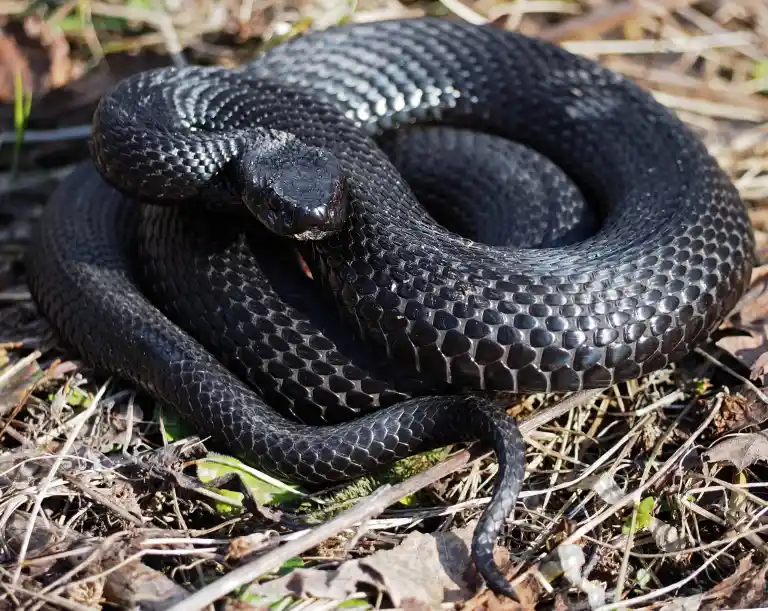
Black snakes in Georgia are usually harmless, most are non-venomous species that help control rodents rather than posing a threat. A few, like the cottonmouth, can appear solid black as adults and are genuinely dangerous, so knowing the difference between a harmless black racer and a venomous lookalike matters more than color alone.
TL;DR: Most black snakes in Georgia, including black racers, rat snakes, kingsnakes, and swamp snakes, are non-venomous and harmless. Cottonmouths can look solid black as adults and are venomous, so check for a thick body, triangular head, and vertical pupils. Bites from harmless species are rare and usually happen when someone tries to handle the snake. To make your property less appealing, reduce rodents, seal gaps, and clear debris, and call a professional if you can’t identify the snake.
Key Takeaways
- Black racers are slender, glossy black snakes that grow up to 6 feet, have white chins and smooth scales, and flee when spotted.
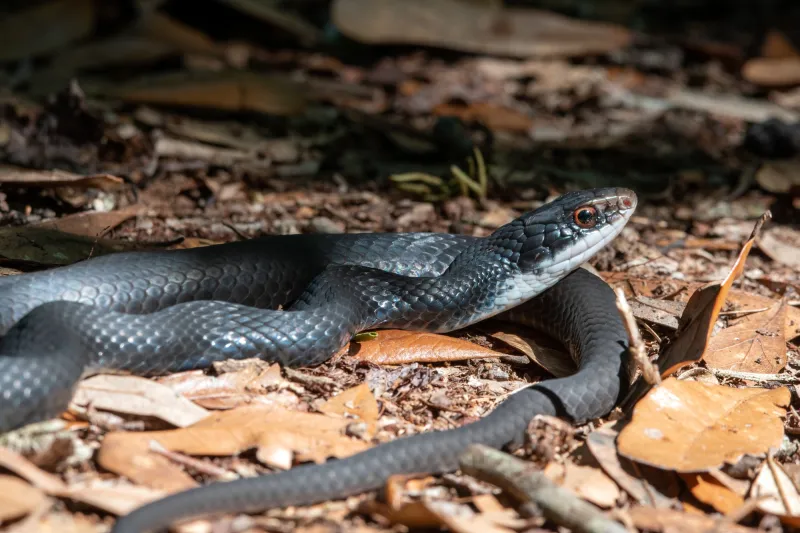
- Black rat snakes (now often called Eastern rat snakes) are non-venomous constrictors that climb and swim and are often found around homes and barns.
- Black kingsnakes eat other snakes, including venomous ones, but will bite if threatened or handled.
- Black swamp snakes have a red belly and live mainly in Florida and coastal Georgia.
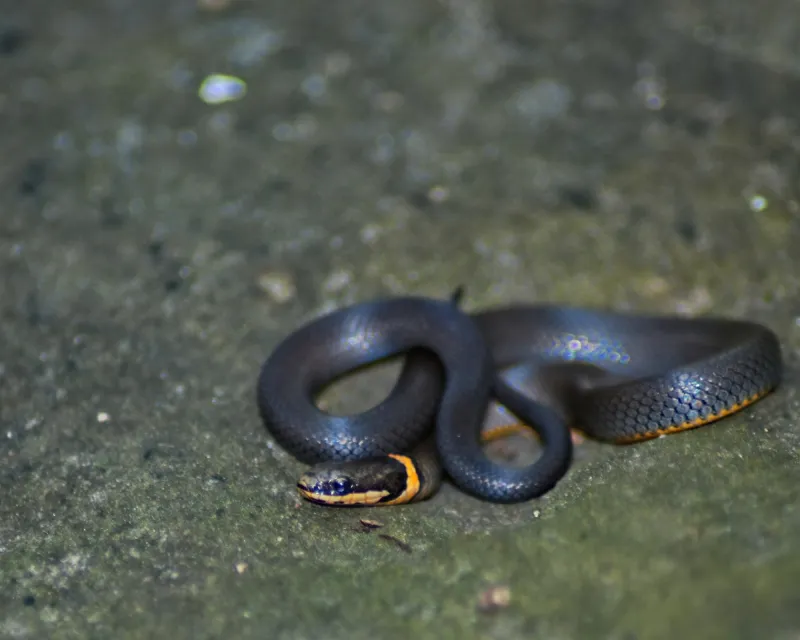
- Ring-necked snakes have a yellow or red neck ring and mild venom that is harmless to humans.
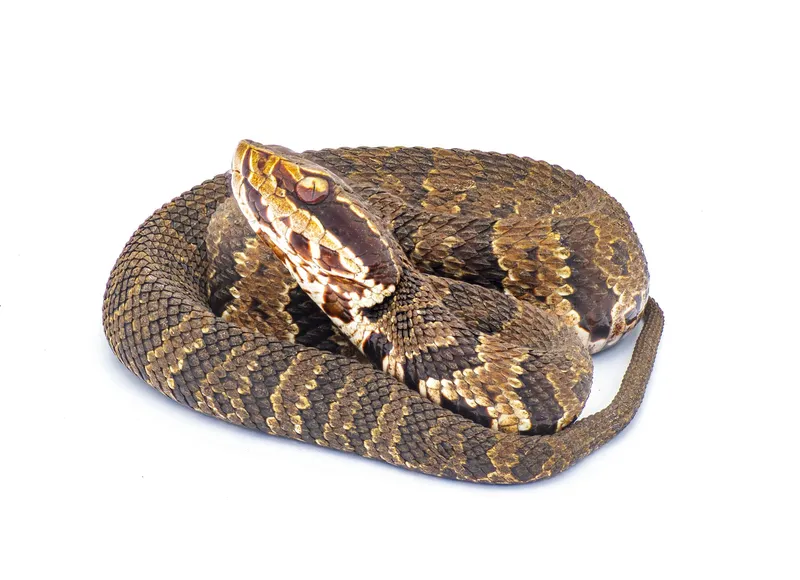
- Cottonmouths have a thick, stout body, a triangular head, vertical pupils, and facial pits. If you can’t tell, don’t approach it and call a professional.
- Snakes are drawn to food and shelter, so trim grass, seal gaps, remove wood piles and debris, and reduce rodents.
Why Black Snakes in Georgia Are So Feared
Snakes carry an ancient symbolism that strikes fear in many, often unjustly. Legends, mythology, and religious stories all contribute to this fear. While black snakes might look menacing, most are harmless and actually play an important role in pest control in Johns Creek. Understanding their habits and identities can reduce unnecessary fear and help you make informed decisions.
Can Black Snakes Actually Bite or Hurt You?
Yes, black snakes can bite, but bites are rare and usually occur when someone tries to pick one up. Most black snake bites are not dangerous and only result in minor wounds. The real concern is misidentifying a venomous snake like a cottonmouth as a harmless one. Knowing the difference is essential.
How Can You Tell If a Snake Is a Black Racer?
Black racers are slender, shiny black snakes found throughout much of the U.S. They can grow up to 6 feet and are fast movers, often fleeing when spotted. They have white chins, smooth scales, and lack the triangular head of venomous snakes. Juveniles have blotchy markings that fade as they mature.
What Does a Black Rat Snake Look Like?
Black rat snakes, now often called Eastern rat snakes, are non-venomous constrictors. They are dull black with a white or yellow underlayer and a light chin. These snakes can climb and swim and are often found around homes and barns. They help control rodents and should be left alone.
How Do You Identify a Black Kingsnake?
Black kingsnakes are thick-bodied snakes with shiny black scales and light yellow or white markings. They are known for eating other snakes, including venomous ones thanks to their resistance to pit viper venom. Kingsnakes are excellent to have around but will bite if threatened or handled.
What Is a Black Swamp Snake and Is It Dangerous?
Black swamp snakes are small, aquatic snakes primarily found in Florida and coastal Georgia. They are glossy black with a striking red belly. These non-venomous snakes are harmless and unlikely to bite, even when handled. They feed on amphibians and insects and help balance wetland ecosystems.
What Are Ring-Necked Snakes and Should You Be Concerned?
Ring-necked snakes are small and reclusive. They appear black from above but have a yellow or red ring around the neck and a colorful underside. While they do have mild venom, it’s harmless to humans. Their bright belly is a defense mechanism, warning predators of their (mostly harmless) toxicity.
How Do You Identify a Cottonmouth or Water Moccasin?
Cottonmouths are venomous snakes found in the southeastern U.S. As adults, they may appear solid black. Key identifiers include:
- Thick, stout body
- Triangular head with a narrow neck
- Vertical pupils and facial pits
- Aggressive defense posture (coiling, mouth open)
If you’re unsure whether a snake is a cottonmouth, do not approach it. Call a professional.
How Do Professionals Get Rid of Snakes Safely?
If a snake enters your home or property, professionals like Nextgen Pest Solutions can safely remove it. We:
- Identify whether the snake is venomous or non-venomous
- Remove the snake using safe equipment
- Provide tips to prevent future entries
- Offer exclusion services and rodent control to reduce snake food sources
In many cases, simply providing the snake with an escape route is enough. Otherwise, we handle it quickly and safely.
What Are the Best Ways to Prevent Snakes Around Your Home?
Snakes are drawn to food and shelter. To prevent them:
- Keep grass and shrubs trimmed
- Seal gaps and holes around your home
- Remove wood piles and debris
- Avoid leaving pet food outside
- Reduce rodent populations
Bird feeders may also attract rodents and, in turn, snakes. Our pest and wildlife control team can inspect and identify problem areas around your home.
When Should You Call Experts for Snake Removal?
If you see a snake and can’t identify it, or if it’s repeatedly entering your property, call Nextgen Pest Solutions. Most black snakes are harmless, but misidentifying a cottonmouth or other venomous species can be dangerous. We offer fast, expert snake removal and long-term prevention strategies.
👉 Schedule your snake inspection now and reclaim your peace of mind.
Nextgen Pest Solutions. Veteran-Owned. Locally Trusted. Expert Snake Removal for Florida & Georgia.
Frequently asked questions
Black Snake FAQ: Georgia Species, Safety, and Snake Removal
Get a free inspection when you book a pest control service.
What is the most common black snake in Georgia?
The southern black racer is one of the most common black snakes in Georgia. The eastern rat snake is also frequently seen. Both are non-venomous and help control rodents and other small animals around homes and businesses.
Are black snakes in Georgia dangerous?
Most black snakes in Georgia are non venomous snakes and are not dangerous to people when left alone. Venomous species like rattlesnakes or cottonmouths have distinct behaviors, but professional identification is always recommended if you are unsure.
Should I remove a black snake from my yard?
If the snake is outdoors and poses no threat, it may leave on its own. If it enters your home or keeps returning, professional snake removal and exclusion services can address the root cause and reduce future encounters.
What to do after finding a snake in the house?
Stay calm and back away slowly to keep a safe distance from the snake.
Which smell do snakes hate?
Snakes dislike strong, pungent, and spicy odors like garlic, peppermint oil, cinnamon, clove oil, and vinegar, because these strong scents can confuse the chemical signals they pick up with their tongues.