 Limited Time: Get $25 Off Your First Service

Milk Snakes: Identification, Behavior & Prevention Tips
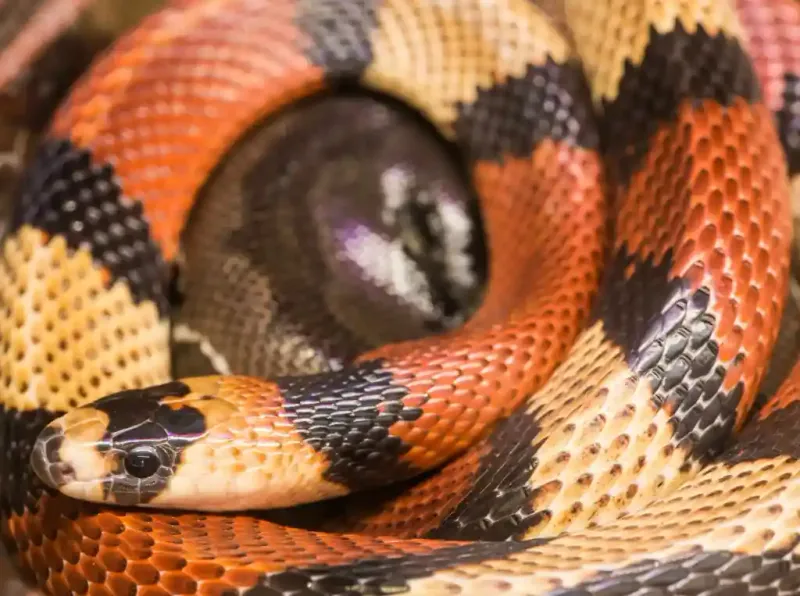
Milk snakes are nonvenomous snakes found throughout parts of North America. They have smooth scales, slender bodies, and distinctive patterns of reddish-brown, black, white, or gray markings. Although milk snakes are sometimes mistaken for venomous species, they are generally harmless to humans and help control rodent populations. Learning their identifying features can help you recognize these snakes and respond safely when encountering one.
TL;DR: Milk snakes generally avoid people, but they may vibrate their tails, release musk, or bite if cornered or handled, and a bite can cause minor puncture wounds. Because some banded milk snakes closely resemble venomous coral snakes and the markings can look like copperheads, never rely on color alone, and seek emergency evaluation if you cannot confidently identify the snake that bit you. If you find one outdoors, keep your distance, move children and pets away, let it leave on its own, and contact a qualified wildlife professional if it enters your home or its identity is uncertain.
Key Takeaways
- Milk snakes have smooth, glossy scales and a slender body with dark-bordered blotches or bands, and eastern milk snakes often show reddish-brown blotches outlined in black and a black-and-white checkerboard belly.
- Milk snakes are nonvenomous, with no venom glands or venom-injecting fangs, and they kill prey by constriction, but they may bite if grabbed, cornered, or threatened.
- Most milk snakes are about 2 to 4 feet long, and eastern milk snakes commonly reach 24 to 36 inches, according to the Rhode Island Department of Environmental Management.
- Color patterns, head shape, and the coral snake color rhyme are not reliable for telling milk snakes from coral snakes or copperheads, so keep your distance from any unfamiliar snake.
- Milk snakes live in woodlands, fields, rocky areas, and around barns and sheds, and they eat mice, voles, and other small animals, so they help control rodents.
What Does a Milk Snake Look Like?
A milk snake typically has a slender body, smooth, glossy scales, and dark-bordered blotches or bands. Its colors vary depending on the species and geographic region, but many have a light-colored background with red, brown, or black markings.
Milk snakes belong to the genus Lampropeltis, which includes kingsnakes. Their physical appearance varies considerably, so identifying one requires more than looking at its colors.
Milk Snake Colors and Markings
Common milk snake characteristics include:
- Body color: Gray, tan, cream, or white, often with reddish-brown blotches or colored bands.
- Pattern: Dark-bordered blotches or bands along the back and sides.
- Head: Usually narrow, with markings that vary by species.
- Scales: Smooth and glossy rather than rough or strongly ridged.
- Belly: Some species have a distinctive black-and-white checkered underside.
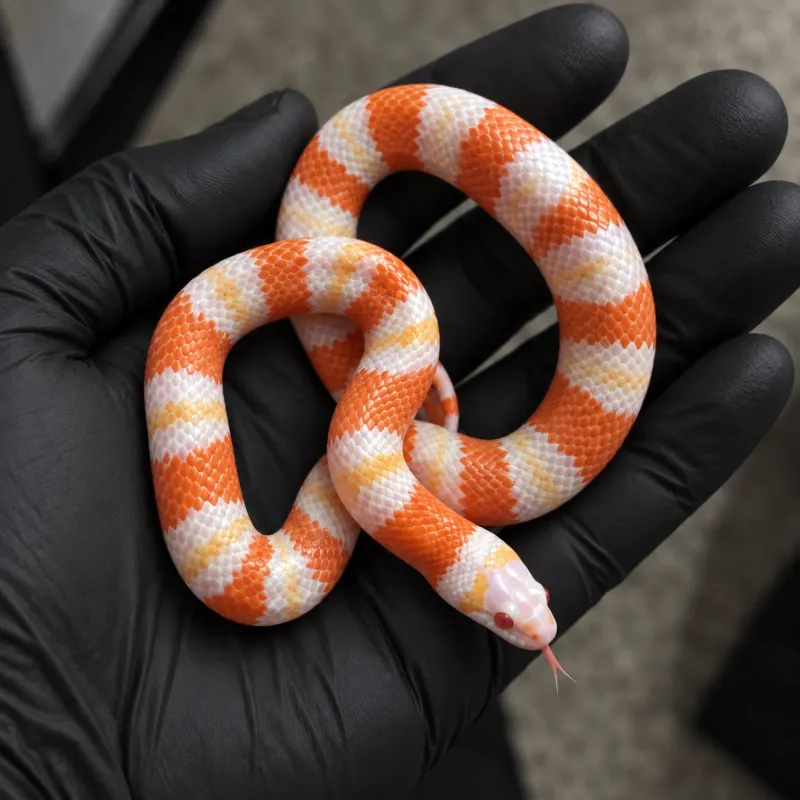
Milk snake colors can resemble those of other snakes. A red and white snake, for example, is not automatically a milk snake. Geographic location, body pattern, and other physical features must also be considered.
Eastern Milk Snake Identification
The eastern milk snake (Lampropeltis triangulum) is among the most recognizable milk snakes in the eastern United States.
Eastern milk snakes commonly have a gray or tan body with reddish-brown blotches outlined in black. A light-colored Y- or V-shaped marking may appear behind the head, while the belly typically displays a black-and-white checkerboard pattern.
Juvenile milk snakes often have brighter red markings that become duller or browner as they mature. However, young snakes retain many of the same basic identification characteristics as adults.
According to the Connecticut Department of Energy and Environmental Protection, these markings, combined with smooth scales and a relatively narrow head, are useful characteristics for identifying eastern milk snakes.
Are Milk Snakes Poisonous or Venomous?
No, milk snakes are neither poisonous nor venomous. They do not have venom glands or specialized venom-injecting fangs. Instead, they subdue prey through constriction, wrapping their bodies around small animals.
Milk snakes generally avoid people and prefer escaping or hiding when disturbed. However, they may bite if grabbed, cornered, or threatened.
A milk snake bite can cause minor puncture wounds, bleeding, or irritation, but it does not inject venom. Clean a confirmed nonvenomous bite with soap and water, and seek medical care for concerning symptoms.
If you cannot confidently identify the snake responsible for a bite, seek emergency medical evaluation rather than assuming it was harmless.
How Big Do Milk Snakes Get?
Adult milk snake size varies depending on the species, but many measure approximately 2 to 4 feet long. Some populations grow longer, while others remain relatively small.
Eastern milk snakes commonly reach 24 to 36 inches, although some individuals exceed 4 feet. Their bodies remain relatively slender even when fully grown.
Young milk snakes are considerably smaller. Hatchlings may measure only several inches long, depending on the species.
The Rhode Island Department of Environmental Management reports an average eastern milksnake length of 24 to 36 inches, with a maximum recorded length of approximately 52 inches.
Milk Snake vs. Coral Snake vs. Copperhead
Milk snakes are sometimes mistaken for venomous coral snakes or copperheads because of similarities in their markings. However, these snakes differ in appearance, distribution, and venom status.
| Feature | Milk Snake | Coral Snake | Copperhead |
|---|---|---|---|
| Venomous | No | Yes | Yes |
| Common markings | Blotches or bands | Red, yellow, and black bands in many U.S. species | Brown or copper-colored crossbands |
| Body shape | Often slender | Usually slender | Generally heavier-bodied |
| Typical behavior | Hides or retreats | Often secretive | May remain still when approached |
Eastern milk snakes commonly have dark-bordered reddish blotches, while eastern copperheads typically display hourglass-shaped crossbands that are narrower across the back.
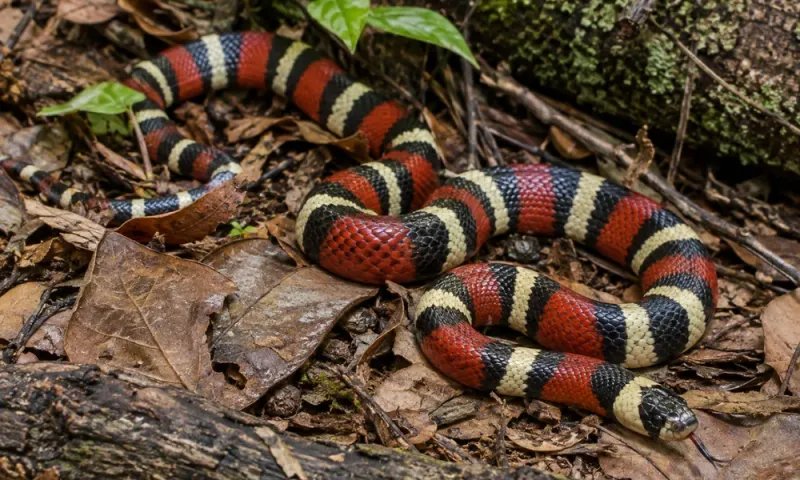
Some banded milk snakes closely resemble coral snakes, making identification more difficult.
Never rely entirely on color patterns, head shape, or the traditional coral snake color rhyme. These features are not reliable for every species or geographic region.
If you encounter an unfamiliar snake, maintain a safe distance and avoid attempting to handle it.
Where Do Milk Snakes Live?
Milk snakes inhabit a variety of environments across North America, including woodlands, fields, grasslands, rocky hillsides, and areas near human structures.
They prefer places offering shelter and access to prey. Common hiding locations include:
- Under rocks, logs, and fallen branches
- Beneath woodpiles and stored materials
- Around stone walls and rocky outcrops
- Inside old barns and other sheltered structures
- Under boards and debris around properties
Eastern milk snakes occur throughout portions of the eastern United States, including wooded and agricultural landscapes.
They may also appear around houses, sheds, or foundations where rodents are present.
Milk snakes are often secretive and spend much of their time under cover. Some are primarily active at night, although they may emerge during daylight when conditions are suitable.
Their presence around a property does not necessarily indicate an infestation, but available shelter and prey can make an area attractive to snakes.
For related information, read about where different Florida snakes go during winter.
What Do Milk Snakes Eat?
Milk snakes are carnivorous predators that primarily eat small vertebrates. Their diet commonly includes mice, voles, shrews, lizards, and other snakes.
Larger milk snakes may consume small birds or eggs, depending on prey availability.
Milk snakes kill many of their prey through constriction before swallowing them whole. Their flexible jaws allow them to consume animals wider than their heads.
Because rodents are an important part of their diet, milk snakes contribute to natural population control around fields, barns, and other habitats.
This makes them beneficial wildlife, particularly in areas where mice and other small mammals are common.
What to Do if You Find a Milk Snake
Finding a milk snake in your yard does not automatically mean it needs to be removed. These nonvenomous snakes help control rodents and generally avoid human contact.
If you encounter a snake around your home:
- Keep your distance. Do not approach or attempt to pick up an unidentified snake.
- Move children and pets away. Give the snake enough space to retreat.
- Allow it to leave naturally. An outdoor snake that poses no immediate threat can often be left undisturbed.
- Reduce hiding places. Maintain overgrown vegetation and remove unnecessary piles of debris.
- Address rodent activity. Rodents can attract snakes searching for food.
- Seek professional assistance when necessary. Contact a qualified wildlife professional if a snake enters your home or its identity remains uncertain.
Avoid using glue traps, attempting to capture a snake with household tools, or handling it without appropriate training.
Preventing unnecessary contact is usually the safest approach for both homeowners and wildlife.
Need Help Identifying a Snake?
If you find an unidentified snake inside your home or repeatedly encounter snakes around your property, professional assistance can help you determine the appropriate next steps.
Nextgen Pest Solutions’ snake removal services can help homeowners address wildlife concerns, identify potential entry points, and evaluate prevention options in supported service areas.
Frequently Asked Questions
Are milk snakes aggressive?
Milk snakes are not typically aggressive toward people. They usually retreat or hide when approached. However, they may vibrate their tails, release musk, or bite defensively if cornered or handled.
Do milk snakes have teeth?
Yes. Milk snakes have small, backward-pointing teeth that help them grip prey. They do not have venom-injecting fangs. Their bites can break the skin, so handling them unnecessarily is not recommended.
How long do milk snakes live?
Milk snakes can live for more than 20 years in captivity with appropriate care. Their lifespan in the wild is generally shorter and varies with predation, habitat conditions, and other environmental factors.
Why are they called milk snakes?
The name comes from an old belief that these snakes entered barns to drink milk from cows. This is a myth. Milk snakes are attracted to barns primarily because they provide shelter and access to rodents.
Frequently asked questions
Milk Snake FAQ: Identification, Behavior, and Safety
Get a free inspection when you book a pest control service.
How venomous are milk snakes?
Milk snakes are completely non-venomous and harmless to humans.
What happens if a milk snake bites you?
Nothing serious happens if a milk snake bites you because they are not venomous. However, they may cause tiny scratches, minor pinpricks, but no real danger.
Can milk snakes be friendly?
Milk snakes can become very docile and handleable over time, though they do not experience affection like mammals do.
Which snake bite has no antivenom?
Many venomous snake species, such as the African bush viper and certain rear-fanged or localized species like the Malayan blue coral snake, do not have a dedicated or widely available commercial antivenom.
Do milk snakes bite hurt?
Milk snake bites do not hurt much and rarely break the skin.