Skip to content
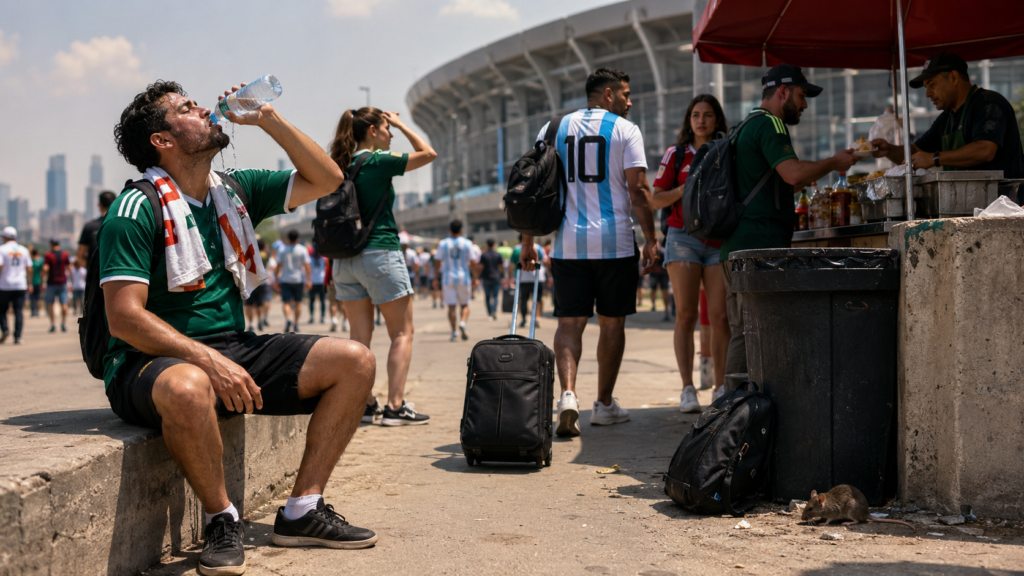
When global soccer fans land in Atlanta this summer to cheer on their favorite teams, doctors and public health officials will be watching closely. Most fans aren’t thinking about health risks when they book their tickets. They probably should be.
Here’s what’s actually out there, and how to protect yourself.
The Heat Is Not Just Part of the Game
Researchers at Imperial College London flagged Dallas, Houston, and Atlanta as the U.S. host cities most at risk for extreme heat impact. The stadiums are air-conditioned – the hours spent outside in fan zones, transit queues, and parking lots are not.
Heat exhaustion and heat stroke are real dangers. Watch for nausea, dizziness, rapid heartbeat, and confusion.
- Stay hydrated with non-alcoholic fluids before and during the event
- Limit outdoor exposure between 11 a.m. and 3 p.m.
- Locate the nearest cooling station before you arrive
Infectious Diseases: A Crowd of Millions Brings Real Risk
When fans from dozens of countries converge on the same cities, infectious disease spread becomes a genuine concern. Public Health Ontario’s Hazard Identification and Risk Assessment rated measles and food and waterborne diseases as moderate-risk threats for the tournament.
Measles is the headline concern. Cases have been rising in Mexico, particularly around Guadalajara, one of the host cities. A fan can be exposed in one city and travel to another before symptoms even appear.
Hantavirus is a lesser-known but serious risk, especially for fans staying in budget accommodations or attending outdoor events. It spreads through contact with infected rodent droppings, urine, or nesting materials. Avoid areas with visible signs of rodent activity, and never sweep or vacuum droppings without proper protection.
Before you travel, make sure your routine vaccinations are current. The Government of Canada’s travel health advisory recommends a travel health clinic visit at least six weeks out.
Food Safety: The Risk No One Talks About Until It’s Too Late
Gastrointestinal illness is one of the most common health events at major international tournaments. The Fulton County Board of Health is deploying food safety inspectors to vendor locations daily – which tells you something about the scale of the risk.
- Stick to vendors with visible health inspection certificates
- Avoid raw or undercooked foods from street vendors
- Carry hand sanitizer with at least 60% alcohol
- In Mexico, drink bottled water only, including for brushing teeth
The Health Risk Fans Forget: Bed Bugs
Food poisoning and infectious disease get the headlines, but there’s one World Cup health risk almost no one is talking about: bed bugs. With millions of travelers cycling through hotels, Airbnbs, and hostels across 16 host cities, conditions for a surge are near-perfect. And unlike heat stroke or traveler’s diarrhea, this one follows you home.
Bed bugs hitch rides on luggage and clothing, spreading from room to room as fans move with their teams. A little preparation before you check in can save a serious headache when you get back.
Before you pack, read these:
- 2026 FIFA World Cup Bed Bug Risk for Travelers — what you’re up against and how to check your room
- World Cup Hospitality Bed Bug Guide — essential if you’re managing a hotel, rental, or event property
- World Cup Pest Inspection Checklist — a step-by-step guide to inspecting any accommodation
Know the risks, check your room, and don’t bring any uninvited guests home after the final whistle. If you’re returning through Florida or Georgia and suspect you’ve picked something up, Nextgen Pest Solutions offers inspections for exactly this situation.