
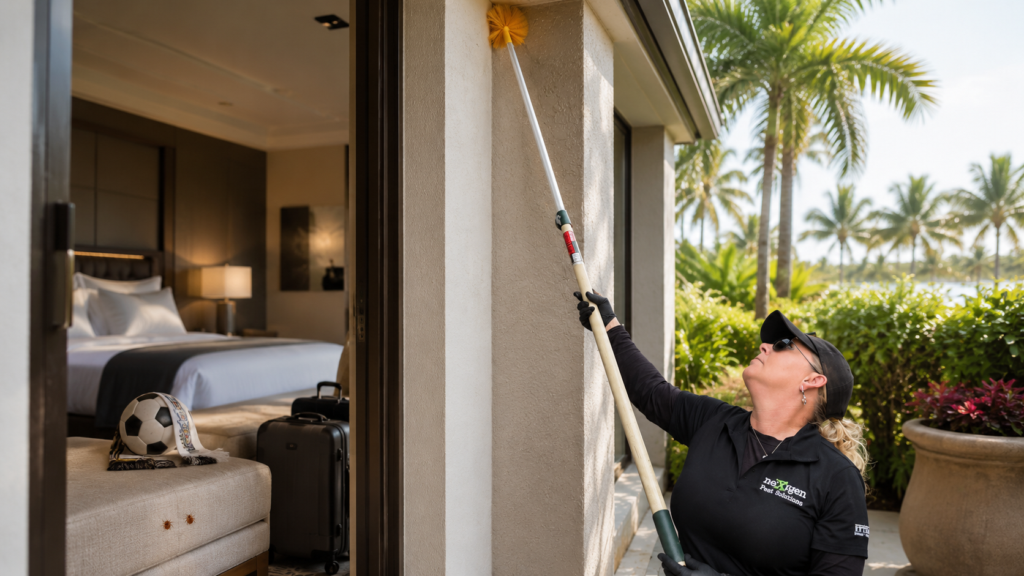
TL;DR: The 2026 FIFA World Cup (June 11 – July 19) will push millions of international fans through U.S. hotels and short-term rentals simultaneously. For operators in Florida and Georgia, that means faster turnover, compressed housekeeping windows, and elevated bed bug exposure. A pre-event inspection and staff training protocol costs a fraction of one verified complaint during peak occupancy. Call (470) 375-0496 to schedule a commercial inspection, or request a free quote online.
The 2026 FIFA World Cup brings 48 teams, 104 matches, and millions of international fans into the U.S. hospitality market across 16 host cities – all at once. For hotels, vacation rentals, and short-term rental hosts, it is a significant revenue opportunity and one of the most concentrated bed bug treatment risk windows the industry has seen in years.
| Traveling to the World Cup? See bed bug travelers guide for guest-side bed bug prevention tips. |
The transmission math is simple: more guests, faster room turnover, and luggage moving constantly between cities means more opportunities for bed bugs to transfer between properties undetected. According to AirDNA’s March 2026 short-term rental outlook, vacation rental bookings in Miami are projected to increase 58.4% year-over-year for June and July 2026, with certain match days showing demand spikes as high as 244%. The American Hotel and Lodging Association has documented a 30% increase in bed bug reports at hospitality properties during major events – at properties that were unprepared.
The operators who avoid an incident are not the ones who react fastest after a complaint. They are the ones who act before the first guest checks in.
Key risk factors heading into June:
- Bed bugs spread through luggage, clothing, and soft goods – not poor hygiene
- Fast room turnover compresses the detection window between guest stays
- A single infested room can seed problems across multiple floors if not contained
- Florida and Georgia both rank among the highest-exposure markets in the country heading into the tournament
How Bed Bugs Spread Through High-Turnover Properties
Bed bugs do not discriminate by hotel tier or cleanliness rating. What determines whether a low-level problem becomes a full infestation is how quickly it is identified and contained.
During a major event, the transmission sequence follows a predictable pattern:
- Introduction: A guest checks in carrying bed bugs in luggage or clothing from a previous property.
- Establishment: Bed bugs migrate into mattress seams, headboards, upholstered furniture, and wall voids during the stay.
- Spread: The guest checks out. Housekeeping, under time pressure, misses early signs. The next guest checks in.
- Escalation: Within days or weeks, multiple rooms on the same floor show activity – and the problem is now significantly more expensive to resolve.
The critical window is between guest stays. Staff training on early detection can improve catch rates by 80 to 90 percent, that improvement only materializes if training happens before occupancy spikes, not after.
The Real Cost of One Complaint During Peak Occupancy
A single verified bed bug complaint during the World Cup window does not just cost a refund. It triggers financial and reputational consequences that compound quickly when every room night carries maximum revenue value.
| Scenario | Typical Cost Range |
| Pre-event professional inspection | $150 – $300 per unit |
| Staff training and protocol setup | One-time investment, minimal per-room cost |
| Single-room treatment (early detection) | $300 – $800 |
| Multi-room treatment (delayed response) | $1,000 – $2,500+ |
| Revenue loss from room shutdown during peak | $200 – $600+ per night per room |
| Reputational damage from public complaints | Booking impact can last months |
The National Pest Management Association puts professional bed bug treatment for a standard property in the $1,000 to $2,500 range for a contained infestation. Multi-room problems cost significantly more, and room shutdowns eliminate revenue at the moment demand is highest.
The reputational exposure is harder to price but easier to prevent. A negative review mentioning bed bugs can suppress future bookings for weeks. Proactive inspection is the only way to take that risk off the table entirely.
What a Pre-Event Bed Bug Protocol Looks Like
Three components, working together: professional inspection, staff training, and a documented escalation path. None of it is complicated – it just needs to be in place before guest volume spikes.
Professional Inspection First
A licensed pest management professional should inspect the property before any internal protocol is meaningful. This establishes a verified baseline – confirming which rooms are clear, flagging existing activity, and identifying structural vulnerabilities like wall voids, headboard mounting points, and furniture with high hiding-spot density. For properties in Miami and Atlanta, where background bed bug activity is already elevated, this step is not optional.
Staff Training and Escalation
Housekeeping teams are the first line of detection between guest stays. Key training elements:
- What to look for: shed skins, dark fecal spotting on mattress seams, live bugs in headboard gaps, faint musty odor
- Where to check: mattress seams and piping, box spring corners, headboard mounting points, upholstered furniture seams, nightstand joints, baseboards near the sleeping area
- When signs are found: isolate the room immediately, document with photos, escalate to management before the next guest is assigned
Every suspected sighting should be logged with a date, room number, and photographic evidence. This protects the property legally and creates a documented record of proactive management – which matters if a guest complaint reaches a review platform or dispute process.
Why Florida and Georgia Operators Face Elevated Risk
Not every host market carries the same baseline risk. Florida and Georgia operators are working in two of the higher-exposure environments heading into the tournament.
| Market | Key Risk Factor |
| Miami, FL | Top 5 state for bed bug demand nationally; 58.4% rental booking surge projected for June-July 2026 |
| Atlanta, GA | Major transit hub; high volume of guests cycling through multiple southern host cities |
Miami is the clearest case. Florida consistently ranks among the top five states for bed bug treatment demand, and the projected booking surge layers significant additional exposure on top of that baseline. Atlanta’s risk profile is different but real: as a major regional transit hub with direct connections to most Florida markets, hotels and rentals near the airport and downtown convention corridor are particularly exposed to guests arriving from multiple host cities in quick succession.
For commercial properties across both states, the window to complete a pre-event inspection and implement staff protocols is narrowing. The tournament begins June 11. Guest volume will start climbing well before that.
Book a Commercial Inspection Before Guest Volume Spikes
Nextgen Pest Solutions provides commercial bed bug inspections and treatment for hotels, vacation rentals, and property managers across Florida and Georgia. Licensed technicians establish a verified baseline, identify vulnerabilities before they become complaints, and design a monitoring protocol your housekeeping team can implement immediately.
- Urgent pre-event inspections: Call (470) 375-0496 directly to discuss scheduling and what to expect from a full property assessment.
- Non-emergency planning: Request a free quote online and note that you are preparing for World Cup occupancy.
The cost of a proactive inspection is a fraction of the cost of a complaint, a treatment, and a room shutdown during your highest-revenue weeks of the year. The operators who come through the tournament without an incident will be the ones who acted before June.
Frequently Asked Questions: Bed Bugs and Hospitality Operations
How often should a hotel inspect for bed bugs?
High-occupancy properties should conduct visual inspections between every guest stay, with a full professional inspection at least quarterly. During peak event windows like the World Cup, monthly professional inspections are a reasonable standard.
Does commercial property insurance cover bed bug treatment?
In most cases, no. Standard commercial policies classify pest infestations as a maintenance issue, making treatment costs entirely the operator’s responsibility.
Can a vacation rental host be held liable for a guest’s bed bug infestation?
Yes, potentially. If a guest can demonstrate they acquired bed bugs at your property, liability exposure is real. Documented inspection records and a proactive treatment history are the strongest defense available.
How long does a professional bed bug treatment take?
A single room typically takes two to four hours, with a follow-up visit within two weeks. Multi-room infestations require longer timelines and may involve temporary room closures.
What is the fastest way to get a commercial inspection in Florida or Georgia?
Call Nextgen Pest Solutions at (470) 375-0496. Our team serves hotels, vacation rentals, and commercial properties across Florida and Georgia and can schedule pre-event assessments on an expedited basis.