
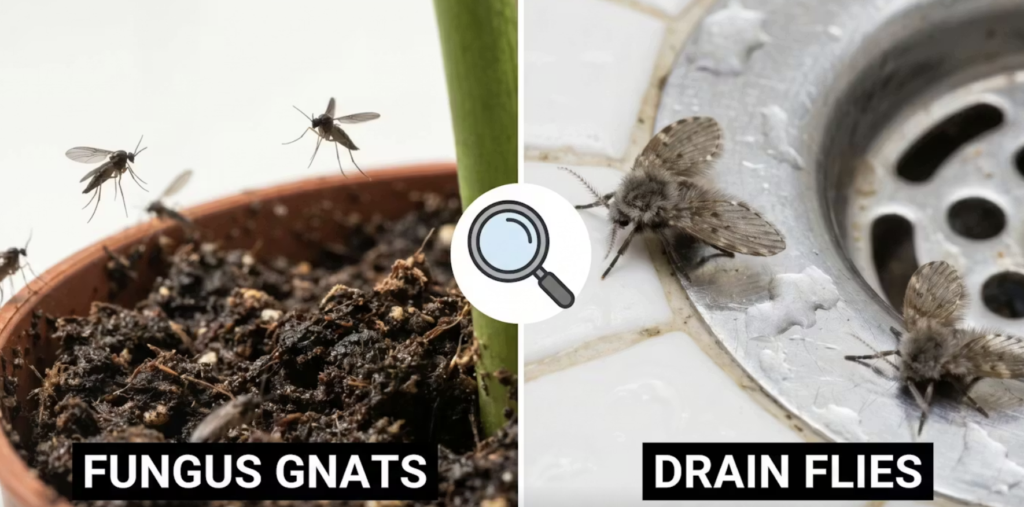
Tiny flying insects in your bathroom can frustrate Georgia homeowners and tenants. People often think they are fruit flies, but they are fungus gnats or drain flies. They may look similar, but they come from different breeding sites.
Fungus gnats develop in moist soil from houseplants and potted plants. Drain flies breed in plumbing where organic matter builds up. Both pests are common in bathrooms because moisture supports breeding year-round.
If you see small flying insects near sinks, showers, or indoor plants, identify the source quickly. Correct identification helps you choose the right pest control method and stop the infestation from spreading.
Key Takeaways
- Drain flies and fungus gnats are common in Georgia bathrooms.
- Drain flies have a moth-like appearance and breed in biofilm and buildup inside drains.
- Fungus gnats look mosquito-like and grow in moist soil around houseplants.
- Finding breeding sites is the key to stopping the infestation.
- Professional pest control can find hidden sources and reduce fly activity over time.
Fungus Gnats vs Drain Flies: Key Differences
Fungus gnats and drain flies are both tiny flying insects, but their appearance and behavior help you tell them apart.
Appearance
Drain flies have a fuzzy, moth-like appearance and are also called moth flies. Their wings are wide and slightly heart-shaped, and their bodies look hairy up close.
Fungus gnats look like small mosquitoes. They have a slender body, long legs, and visible antennae. They may look like mosquitoes, but they do not bite.
Flight Pattern
Flight pattern is a key difference. Drain flies flutter slowly along walls and remain near breeding sites such as showers and floor drains.
Fungus gnats move more actively. They hover around indoor plants, potting soil, and moist soil, and fly upward when disturbed.
Breeding Areas
Drain flies breed in organic material inside drains and pipes. Biofilm, sludge, and organic matter build up in pipes, especially in sink drains, floor drains, and garbage disposal lines, creating a food source for larvae.
Fungus gnats develop in plant soil. Overwatered houseplants and potted plants create moist soil where gnat larvae feed on organic material and can damage plant roots.
Bathroom Sources That Point to Each Pest
Where you see these insects helps identify the source of the infestation.
Drains and Plumbing Areas
Drain flies gather near drains, including shower drains, sink drain openings, and floor drains. Adult flies lay eggs in the biofilm lining pipes, where larvae grow and complete their life cycle.
If flies are resting on walls near drains or consistently appearing around plumbing areas, drain flies are likely the cause.
Houseplants in Bathrooms
Bathrooms with indoor plants can attract fungus gnats, especially when frequent waterings leave the soil overwatered. Moist soil lets gnat larvae grow beneath the surface and feed on organic matter.
Adult flies typically hover around houseplants or plant soil, making the source easier to trace.
Standing Water and Organic Buildup
Both pests need moisture, but their breeding sites differ. Drain flies rely on stagnant water and organic buildup in plumbing, while fungus gnats depend on moist soil in indoor plants.
Homes with high humidity may experience these pest problems year-round if drains are not kept clean or soil remains consistently wet.
Quick Checks to Confirm the ID
Simple checks can help homeowners confirm if they have fungus gnats or drain flies.
Inspect the Drains
Look inside bathroom drains with a flashlight. Sludge, biofilm, or buildup inside the pipe can point to drain flies.
Boiling water may reduce activity, but it does not remove the infestation because breeding sites remain inside the pipe. Use caution when handling hot water.
Check Indoor Plants
If tiny flying insects gather around houseplants or potted plants, fungus gnats are likely the cause. Allowing the soil to dry between waterings can help reduce gnat activity.
DIY options like apple cider vinegar traps may catch adult flies, but they only address a small portion of the population.
Monitor the Flight Activity
A flight pattern can help confirm the pest. Drain flies stay close to drains and move slowly, while fungus gnats hover around plant soil and move more actively.
Both pests reproduce quickly; even a small gnat infestation can grow if you do not treat breeding sites.
Schedule a Georgia Bathroom Inspection for Gnats/Drain Flies
If tiny flying insects continue appearing in your bathroom, you may need professional pest control to locate hidden breeding sites. Nextgen Pest Solutions provides inspections that identify whether the issue involves drain flies, fungus gnats, fruit flies, or other flying insects.
Our technicians remove the source rather than just treating adult flies. We check drains, floor drains, plumbing lines, and indoor plants for organic matter that supports larvae. This approach is part of our pest management process and helps reduce recurring pest problems.
Contact us today to schedule a bathroom inspection and address fungus gnats or drain flies at the source.
FAQs
How can I tell if I have drain flies or fruit flies?
Drain flies usually appear near sinks, showers, or floor drains and have a fuzzy, moth-like appearance. Fruit flies have smooth bodies and gather near food sources like fruit, trash, or garbage disposal areas.
What causes fungus gnats in bathrooms?
Fungus gnats develop in moist soil from houseplants or potted plants. Overwatered plant soil creates an ideal environment for gnat larvae to develop and complete their life cycle.
Will DIY methods remove drain flies completely?
DIY methods like boiling water, drain cleaners, or apple cider vinegar traps may reduce adult fly numbers temporarily when used as directed. However, they rarely remove the organic buildup where larvae develop. Professional pest control is often needed to help address the breeding source.