 Limited Time: Get $25 Off Your First Service

Silverfish Infestation? Here’s How to Get Rid of Them Fast
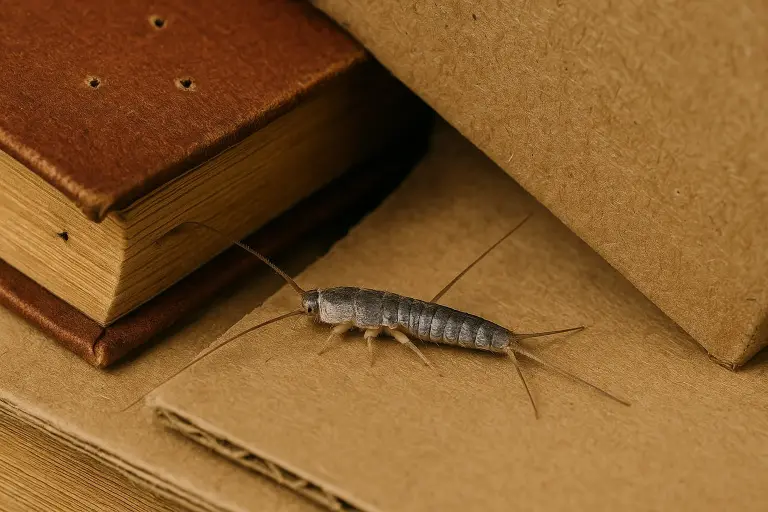
To get rid of silverfish quickly and effectively, you must approach the infestation from several angles. You’ll want to learn how to identify silverfish, how to eliminate them, and how professional pest extermination services in Sandy Springs actually work.
TL;DR: Silverfish are wingless, silvery-gray insects about ½ to ¾ inch long that hide in damp, dark places such as bathrooms, basements, kitchens, and closets, and they feed on paper, cardboard, starches, and crumbs. Killing the ones you see doesn’t end an infestation, so fix leaks, run exhaust fans or a dehumidifier, store dry food and papers in sealed containers, vacuum cracks, and seal gaps. Sticky traps and insecticides labeled for silverfish help, and you should follow the label. Call a professional if silverfish keep appearing, show up in several rooms, or keep damaging books and wallpaper.
Key Takeaways:
- Reduce moisture by fixing leaks, improving ventilation, and using a dehumidifier.
- Remove food sources such as cardboard, paper clutter, crumbs, and improperly stored dry foods.
- Vacuum cracks, baseboards, and other hiding places to remove silverfish and debris.
- Use silverfish traps or insecticides labeled for silverfish when necessary.
- Seek professional pest control if silverfish keep appearing despite preventive measures.
- Silverfish are most active at night, have two long antennae and three tail-like appendages, and can’t fly.
- They don’t bite or spread disease, but they damage books, wallpaper, photographs, and some fabrics.
- Vinegar, essential oils, and cedar have limited evidence, and diatomaceous earth must be a labeled pest-control product.
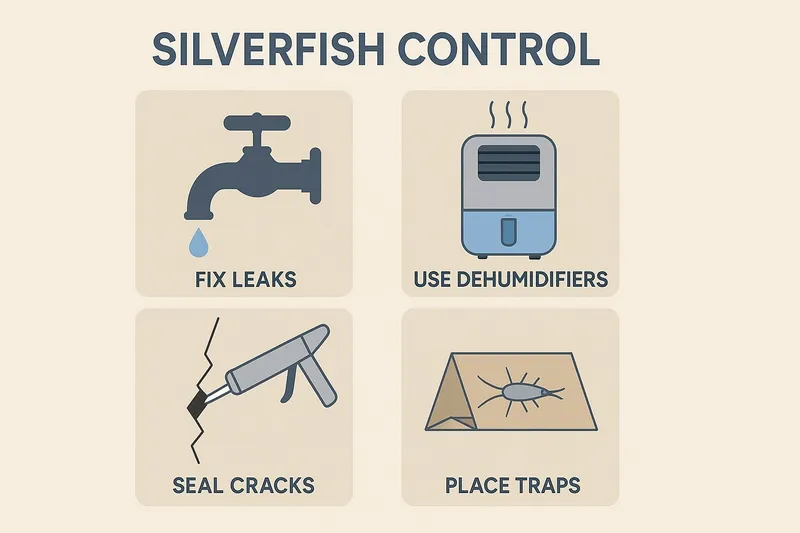
Diagram showing silverfish control steps: fix leaks, reduce humidity, seal cracks, and set traps.
How to Get Rid of Silverfish in Your House
The best way to get rid of silverfish is to combine moisture control, cleaning, exclusion, and targeted treatment. Silverfish can hide in narrow cracks and remain active in undisturbed areas, so killing the insects you see may not eliminate the entire infestation.
Follow these steps to control silverfish in your home.
1. Reduce Moisture and Humidity
Silverfish prefer humid environments, making bathrooms, basements, kitchens, and laundry rooms common hiding places.
To make your home less suitable for silverfish:
- Repair leaking pipes, faucets, and other plumbing problems.
- Run bathroom exhaust fans during showers and afterward to remove excess moisture.
- Use a dehumidifier in damp rooms, aiming for indoor relative humidity below 50% where practical.
- Improve airflow in closets, storage rooms, and poorly ventilated spaces.
- Address condensation and water intrusion around windows, walls, and foundations.
Reducing humidity makes indoor conditions less favorable for silverfish and helps prevent continued activity.
2. Remove Food Sources and Clutter
Silverfish feed on materials containing starches, sugars, and certain proteins. They may damage books, wallpaper, cardboard, photographs, and some fabrics.
You can reduce their food sources by:
- Storing flour, cereal, and other dry foods in airtight containers.
- Replacing cardboard storage boxes with sealed plastic containers.
- Removing unnecessary stacks of newspapers, magazines, and paper.
- Cleaning crumbs and food residue from cabinets and pantry shelves.
- Regularly vacuuming dusty storage areas and underneath furniture.
Removing clutter also eliminates sheltered spaces where silverfish can remain undisturbed.
3. Vacuum and Treat Silverfish Hiding Places
Silverfish are primarily nocturnal and often hide during the day. Cleaning the places where they shelter can help reduce their numbers.
Focus on:
- Cracks along baseboards and flooring.
- Spaces behind cabinets and appliances.
- Bathroom and kitchen storage areas.
- Closets containing paper, books, or stored fabrics.
- Gaps around plumbing penetrations.
Use a vacuum with a crevice attachment to remove visible insects, dust, and debris. Empty the vacuum promptly into a sealed bag and dispose of it outside.
After cleaning, seal accessible cracks and gaps with an appropriate caulk or sealant to reduce hiding places and potential entry points.
4. Use Silverfish Traps or Labeled Insecticides
Sticky traps can help capture silverfish and identify areas where they are most active. Place them along walls, behind appliances, or near suspected hiding places.
For more persistent activity, use an insecticide specifically labeled for silverfish and the intended indoor application area.
Some products are designed for crack-and-crevice treatment, while others may be intended for different locations or application methods. Always follow the product label, including restrictions involving children, pets, food preparation surfaces, and occupied spaces.
Avoid spraying electrical outlets or applying pesticide dusts in exposed areas where people or pets could contact them.
Traps and insecticides can help control active silverfish, but moisture reduction and sanitation remain important for preventing another infestation.
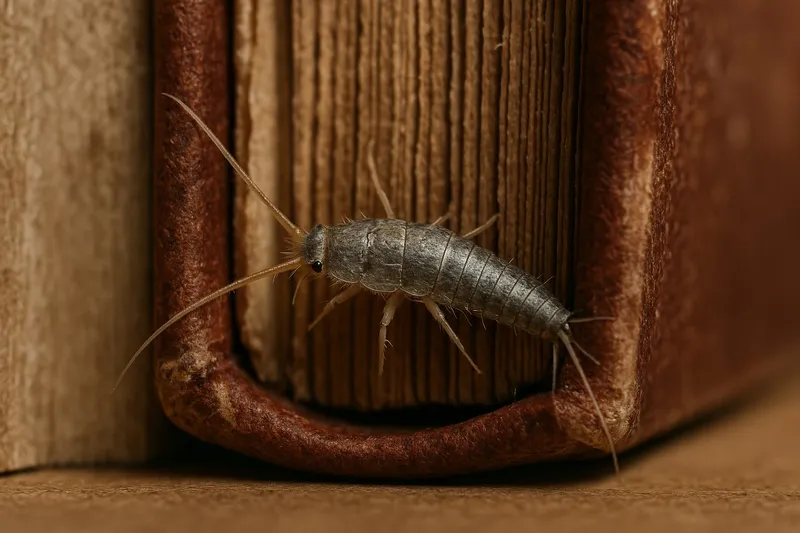
A silverfish hiding in the spine of an old book in a humid home.
What Kills Silverfish?
Insecticides labeled for silverfish, certain insecticidal dusts, and direct physical removal can kill silverfish. However, the effectiveness of each method depends on the product, application, and whether the insects are reached in their hiding places.
Here are the main silverfish control options:
| Treatment | How it works | Best use |
|---|---|---|
| Labeled insecticide sprays | Kill silverfish through contact or residual exposure, depending on the product | Targeted treatment of permitted surfaces |
| Insecticidal dusts | Control insects that contact treated areas | Approved cracks and inaccessible voids |
| Sticky traps | Capture individual silverfish | Monitoring and limited removal |
| Vacuuming | Physically removes visible insects and debris | Immediate removal and routine cleaning |
| Moisture control | Makes the environment less favorable | Long-term prevention |
Some homeowners try vinegar, essential oils, cedar, or other natural silverfish repellents. However, evidence that these remedies reliably eliminate established infestations is limited.
Likewise, diatomaceous earth may affect insects that contact it, but it must be an appropriate pest-control product used according to its label. Avoid inhaling dust or applying it indiscriminately.
For safe pesticide use, follow the EPA’s pest control guidance.
Why Do You Have Silverfish in Your House?
Silverfish enter or remain in homes because they find suitable moisture, food, and shelter. A silverfish infestation does not necessarily mean your home is dirty, but damp conditions and undisturbed storage areas can help these insects survive.
Common conditions that support silverfish activity include:
- High humidity: Damp rooms provide favorable conditions for silverfish.
- Water leaks: Moisture around plumbing and fixtures can support hidden activity.
- Paper and cardboard: Books, boxes, and stored documents may provide food and shelter.
- Cracks and gaps: Narrow openings offer protected hiding places.
- Undisturbed storage: Closets, basements, and crowded shelves allow silverfish to remain concealed.
Silverfish in your house are often discovered when you move stored boxes, turn on a bathroom light at night, or clean beneath furniture.
Finding one silverfish does not automatically mean you have a serious infestation. However, repeated sightings, damaged materials, or activity across several rooms may indicate an established population.
If you regularly find these insects around showers, sinks, or drains, read our guide to silverfish in the bathroom for more location-specific advice.
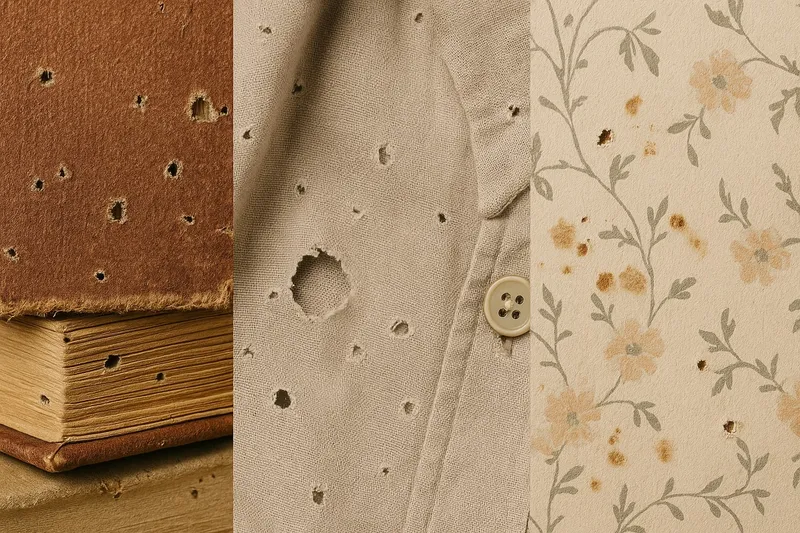
Damage from silverfish shown on paper, fabric, and wallpaper.
What Do Silverfish Look Like?
Silverfish are wingless insects with flattened, elongated bodies covered in silvery-gray scales. They typically measure about ½ to ¾ inch long, excluding their antennae and tail appendages.
You can identify a silverfish bug by these characteristics:
- A tapered, carrot-shaped body.
- Silvery-gray scales that give it a metallic appearance.
- Two long antennae extending from its head.
- Three slender, tail-like appendages at the rear.
- Quick, wriggling movements when disturbed.
Silverfish bugs do not have wings and cannot fly. They are often confused with firebrats, which have similar body shapes but generally prefer warmer environments.
Correct identification helps you choose the appropriate treatment rather than using products intended for unrelated household pests.
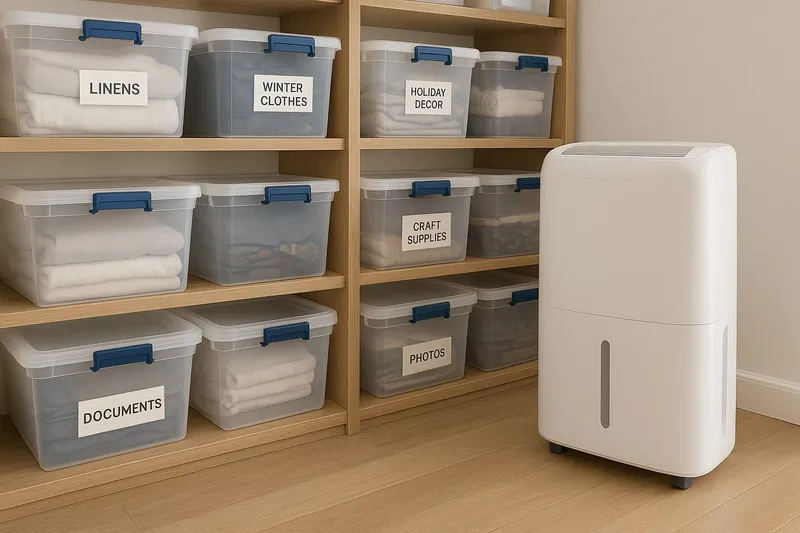
Neat storage room with sealed bins and a dehumidifier for pest prevention.
How to Prevent Silverfish From Coming Back
Silverfish prevention focuses on keeping your home dry, reducing accessible food materials, and eliminating sheltered spaces.
After treating an infestation, maintain these habits:
- Monitor humidity. Use a hygrometer to identify damp rooms and maintain appropriate indoor moisture levels.
- Inspect plumbing regularly. Repair leaks before they create persistent moisture problems.
- Seal openings. Close accessible gaps around baseboards, pipes, and wall penetrations.
- Protect stored belongings. Keep important documents, books, and seasonal fabrics in suitable sealed containers.
- Clean storage spaces. Vacuum closets, shelves, and other areas where dust and debris accumulate.
- Check for renewed activity. Use monitoring traps in previously affected areas to identify recurring silverfish.
If you want to keep silverfish away, prioritize correcting moisture problems instead of relying solely on repellents or repeated spraying.
These preventive measures are especially important in humid climates, where indoor moisture can remain elevated throughout the year.
When Should You Call Pest Control for Silverfish?
Occasional silverfish sightings may be manageable with cleaning, moisture reduction, and targeted treatment. However, professional silverfish control may be necessary when the problem persists.
Consider contacting a pest control professional if:
- Silverfish continue appearing after repeated control efforts.
- You find insects in several rooms.
- Books, wallpaper, or stored belongings show ongoing damage.
- You suspect activity inside walls or other inaccessible areas.
Professional pest control can help identify hidden activity, evaluate contributing conditions, and determine appropriate treatment options.
If silverfish continue returning, contact Nextgen Pest Solutions to discuss pest control services available in your area.
Frequently asked questions
Silverfish FAQ: Infestations, Prevention, and Control
Get a free inspection when you book a pest control service.
Does seeing one silverfish mean I have an infestation?
Usually. Silverfish are nocturnal and avoid light, so the ones you see are a small fraction of the population. A single sighting in a bathroom at night is worth investigating; repeated sightings, or finding damage and droppings, confirm it.
How long does it take to get rid of silverfish?
DIY approaches take weeks of consistent effort, because the eggs hatch on their own schedule and moisture problems take time to correct. Professional treatment typically resolves most activity within days, though the moisture work behind it is still what keeps them from returning.
Can silverfish cause allergic reactions?
Yes. Some people can show allergic reactions from silverfish if they come into contact with droppings and shed skins. For some, allergies show up as respiratory irritation.
How fast do silverfish reproduce and how long do they live?
Silverfish can reproduce very quickly with females laying dozens of eggs at a time. Infestations can grow at a steady pace for a long time, because silverfish can live up to eight years in optimal conditions
Are there natural deterrents that work?
Yes, many natural products can be used to deter silverfish. While they don’t do much to get rid of them, they can keep these insects out of specific places. Salt can be used to dry areas out, and scents like cedar, lavender, peppermint, and tea tree oil can repel silverfish. Dried bay leaves in drawers and storage bins work on the same principle. Just remember to reapply these often as their effectiveness does fade over time.