 Limited Time: Get $25 Off Your First Service

How to Get Rid of Fruit Flies Fast: 7 Effective Ways
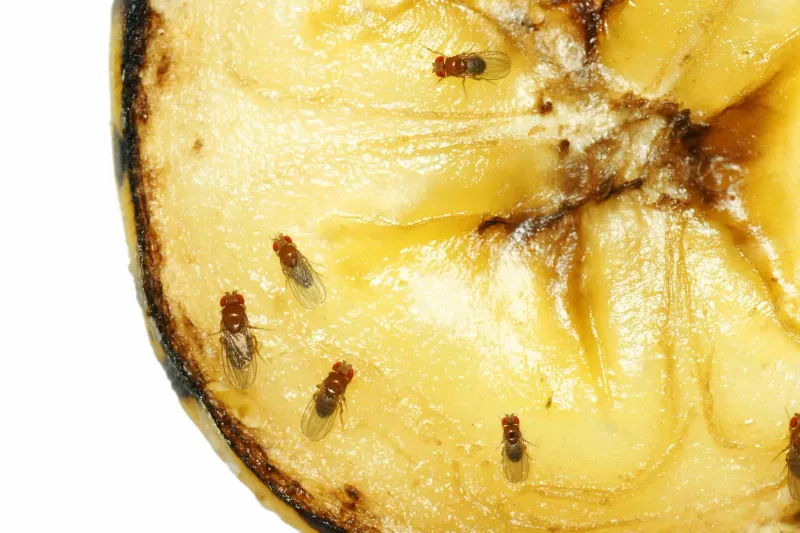
To get rid of fruit flies fast, remove overripe produce, empty trash, clean food spills, and set up homemade fruit fly traps. Apple cider vinegar traps can catch adult flies, but eliminating breeding sources is the best way to stop an infestation. Regular cleaning and proper food storage help prevent fruit flies from returning.
Key Takeaways
- Remove breeding sources: Discard overripe produce, empty trash, and clean food spills to stop fruit flies from reproducing.
- Use homemade fruit fly traps: Apple cider vinegar, dish soap, and overripe fruit can help catch adult fruit flies.
- Clean kitchen problem areas: Check drains, garbage disposals, recycling bins, and hidden food residue for breeding sources.
- Prevent future infestations: Store ripe produce properly, clean spills immediately, and dispose of food waste regularly.
- Address persistent infestations: If fruit flies keep returning, hidden breeding areas may require professional pest control.
How to Get Rid of Fruit Flies Fast: 7 Effective Ways
The best way to get rid of fruit flies is to remove their breeding sources while trapping adults already flying around your home. Follow these seven steps to reduce their numbers and prevent another infestation.
1. Remove Overripe Fruits and Vegetables
Fruit flies are attracted to ripe, rotting, and fermenting produce. Throw away spoiled fruits and vegetables, inspect fruit bowls, and refrigerate ripe items whenever possible.
2. Empty and Clean Trash Cans
Discard food waste daily and wash trash containers with warm, soapy water. Pay attention to sticky residue around lids and underneath trash bags, where fruit flies may lay eggs.
3. Clean Food Spills and Residue
Wipe kitchen counters, tables, and floors. Remove spilled juice, soda, wine, and other sugary liquids. Check underneath appliances for hidden food debris.
4. Set Up Homemade Fruit Fly Traps
Use apple cider vinegar or overripe fruit to attract and catch adult flies. Place traps near problem areas, away from uncovered food.
5. Clean Kitchen Drains
Scrub garbage disposals, drain openings, and accessible pipe surfaces to remove organic buildup. A drain brush or suitable enzyme-based cleaner can help remove residue where small flies may breed.
6. Rinse Recycling Containers
Empty bottles and cans may contain fermented liquid that attracts fruit flies. Rinse containers before recycling and keep collection bins clean.
7. Monitor Fruit Fly Activity
Keep traps in place while checking for overlooked breeding sources. Although these steps can kill fruit flies and reduce activity quickly, complete elimination may take several days or longer.
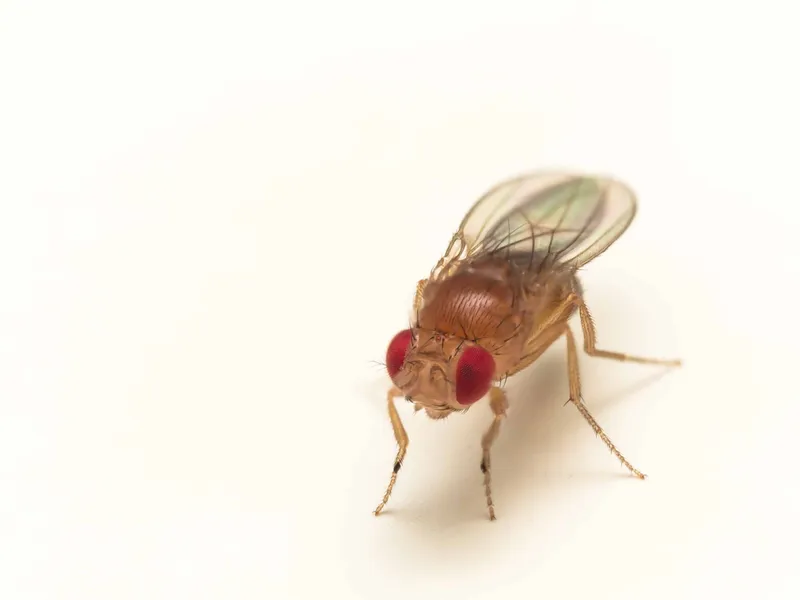
Close up of a fruit fly (Drosophila)
Home Remedies for Fruit Flies That Work
Several home remedies for fruit flies use ordinary household items. These methods catch adults without requiring insecticide sprays, but they work best when combined with cleaning.
Apple Cider Vinegar Fruit Fly Trap
One popular home remedy for fruit flies combines apple cider vinegar with dish soap.
- Pour two to three tablespoons of apple cider vinegar into a small bowl or jar.
- Add one or two drops of dish soap.
- Place the container near fruit fly activity.
- Replace the mixture when it becomes dirty or stops attracting flies.
The vinegar attracts flies, while the soap reduces surface tension, making it harder for them to escape after landing.
How to Catch Fruit Flies Without Apple Cider Vinegar
If you want to know how to get rid of fruit flies without apple cider vinegar, try these alternatives:
- Overripe fruit trap: Place banana pieces in a jar, cover with plastic wrap, and poke small entry holes.
- Wine trap: Leave a little red wine in a narrow-necked bottle to attract adult flies.
- Beer trap: Use a small amount of beer with a drop of dish soap.
Dispose of trapped flies and bait regularly. These are natural ways to get rid of fruit flies, but they will not eliminate eggs developing elsewhere.
How to Get Rid of Fruit Flies in the Kitchen
Learning how to get rid of fruit flies in kitchen areas starts with finding where they reproduce.
Inspect these common problem spots:
- Fruit bowls and vegetable storage containers
- Kitchen sinks and garbage disposals
- Trash cans and compost containers
- Empty beverage bottles and recycling bins
- Food residue underneath appliances
- Damp cleaning cloths and mops
Remove spoiled food, wash contaminated surfaces, and keep storage containers clean.
To get rid of fruit flies in your house beyond the kitchen, inspect bedrooms, dining rooms, and anywhere food or sugary drinks are consumed.
Getting rid of fruit flies in the house requires checking every possible breeding location, not just the places where adults are visible.
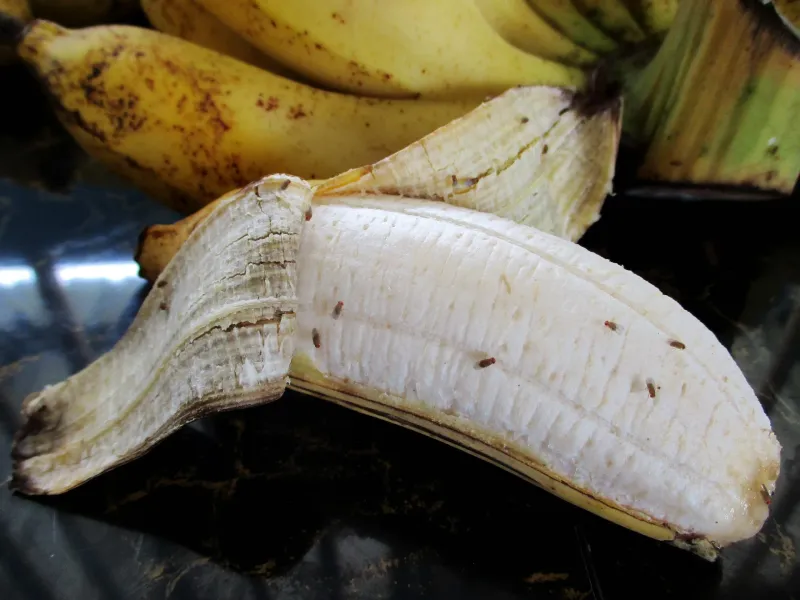
Several fruit flies cluster on peeled, overripe bananas.
Why Do I Have Fruit Flies in My House?
Fruit flies often enter homes through open windows, doors, or produce brought indoors. They are especially attracted to fermenting fruit, sugary liquids, and decomposing organic material.
A fruit fly infestation can develop quickly because females lay eggs near suitable food sources. Under warm conditions, their life cycle may take approximately one to two weeks.
Fruit flies may lay eggs on ripe or decaying produce, allowing an infestation to develop quickly. If you notice suspicious eggs or larvae on food, learn more about fly eggs on food and how to recognize potential contamination.
According to Texas A&M AgriLife Extension, eliminating breeding materials is essential for controlling indoor fly populations.
Even small amounts of forgotten food residue can support recurring activity.
How to Get Rid of a Fruit Fly Infestation That Won’t Go Away
If fruit flies keep appearing despite regular cleaning, there may be a hidden breeding source.
To get rid of a fruit fly infestation, check underneath refrigerators, behind appliances, inside trash containers, and around plumbing.
Scrub accessible drain surfaces if organic buildup is present. Simply pouring baking soda and vinegar into a drain may not remove the material supporting fly larvae.
You should also verify that the insects are actually fruit flies. Similar-looking pests, including drain flies and phorid flies, can require different treatment approaches.
Our guide on how to get rid of gnats explains how to identify other small household flies.
If cleaning and trapping fail, professional fruit fly treatment can help identify overlooked breeding sites. Sprays may kill exposed adults, but they do not replace source removal.
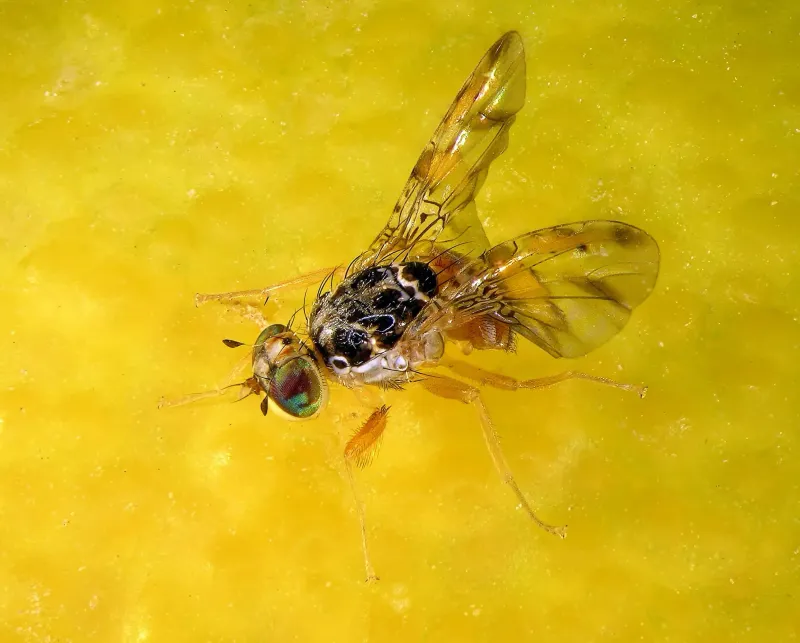
A Mediterranean fruit fly rests on the surface of ripening fruit.
How to Prevent Fruit Flies From Coming Back
Once you’ve eliminated the infestation, consistent sanitation is the most effective way to keep fruit flies away.
Follow these prevention tips:
- Refrigerate ripe fruit whenever practical.
- Discard rotting produce immediately.
- Empty kitchen trash regularly.
- Clean sticky spills as soon as they happen.
- Rinse bottles and cans before recycling.
- Remove food buildup from garbage disposals.
- Wash and dry cleaning cloths frequently.
- Inspect produce before bringing it indoors.
The goal is to eliminate food and breeding materials before fruit flies can reproduce.
According to the University of Minnesota Extension, sanitation and removing breeding sources are central to controlling fruit flies.
Get Professional Fruit Fly Control From Nextgen
Still dealing with fruit flies after cleaning and setting traps? Hidden breeding sources may be allowing the infestation to continue.
Nextgen Pest Solutions provides professional fly control services to help identify breeding areas, address persistent fly activity, and reduce future infestations.
Contact Nextgen Pest Solutions today for a free quote and professional help getting your fruit fly problem under control.
What’s the Best Way to Get Rid of Fruit Flies for Good?
These flies may be persistent, but they’re not unstoppable. The key to long-term control is removing the source, decaying food, moisture, and organic waste, and staying consistent with cleaning and trapping efforts. Don’t wait until it becomes a bigger problem.
Need expert help? Call Nextgen Pest Solutions today and let our professionals eliminate fruit flies at the source.
Frequently asked questions
Frequently Asked Questions About Getting Rid of Fruit Flies
Get a free inspection when you book a pest control service.
What is the fastest way to get rid of fruit flies?
The fastest way to reduce fruit flies is to remove breeding sources and trap adults. Throw away overripe produce, clean sticky spills, empty trash, and rinse recycling bins. Place an apple cider vinegar trap near affected areas to catch remaining flies.
Why do fruit flies keep appearing in my kitchen?
Fruit flies keep appearing when food residue or moist organic matter provides a breeding source. Check overripe fruit, garbage disposals, trash bins, recycling containers, and spills beneath appliances. Even small amounts of fermenting material can support fruit fly activity.
How do you make a homemade fruit fly trap?
Pour apple cider vinegar into a small jar, add a few drops of dish soap, and place it near fruit fly activity. The vinegar attracts adult flies, while the soap helps trap them. Homemade traps reduce adult flies but won’t eliminate eggs or larvae in breeding areas.
How can I prevent fruit flies from coming back?
Prevent fruit flies by refrigerating ripe produce, cleaning food spills, emptying trash regularly, and rinsing bottles before recycling. Keep drains free of organic buildup and inspect hidden food debris. Removing breeding sources helps prevent new generations from developing.
How long does it take to get rid of a fruit fly infestation?
Minor fruit fly infestations may improve within several days after removing breeding sources and trapping adults. Larger infestations can take one to two weeks or longer. If flies persist, inspect drains, trash areas, and hidden food residue for overlooked breeding sites.