 Limited Time: Get $25 Off Your First Service

Top 10 largest Spiders in Florida
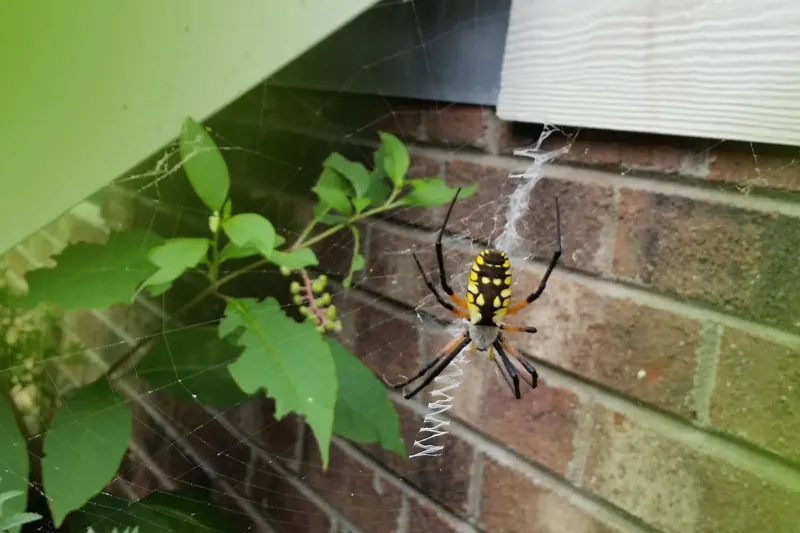
The largest spiders in Florida include the huntsman spider, which can reach a leg span of 5 inches, the golden silk orb-weaver, and the Carolina wolf spider. Although these giant spiders may look intimidating, most are not dangerous to humans. Here are 10 of Florida’s biggest spiders, including their sizes, identifying features, habitats, and potential risks.
TL;DR: Florida’s largest spiders include the huntsman spider, which can reach a 5-inch leg span, the golden silk orb-weaver with its large golden webs, and the Carolina wolf spider, a ground hunter with a thick, hairy body. Most of these species, including fishing spiders and garden spiders, are not considered medically dangerous and rarely bite unless handled or defending an egg sac. Frequent sightings indoors can signal other pest activity, so a professional inspection can help address recurring spider problems.
Key Takeaways
- Body length and leg span are different measurements, so this list is a general size comparison rather than a strict scientific ranking.
- Huntsman spiders are fast-moving hunters that chase prey like cockroaches rather than building webs.
- Fishing spiders can move across water surfaces and occasionally catch small fish or tadpoles.
- Male southern house spiders are sometimes mistaken for brown recluse spiders due to their elongated bodies and long legs.
- Green lynx spiders hunt insects on plants rather than spinning webs, and females may bite defensively while guarding egg sacs.
10 Largest Spiders in Florida
Florida is home to several large spider species, from fast-moving hunters to orb-weavers that build enormous webs. Some spiders appear larger because of their long legs, while others have thicker bodies.
The following list features 10 notably large spiders found in Florida. The order is approximate rather than a definitive scientific ranking because body length and leg span are different measurements.
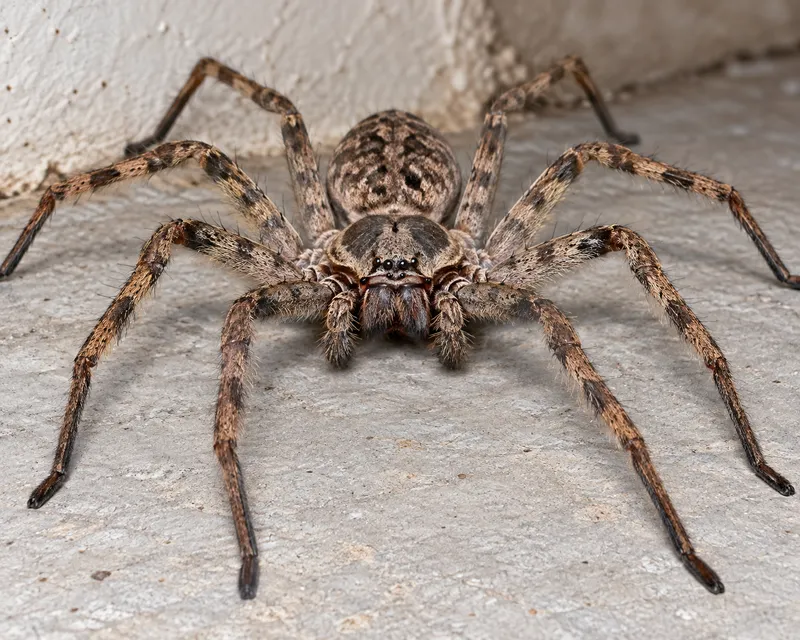
Huntsman Spider
1. Huntsman Spider (Giant Cane Spider)
Scientific name: Heteropoda venatoria
Size: Approximately 3 to 5 inches in leg span, with a body length around 1 inch.
The huntsman spider is one of the biggest spiders in Florida by leg span. Also called the giant cane spider or pantropical huntsman spider, it has a flattened brown body and long legs that extend sideways.
Huntsman spiders are fast-moving hunters that feed on insects, particularly cockroaches. Unlike web-building spiders, they chase their prey and are sometimes mistaken for tarantulas because of their size.
- Identification: Flattened brown body, long sideways-extending legs, and pale markings around the front of the body.
- Where found: Garages, sheds, storage rooms, behind furniture, and sheltered outdoor areas.
- Is it dangerous? Huntsman spiders are not considered medically dangerous. They usually flee when disturbed but may bite if handled or trapped.
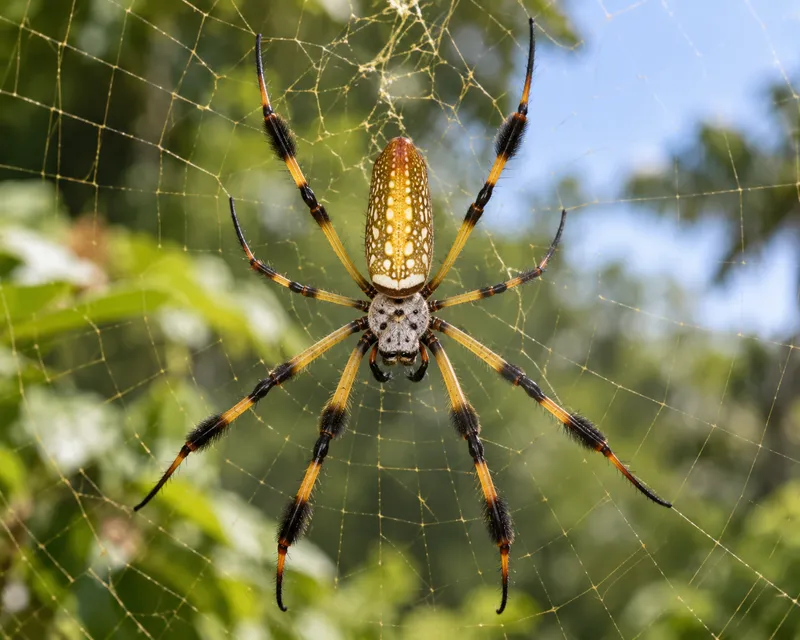
Golden Silk Orb Weaver
2. Golden Silk Orb-Weaver (Banana Spider)
Scientific name: Trichonephila clavipes
Size: Female body length of approximately 1 to 1.6 inches, with a larger overall appearance when including the legs.
The golden silk orb-weaver, commonly called the banana spider, is one of Florida’s largest web-building spiders. Females have elongated yellowish bodies, dark markings, and long legs with noticeable hair tufts.
These spiders build enormous golden-colored webs between trees, shrubs, and wooded trails. Their webs can stretch across several feet and are especially noticeable in warm, wooded areas.
- Identification: Elongated yellow-orange body, dark markings, banded legs with hair tufts, and a large golden web.
- Where found: Gardens, forests, wooded trails, and spaces between trees.
- Is it dangerous? Golden silk orb-weavers are not aggressive. Bites are uncommon and generally cause localized discomfort.
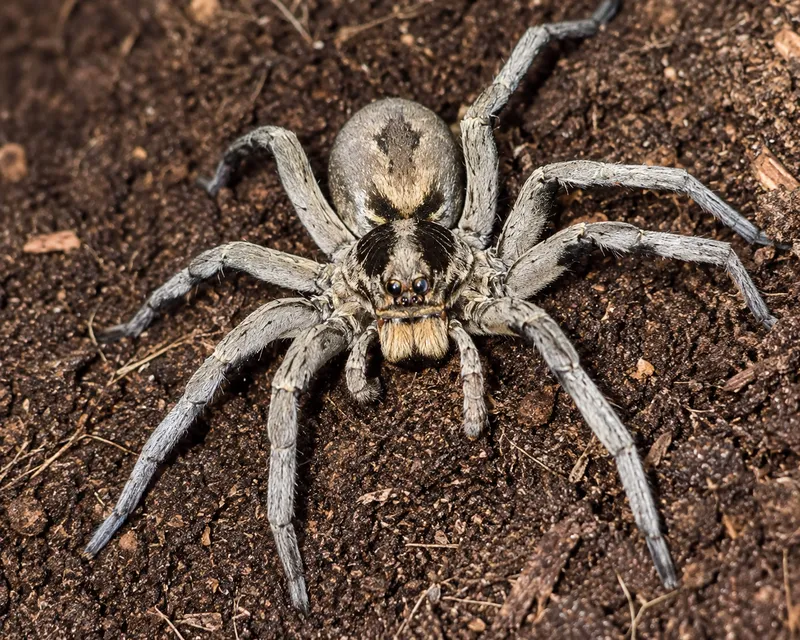
Carolina Wolf Spider
3. Carolina Wolf Spider
Scientific name: Hogna carolinensis
Size: Approximately 1 to 1.4 inches in body length, with a larger overall appearance when the legs are included.
The Carolina wolf spider is among the largest wolf spiders in Florida and North America. Its thick, hairy body and powerful legs make it particularly noticeable around homes.
Unlike orb-weavers, wolf spiders do not build webs to capture insects. They actively hunt prey along the ground, primarily at night.
- Identification: Large, hairy brown or gray body, darker markings, sturdy legs, and prominent eyes that may reflect flashlight beams.
- Where found: Lawns, gardens, burrows, beneath rocks, and around foundations.
- Is it dangerous? Carolina wolf spiders are not considered medically dangerous. Defensive bites may cause temporary pain or swelling.
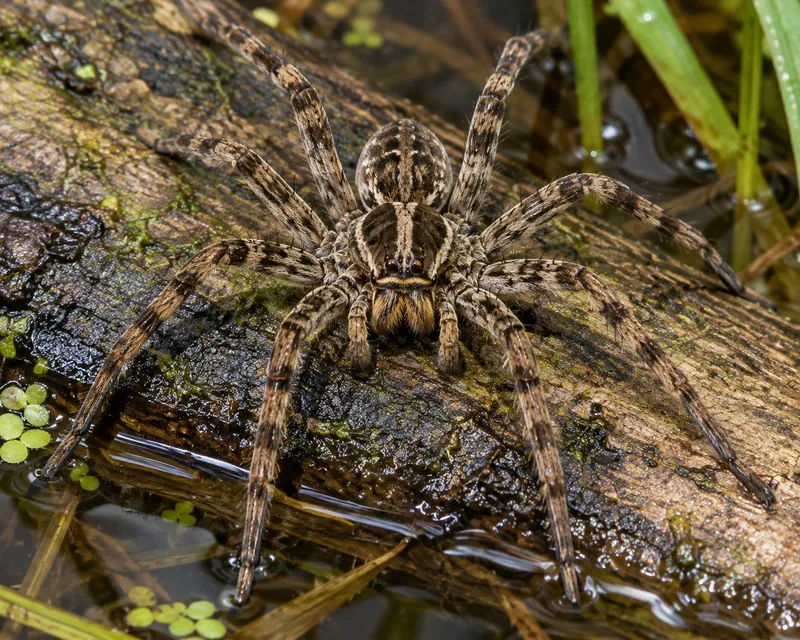
Fishing Spider
4. Fishing Spider
Scientific name: Dolomedes species
Size: Large species may reach several inches across their legs, although size varies by species.
Fishing spiders are large, long-legged spiders commonly found near Florida’s freshwater habitats. They can move across water surfaces and sometimes dive beneath the water to escape predators.
They hunt insects and may occasionally capture small fish, tadpoles, and other aquatic animals. Their brown markings and long legs often lead homeowners to confuse them with wolf spiders.
- Identification: Long legs, broad brown or gray body, and mottled or striped markings.
- Where found: Ponds, lakes, marshes, docks, and wooded areas near water.
- Is it dangerous? Fishing spiders generally avoid people and are not considered medically dangerous.
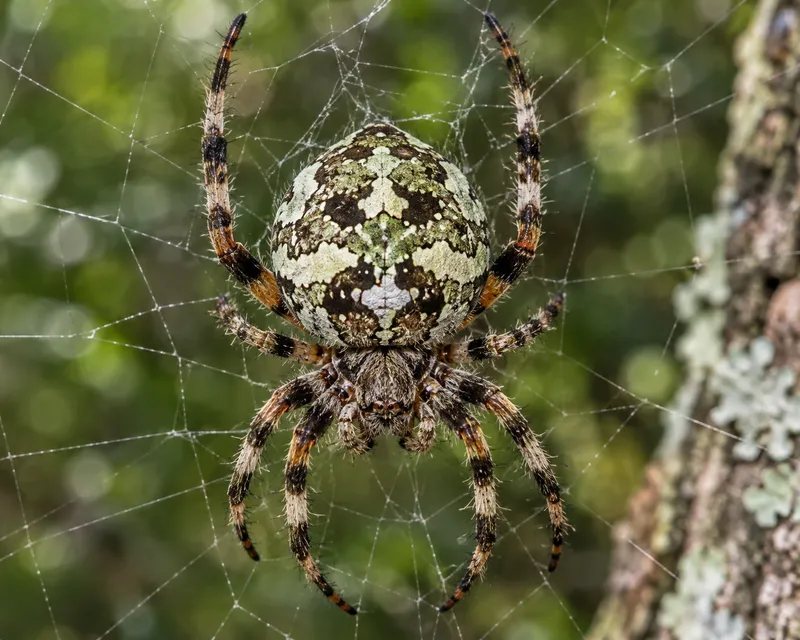
Giant Lichen Orb Weaver
5. Giant Lichen Orb-Weaver
Scientific name: Araneus bicentenarius
Size: Adult females may reach approximately 1 inch or more in body length.
The giant lichen orb-weaver is a bulky spider with greenish-gray, brown, and cream-colored markings that resemble lichen on tree bark.
Its rounded abdomen and long legs give it an imposing appearance. Like other orb-weavers, it builds circular webs to capture flying insects.
- Identification: Large rounded abdomen with mottled green, gray, brown, and cream markings.
- Where found: Trees, wooded properties, forest edges, and gardens near mature vegetation.
- Is it dangerous? Giant lichen orb-weavers are not considered medically dangerous to humans.
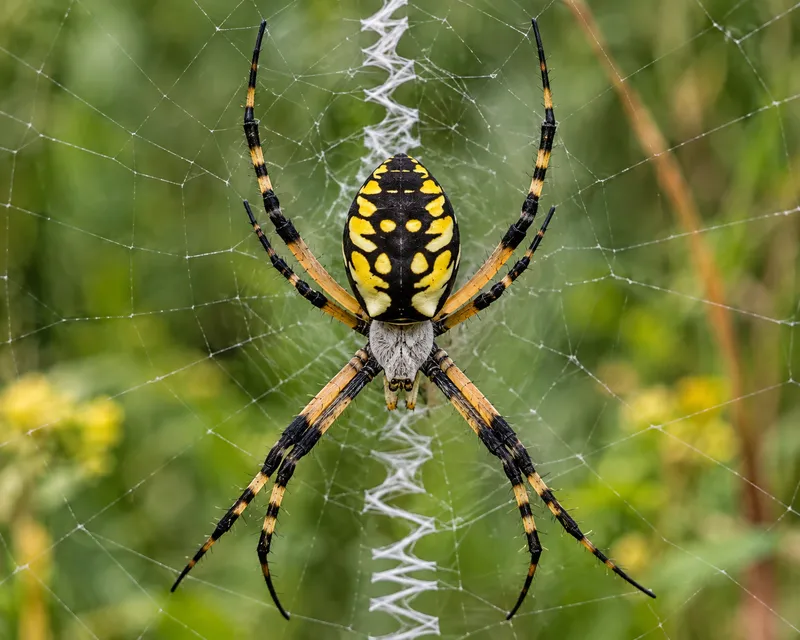
Black and Yellow Garden Spider
6. Black and Yellow Garden Spider
Scientific name: Argiope aurantia
Size: Female body length can reach approximately 1 inch.
The black and yellow garden spider is one of the most recognizable big yellow spiders in Florida. Its bright markings and long legs make it easy to spot in gardens and wooded areas.
These spiders build large circular webs, often featuring a distinctive zigzag silk pattern near the center.
- Identification: Bright yellow-and-black abdomen, silvery front body, dark legs, and zigzag web decorations.
- Where found: Gardens, shrubs, tall grass, and woodland edges.
- Is it dangerous? Black and yellow garden spiders are not aggressive and rarely bite humans.
7. Florida Garden Spider
Scientific name: Argiope florida
Size: Adult females are substantially larger than males, with elongated abdomens and long legs.
The Florida garden spider is another large orb-weaver native to the region. It is related to the black and yellow garden spider but has a different pattern of pale, dark, and yellowish markings.
Females build circular webs among vegetation and commonly position themselves near the center while waiting for insects.
- Identification: Elongated abdomen, contrasting pale and dark markings, and long legs often held in pairs.
- Where found: Gardens, shrubs, sunny woodland edges, and tall vegetation.
- Is it dangerous? Florida garden spiders are not considered medically dangerous to humans.
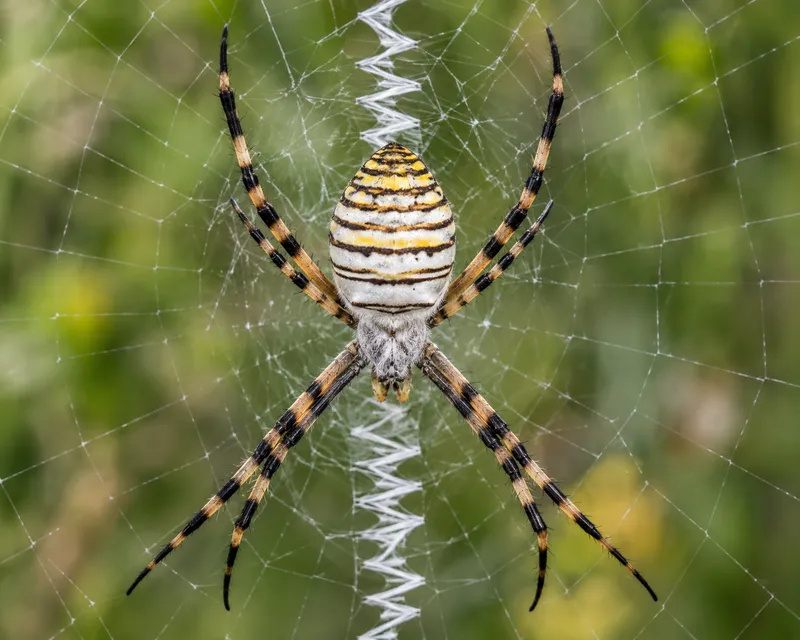
Banded Garden Spider
8. Banded Garden Spider
Scientific name: Argiope trifasciata
Size: Adult females may reach approximately 1 inch in body length.
Banded garden spiders are large orb-weavers distinguished by the narrow bands running across their elongated abdomens. Their markings vary from pale yellow and white to brown and black.
They build circular webs among vegetation, where they capture flying insects.
- Identification: Long abdomen with horizontal bands, slender legs, and a circular web.
- Where found: Gardens, fields, open grassy areas, and tall plants.
- Is it dangerous? Banded garden spiders are not considered dangerous to humans.
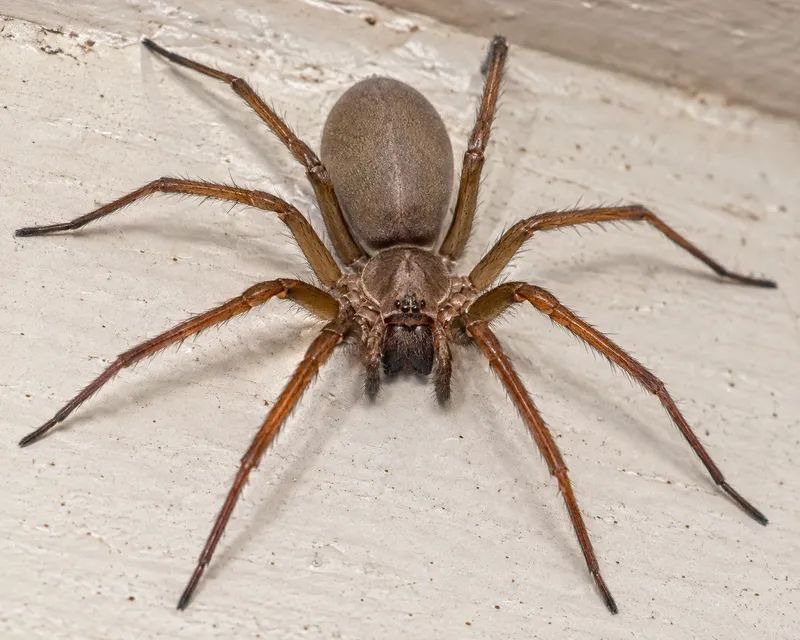
Southern House Spider
9. Southern House Spider
Scientific name: Kukulcania hibernalis
Size: Female body length is approximately 0.5 to 0.75 inches. Long-legged males may appear larger.
Southern house spiders are commonly found around Florida buildings. Females have dark, velvety bodies and usually remain near their webs, while males are lighter brown and wander in search of mates.
Male southern house spiders are sometimes mistaken for brown recluse spiders because of their elongated bodies and long legs.
- Identification: Dark gray, velvety females; lighter brown, long-legged males; and webs in building crevices.
- Where found: Garages, window frames, eaves, sheds, and exterior wall openings.
- Is it dangerous? Southern house spiders are not considered medically dangerous.
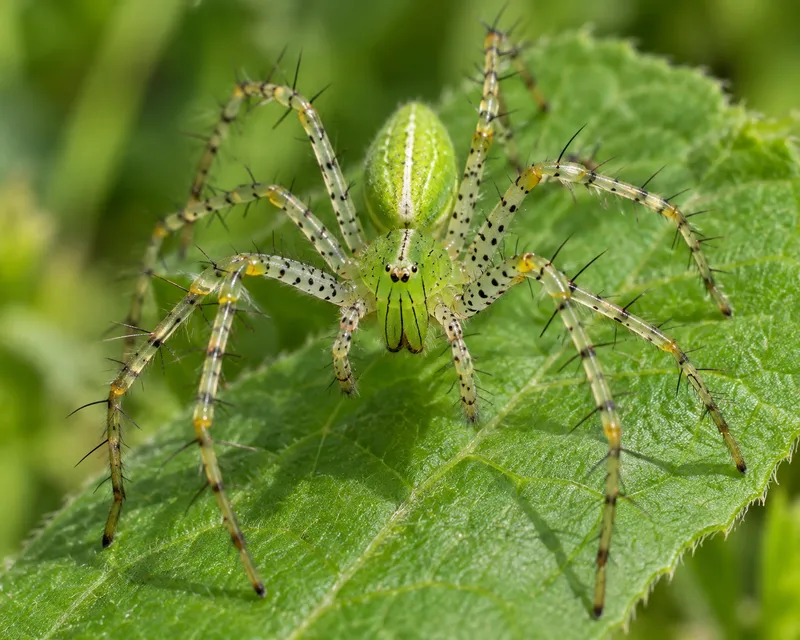
Green Lynx Spider
10. Green Lynx Spider
Scientific name: Peucetia viridans
Size: Adult females typically reach approximately 0.5 to 0.9 inches in body length.
The green lynx spider is a bright green hunting spider commonly found among Florida’s plants and flowers.
Instead of building webs to catch prey, it actively hunts insects on leaves, shrubs, and flowering plants. Its green coloration helps it blend into vegetation.
- Identification: Bright green body, long legs with black spines, and occasional reddish markings.
- Where found: Gardens, shrubs, flowering plants, and grassy vegetation.
- Is it dangerous? Green lynx spiders are not considered medically dangerous, although females guarding egg sacs may bite defensively.
Quick Size Comparison of Florida’s Largest Spiders
| Spider | Approximate adult size |
|---|---|
| Huntsman spider | 3–5 inches leg span |
| Golden silk orb-weaver | Up to 1.6 inches body length |
| Carolina wolf spider | Up to 1.4 inches body length |
| Fishing spider | Several inches leg span in large species |
| Giant lichen orb-weaver | Around 1 inch or more body length |
| Black and yellow garden spider | Up to 1 inch body length |
| Florida garden spider | Large females; measurements vary |
| Banded garden spider | Up to approximately 1 inch body length |
| Southern house spider | Up to 0.75 inches body length |
| Green lynx spider | Up to 0.9 inches body length |
Body length and leg span are different measurements. This table provides a general size comparison, not a precise scientific ranking.
For additional visual references, see this guide to the biggest spiders in Florida.
Seeing Large Spiders in Your Florida Home? Get Professional Spider Control
Frequent spider sightings may indicate hidden pest activity or insects attracting spiders into your home. Nextgen Pest Solutions offers professional spider control and comprehensive pest inspections to help Clearwater-area homeowners address recurring spider problems.
Contact Nextgen Pest Solutions today to schedule an inspection and keep unwanted spiders under control.
Frequently asked questions
Frequently Asked Questions About the Largest Spiders in Florida
Get a free inspection when you book a pest control service.
What is the largest spider found in Florida?
The huntsman spider is among Florida’s largest spiders by leg span, reaching approximately 5 inches. Its flat body and long, sideways-facing legs make it easy to recognize. Huntsman spiders often shelter in garages, sheds, and other protected areas, where they hunt insects.
Are the largest spiders in Florida dangerous to humans?
Most large Florida spiders, including huntsman spiders, wolf spiders, and golden silk orb-weavers, pose little danger to people. However, widow spiders have medically significant venom. Avoid handling unfamiliar spiders, and seek immediate medical care for severe symptoms after a bite.
How can I identify a large spider in my Florida home?
Identify large Florida spiders by their body shape, leg position, markings, and behavior. Huntsman spiders have flat bodies and sideways-facing legs, while wolf spiders have sturdier bodies and hunt on the ground. Avoid handling unfamiliar spiders and use clear photos for identification.
Why are large spiders entering my Florida home?
Large spiders often enter Florida homes while searching for insects, shelter, or mates. Gaps around doors, windows, and foundations provide entry points. Check garages, sheds, cluttered storage areas, and places with frequent insect activity to identify conditions attracting spiders.
How can I keep large spiders out of my Florida house?
Prevent large spiders by sealing cracks, repairing window screens, reducing clutter, and controlling insects around your home. Trim vegetation near exterior walls and limit outdoor lighting that attracts flying insects. Frequent spider sightings may warrant an inspection for hidden pest activity.