
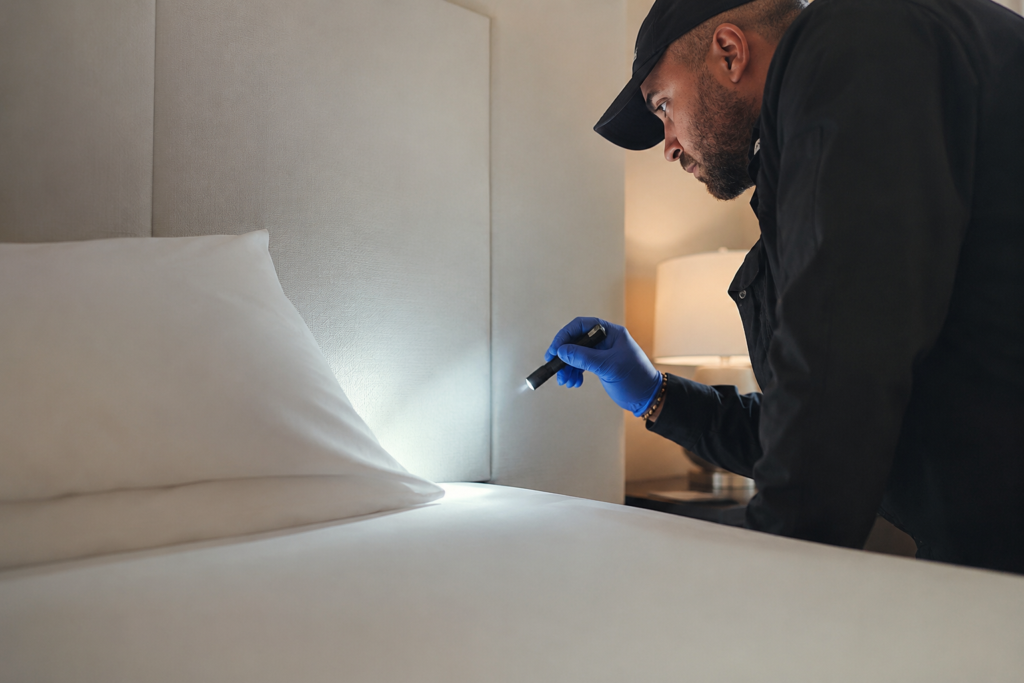
TL;DR: As millions of fans travel across the U.S. for the 2026 FIFA World Cup, the surge in hotel bookings, short-term rental turnover, and constant luggage movement between cities creates ideal conditions for bed bugs to spread. Bed bugs hitchhike in luggage and clothing — they don’t need a dirty environment, just movement.
In this guide, the pest control experts at Nextgen Pest Solutions explain why bed bug activity may rise during World Cup 2026, how to inspect a hotel room before unpacking, what warning signs to watch for when you return home, and when it’s time to call a professional. If you suspect bed bugs in your home after travel, request a free quote online or call (866) 498-1805 to schedule an inspection.
Why the 2026 FIFA World Cup Creates a Real Bed Bug Risk
The 2026 FIFA World Cup spans 16 host cities, 48 teams, and 104 matches across a five-week window from June 11 to July 19. That scale of travel, involving millions of fans moving between airports, hotels, rideshares, stadiums, and short-term rentals, creates a set of conditions that pest management professionals recognize immediately: high guest turnover, rapid room cycling, and luggage constantly in transit between cities.
Bed bugs do not need dirty environments to thrive. They need movement. And the World Cup delivers movement at a scale that few events can match.
The core risk is not the event itself. It is what the event does to hotel and rental turnover across dozens of markets simultaneously, and what that means for every traveler passing through.
Here is what that means in practical terms for anyone attending the tournament:
- Bed bugs spread by hitchhiking in luggage, clothing, backpacks, and soft goods, not by appearing spontaneously in unclean spaces.
- Dense travel periods compress the time between guest stays, reducing the window for housekeeping teams to catch early signs.
- A single infested room can seed a problem across multiple floors or units if not caught quickly.
- Travelers who unknowingly bring bed bugs home face treatment costs that typically range from $1,000 to $2,500, according to the National Pest Management Association, and that figure rises sharply when the infestation spreads.
The good news: travelers and property operators who know what to look for, and act quickly when they see it, can avoid the worst outcomes entirely.
What Makes Major Events Different From Normal Travel Seasons
Bed bug risk exists year-round in any market with active tourism. What changes during a major international event is the intensity and speed of guest turnover, and that change is significant.
During a typical travel season, a hotel room might turn over every two to three days with adequate time for thorough cleaning and inspection. During a major event like the World Cup, rooms can turn over daily, sometimes twice daily, with housekeeping teams under pressure to prepare for the next arrival. That compressed timeline is exactly where early infestations go undetected.
The transmission pathway during an event like this follows a predictable sequence:
Arrival: A traveler checks into a hotel or rental that already has a low-level infestation, often invisible to the untrained eye.
- Transfer: Bed bugs migrate into luggage, clothing, or personal items left on upholstered furniture, carpets, or beds.
- Movement: The traveler checks out and moves to a second city, a rideshare, or a second property, spreading the infestation further.
- Return: The traveler arrives home, and the infestation establishes itself in a new environment.
According to the American Hotel and Lodging Association, major events have been associated with a 30% increase in bed bug reports at hospitality properties. Staff training on early detection can improve catch rates by 80 to 90 percent, but that training needs to be in place before guest volume spikes, not after the first complaint arrives.
Which Host Markets Carry Higher Risk, Especially for Florida and Georgia Travelers
Not every World Cup host city carries the same level of background bed bug activity. Travelers departing from or returning to Florida and Georgia should pay particular attention to a handful of markets where established bed bug activity combines with a major surge in visitor volume.
Miami is the clearest example. The Miami-Fort Lauderdale metro already ranks among the more active U.S. markets for bed bug treatment demand. According to AirDNA’s March 2026 short-term rental outlook, vacation rental bookings in Miami are projected to increase 58.4% year-over-year for June and July 2026, with certain match days showing demand spikes far higher than that. More guests, faster turnover, and an already-active bed bug market is a combination that justifies extra caution.
Atlanta matters for a different reason. As a regional transit hub with direct connections to most Florida markets, Atlanta functions as a transfer point for fans moving between southern host cities. Travelers who pass through Atlanta hotels or rentals mid-trip can carry exposure risk back into Georgia and Florida communities.
| Host City | Why It Warrants Attention |
| Miami, FL | High existing bed bug activity; vacation rental bookings up 58.4% for June-July 2026 |
| Atlanta, GA | Major regional hub; high transit volume connecting southern host cities |
| New York, NY | Historically active bed bug market; dense hotel and rental inventory |
| Los Angeles, CA | Large international traveler volume; high short-term rental market |
Higher background activity does not guarantee infestation. It does mean that travelers visiting these cities, and property operators in them, have more reason to apply prevention habits consistently rather than assuming a well-rated hotel eliminates the risk.
For travelers departing from or returning to Florida and Georgia, the practical takeaway is straightforward: inspect carefully in these markets, and be especially thorough when you get home.
Traveler Checklist: How to Inspect a Hotel Room and Avoid Bringing Bed Bugs Home
According to PestWorld.org, 70% of travelers now check for bed bug reports before booking accommodations. That is a smart first step, but reviews only capture reported problems. Many infestations go unreported or are discovered after the next guest has already checked in. A room inspection on arrival is the most reliable protection.
Before You Unpack
Do not place luggage on the bed, carpet, or upholstered furniture until you have completed a basic inspection. The bathroom floor or a luggage rack are safer staging areas.
What to Inspect
Bed bugs are small, flat, and reddish-brown, roughly the size of an apple seed. They prefer tight, dark spaces close to where people sleep or sit for extended periods.
Check these locations in order:
- Mattress seams and piping: Pull back the bedding and run your fingers along the seams of the mattress, looking for live bugs, shed skins, or dark spotting (fecal matter).
- Box spring and bed frame: Lift the mattress and inspect the box spring. Check the joints and corners of the bed frame.
- Headboard: If the headboard is attached to the wall, check the gap between the board and the wall surface. This is one of the most common hiding spots.
- Upholstered furniture: Check seams, cushion edges, and the underside of chairs and sofas near the bed.
- Nightstands and baseboards: Look in drawer joints, along baseboards, and around electrical outlets near the sleeping area.
After Your Stay
According to Dr. Susan Jones at Ohio State University, hard-shell luggage offers fewer hiding spots than soft-sided bags, reducing the chance that bed bugs travel home with you. Regardless of luggage type, follow these steps before re-entering your home:
- Inspect all luggage visually before loading it into your vehicle.
- Bag worn clothing in sealed plastic and wash it on high heat immediately on return.
- Leave luggage in the garage or outside for 24 hours if possible before bringing it indoors.
If You Find Signs of Bed Bugs
Document everything with photos. Notify hotel management immediately, and request a room that is not adjacent to or directly above or below the affected room. Ask for written confirmation that the room has been inspected. If management is unresponsive, consider checking out and disputing the charge.
When to Call a Professional and What Treatment May Cost
Travelers returning from World Cup cities should monitor for signs over the two to three weeks following their trip, which is the typical window for a new infestation to become noticeable. The signs to watch for include:
- Unexplained bites appearing in clusters or lines, particularly on exposed skin during sleep
- Small rust-colored stains on sheets or pillowcases
- A faint, sweet, musty odor in the bedroom
- Shed skins or dark spotting along mattress seams or baseboards
If any of these appear, professional confirmation is the right next step. Learning to identify bed bug bites accurately can help you assess the situation before calling, but visual confirmation of bugs, eggs, or fecal matter in the sleeping area is a clear signal to escalate immediately.
What Treatment Typically Costs
According to the National Pest Management Association, professional bed bug treatment typically falls in the range of $1,000 to $2,500 for a residential property, though smaller early-stage cases can come in lower. Multi-room or whole-home infestations cost significantly more, which is why speed of response matters.
Standard homeowner and renter insurance policies generally do not cover pest control costs. Pest infestations are typically classified as a maintenance issue rather than a covered loss, meaning the financial burden falls entirely on the property owner or renter. That exclusion makes early intervention, before an infestation spreads, the most cost-effective path available.
For urgent concerns, call Nextgen Pest Solutions directly at (866) 498-1805 to schedule an inspection. For non-emergency situations, you can also request a free quote online and ask about first-time customer specials.
Frequently Asked Questions
What should I do immediately if I find bed bugs in my hotel room?
Secure your belongings in sealed plastic bags before moving them. Photograph the evidence, notify hotel management right away, and request a non-adjacent room that has been inspected. Ask for written confirmation of the inspection.
Does travel insurance cover bed bug extermination?
In most cases, no. Standard travel insurance treats pest infestations as a liability of the lodging provider, not a covered traveler loss. Standard homeowner and renter policies similarly exclude pest control as a maintenance issue.
Are hard-shell suitcases better at preventing bed bug transmission?
Yes. Hard-shell luggage has fewer seams and fabric folds where bed bugs can hide. They are not a complete barrier, but they reduce the risk compared with soft-sided bags.
Can I get a refund if my hotel room has bed bugs?
Many hotels will offer a refund, room change, or partial compensation if you report the issue promptly and provide photographic evidence. Document everything before moving your belongings.
What are the first signs of bed bugs after returning home?
Watch for unexplained bites in clusters or lines, rust-colored stains on bedding, a faint musty odor in the bedroom, or shed skins near mattress seams. If you notice any of these within two to three weeks of travel, schedule a professional inspection promptly. Nextgen Pest Solutions serves Florida and Georgia with fast-response bed bug treatment for homeowners and renters who need answers fast.