Skip to content
You walk into the kitchen to grab a drink and notice tiny flies hovering near the sink, trash can, or fruit bowl. A few circle around the drain while others gather near damp sponges or food scraps left in the garbage disposal. Even after wiping down the counters, the gnats keep showing up day after day.
Learning how to get rid of gnats in Roswell kitchen spaces starts with finding the moisture and organic buildup attracting them indoors. This guide explains the signs to look for, the risks they create, and when to call Nextgen Pest Solutions for help.
Key Takeaways
- Gnats in a Roswell kitchen often trace back to potted plants, overripe fruit, or moist biological matter, so identifying the source is the first step toward getting rid of them.
- Fungus gnats and fruit flies are among the most common types you may notice indoors, and each is drawn to different attractants, so proper identification guides the right approach.
- Prevention steps like managing soil moisture in houseplants, cleaning pots, and removing fermenting fruit can help reduce gnat activity over time.
- When DIY prevention falls short, a trained service professional can inspect your kitchen and surrounding areas to pinpoint breeding sources you may have missed.
How to Identify Gnats in Your Roswell Kitchen
Before you can address a gnat problem in your Roswell kitchen, you need to know what you’re looking at and where to look. Fungus gnats are among the most common small flies that show up indoors, and recognizing the early signs of activity helps you take the right next steps.
How to Tell Gnats Apart in Your Roswell Kitchen
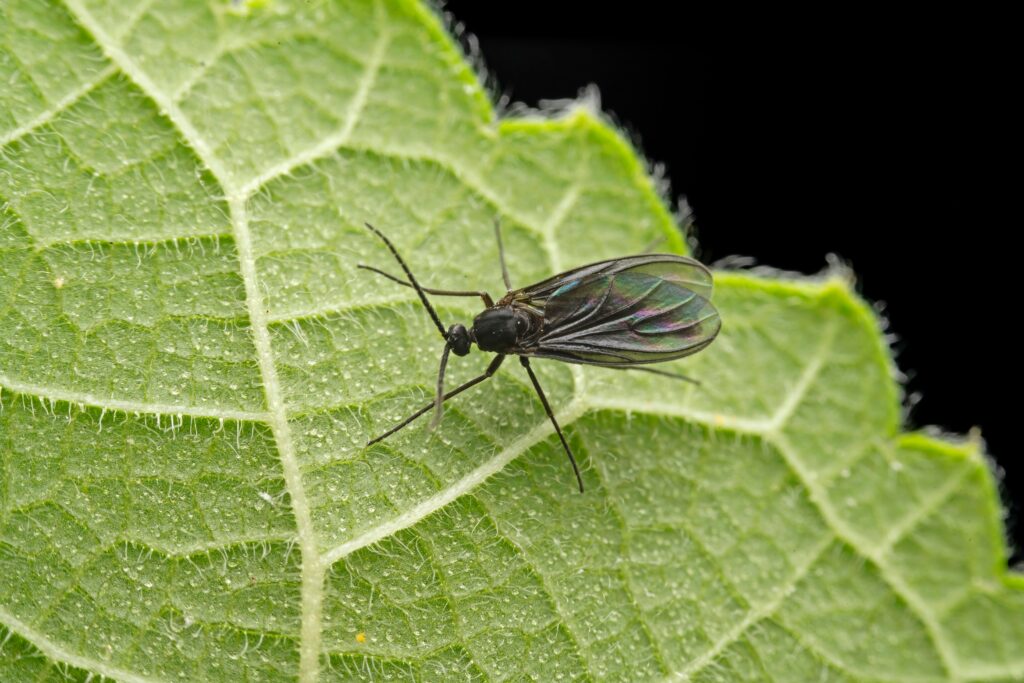
Fungus gnats are small, dark-bodied flies with long legs and translucent wings. They are often confused with fruit flies, but fungus gnats tend to be slimmer and are drawn to different areas of the home. Fruit flies are typically rounder with tan or brownish bodies and tend to hover near ripened produce. Paying attention to body shape and where the flies gather can help you narrow down the type.
How to Spot Gnat Activity Inside Your Roswell Kitchen
Adult fungus gnats are attracted to light, so you may first notice them flying near windows indoors. This light-seeking behavior means you might see a cluster of tiny flies gathered on a window pane or around a light fixture in or near your kitchen during the day.
Watch for weak, fluttering flight patterns close to the soil surface of houseplants or near window glass. If small flies appear consistently in these spots, that repeated presence is a strong clue that you are dealing with fungus gnats rather than a random fly that wandered inside.
Where Gnat Activity Shows Up Around Roswell Homes
Inside a Roswell kitchen, fungus gnat activity often centers on potted herbs, houseplants, or any container with moist soil kept on counters or windowsills. Because the adults are drawn to light, windows closest to these plants tend to be the first place you spot them.
Look for adults resting on the glass or circling near the top of the soil in plant pots. Activity near these areas can help you trace the source of the problem back to a specific container or growing medium.
Exterior Entry Points Gnats Use Around Roswell Homes
Fungus gnats can enter through any small gap around windows, doors, or screens. Because they are attracted to light, openings near well-lit rooms are natural draw points. Checking window screens for tears and ensuring door sweeps fit snugly can help reduce the number of adults that make their way into your kitchen from outdoors.
Keep an eye on any plants you bring inside from a porch or patio, as potted plants moved indoors may carry gnats with them. Inspecting soil and foliage before bringing containers into the kitchen is a simple first step worth taking.
Why Gnat Problems Develop in Roswell Kitchens
Gnats show up in Roswell kitchens for a handful of overlapping reasons, and most of them trace back to moisture and decaying biological matter. Understanding what draws gnats indoors and where they breed helps you target the actual source instead of swatting at adults that keep reappearing.
Outdoor Nesting Areas for Gnats Around Roswell Homes
Fungus gnat larvae feed on fungi and biological matter in soil, and they may also chew roots. Potted plants on porches, garden beds near doorways, and planters with soil rich in decaying plant matter can all serve as breeding grounds close to your home. According to Kansas State University Extension, soil that contains a large amount of decaying plant matter provides a good food source for larvae.
Eye gnats are a separate outdoor species found from central to south Georgia, south of the Fall Line. Roswell sits north of that line, so eye gnats are not the typical kitchen culprit here. Fungus gnats and moth flies are more likely indoor invaders.
Food and Shelter That Attract Gnats in Roswell Kitchens
Moth flies lay their eggs in moist, biological matter where the larvae feed on decaying fungi, algae, and similar material. In kitchens, this often means drains and areas where moisture collects. Fungus gnats, meanwhile, gravitate toward houseplant soil that stays damp.
Fungus gnat larvae do not damage houseplants, but they may reproduce year-round on indoor plants, making the adults a consistent nuisance. Adults do not bite or consume household items or food, yet their persistent presence near kitchen counters can be frustrating.
How Gnats Move Through Roswell Homes and Kitchens
Because fungus gnats can reproduce year-round on indoor plants, a single overwatered pot can sustain ongoing populations. Moth flies can be found in bathrooms, basements, and kitchens, so they may move between rooms wherever moist biological buildup exists.
Trails and Entry Points Gnats Use in Roswell Kitchens
Gnats often enter through open doors and windows near potted plants or garden areas. Once inside, they follow moisture. Drains, sink areas, and any container holding damp soil or biological debris can become a new breeding site. Repotting plants helps get rid of the soil medium that harbors decaying plant matter, cutting off a key food source for larvae.
Risks From Gnats in Your Roswell Kitchen
Gnats in a Roswell kitchen are more than a minor annoyance. Different gnat species carry different risks, and understanding those risks helps you decide how urgently to act. Below are the main concerns these pests can create inside your home.
Health Risks Linked to Gnats in Roswell Kitchens
Eye gnats can mechanically transmit bacteria that cause acute conjunctivitis, also called pink eye, without ever biting you. These pests carry the bacteria on their body parts and transfer them through contact. Even a small number of eye gnats near food preparation areas can pose a concern for your household.
Because kitchens bring people and pests into close quarters, the chance of contact rises. Keeping gnat populations low reduces the opportunity for this kind of bacterial transfer.
Property Damage From Gnats in Roswell Homes
Fungus gnat larvae may feed on roots and leaves resting on the soil surface of houseplants. According to UC IPM, a wilting houseplant may not indicate a lack of water but rather root damage by fungus gnat larvae or, more commonly, other causes of unhealthy roots. If you keep herbs or potted plants near your Roswell kitchen, larval feeding can stress those plants over time.
While the damage is typically limited to potted plants rather than structural materials, losing kitchen herbs or decorative plants to root-feeding larvae is still a frustrating outcome for homeowners.
Food Areas and Gnat Activity in Roswell Kitchens
Kitchens offer the conditions many gnat species need. Fungus gnat females may deposit up to 200 eggs in the growing medium of houseplants, and the larvae remain in the top two to three inches of soil, feeding on fungi, algae, and decaying plant matter. That rapid reproduction means a few pests near a kitchen windowsill can turn into a persistent swarm within days.
Other small flies, sometimes called fruit flies or vinegar flies, may also appear in kitchens where biological material is accessible. Multiple gnat types may overlap in the same space, complicating identification and removal.
When to Look Closer at Gnat Activity
Adult fungus gnats live only seven to ten days, yet each generation can lay up to 200 eggs. If you notice gnats returning week after week, the breeding cycle is likely active somewhere in your kitchen or nearby rooms. Wilting houseplants, persistent swarms near sinks, or gnats landing near your eyes are all signs that the population may be growing faster than simple cleanup can address.
Identifying the specific gnat species matters because the risks differ. A professional inspection can help you determine whether you are dealing with fungus gnats, eye gnats, fruit flies, or a combination of these pests, so you can focus your efforts where they count.
Professional Pest Control to Get Rid of Gnats
A gnat infestation in your Roswell kitchen can be frustrating, especially when the source is not obvious. Several types of small flies, including fungus gnats, phorid flies, fruit flies, and moth flies, breed in different biological materials around the home. Pinpointing the right breeding site is the first step toward lasting relief, and that often requires a careful, room-by-room inspection.
How to Reduce Attractants in Roswell Kitchens
Many gnat problems trace back to moisture and decaying biological matter hiding in plain sight. Dirty, unlined garbage cans can attract phorid flies or fruit flies, and cans that are not emptied on a set schedule create a steady breeding site. Line your kitchen trash can and take garbage out each evening.
Forgotten produce is another common culprit. A tomato or similar item that has rolled behind the refrigerator can support fruit flies or phorid flies. Pull appliances away from the wall every few weeks and remove any decaying food you find.
According to Mississippi State University Extension, indoor fungus gnat infestations are almost always associated with houseplants, especially overwatered ones. If you keep plants near the kitchen, let the soil dry between waterings, and clean drain saucers of wet biological matter.
Why Gnat Control in Roswell Kitchens Starts With Inspection
An infestation can persist even after you clean visible surfaces because the breeding source may be hidden. Drain pans for refrigerators, air conditioners, or other appliances can harbor phorid flies or fungus gnats. These pans sit out of sight and collect moisture and biological buildup over time.
Kitchen, bathroom, and laundry drains are another overlooked source where moth flies or phorid flies may breed. A thorough inspection of every drain, appliance pan, and plant saucer in the area helps narrow down which fly species is present and where it is reproducing.
Without identifying the exact breeding site, cleanup efforts may only reduce adults temporarily while larvae continue to develop in the source material.
What to Expect During Professional Gnat Treatment in Roswell
Nextgen Pest Solutions technicians are certified through the University of Florida and the University of Georgia pest control programs. During a visit, they inspect drains, appliance pans, garbage areas, and houseplant zones to locate breeding material tied to the infestation.
Proper identification matters because different fly species use different breeding sites. Fungus gnats develop in wet biological matter around houseplants, while phorid flies may breed in drains or appliance drain pans. Each situation calls for a targeted approach based on the source.
Nextgen uses products that competitors typically do not carry for three to five years after initial release, and the company operates paperlessly to reduce waste throughout the service process.
What to Expect From a Gnat Control Plan
A control plan starts with removing or treating the identified breeding source. Your technician will walk you through sanitation steps specific to your kitchen, such as cleaning appliance drain pans, adjusting plant watering habits, and lining garbage cans.
Ongoing attention to these attractants is important. Even after professional treatment, a new infestation can develop if biological material accumulates again in drains, under appliances, or in plant saucers. Consistent sanitation paired with professional inspection gives you the best chance of keeping gnats out of your Roswell kitchen.
Getting Rid of Gnats in Your Roswell Kitchen: Bottom Line
Getting rid of gnats in your Roswell kitchen starts with identifying what is attracting them and cutting off those sources. Overwatered houseplants, moisture in drains, and ripening fruit on the counter are common culprits. Addressing these conditions through consistent cleaning, proper watering habits, and keeping biological matter sealed can go a long way toward reducing gnat activity.
When the problem persists despite your best efforts, a professional inspection can pinpoint breeding sources you may have missed. Contact Nextgen Pest Solutions to schedule an inspection and get a clear plan for your home.
Frequently Asked Questions
Why do gnats keep coming back after I clean my kitchen?
Gnats can breed in places that are easy to overlook. Wet biological matter in drain saucers under houseplants or buildup inside kitchen and bathroom drains may sustain breeding even when countertops and sinks look clean. Checking these less obvious moisture sources is an important step.
Can gnats cause any health concerns?
Most kitchen gnats are a nuisance rather than a direct health threat. However, certain gnat types found in parts of Georgia can mechanically transmit bacteria. Keeping gnat populations low in your home is a practical precaution.
Should I replace the soil in my houseplants?
If gnats are hovering around potted plants, the potting media may contain the biological matter they need to breed. Allowing the top layer of soil to dry between waterings helps make conditions less favorable. In some cases, repotting with fresh media and clean pots is worth considering.
When should I call a professional instead of handling it myself?
DIY prevention steps work well for mild cases, but if gnats persist for several weeks despite removing moisture and biological sources, a professional assessment can help. A trained technician can identify the specific type of gnat involved and locate breeding sites that are difficult to access on your own.