Skip to content
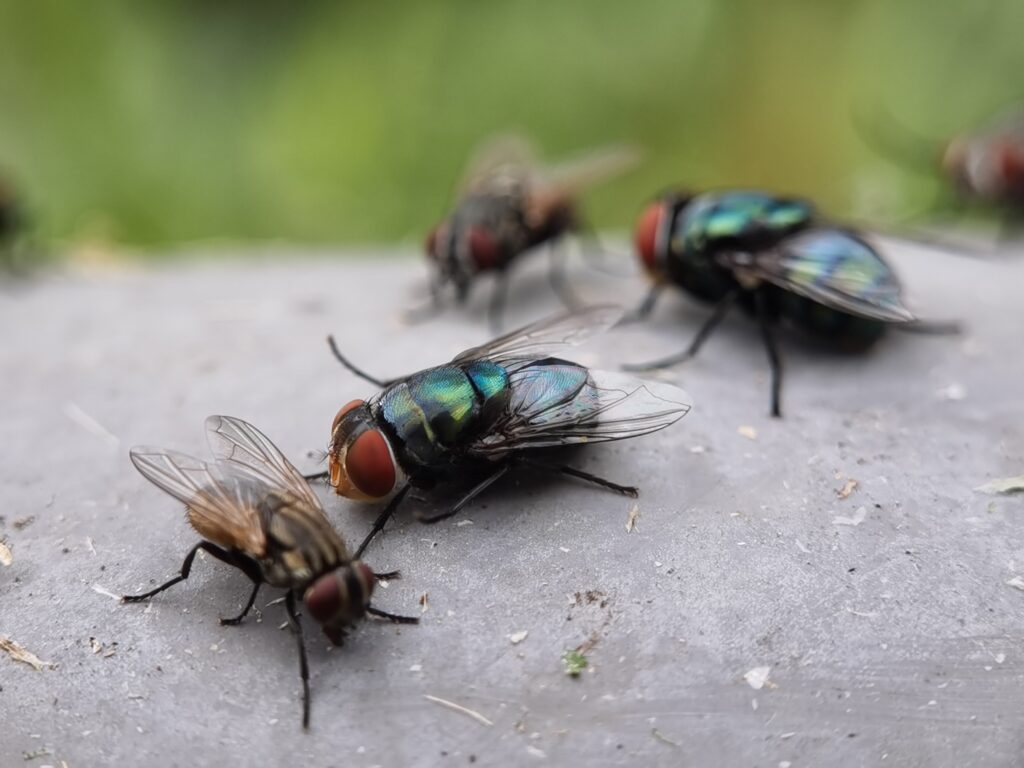
You open the back door to let the dog outside and immediately notice flies hovering near the frame, porch light, or garbage bin nearby. A few slip into the house before the door even shuts. Learning why flies swarm around doors in Johns Creek starts with understanding what attracts them to these areas. Trash containers, dirty drains, pet waste, and outdoor lighting can all draw flies toward doors and garages. This guide explains why flies gather near entrances and what homeowners can do to reduce fly activity around the property.
Key Takeaways
- Certain fly species may gather around doors and entry points during late summer, fall, and on warm sunny days in cooler months as they seek sheltered overwintering spots inside wall voids and attics.
- Proper identification matters because several fly types can look similar to the common house fly, and each may call for a different approach to control.
- Reducing attractants near doorways, keeping entry points sealed, and addressing breeding sources are the most practical first steps Johns Creek homeowners can take.
- When flies persist, a professional inspection can pinpoint the species and breeding source so treatment targets the root of the problem rather than just the visible adults.
How to Identify Flies Swarming Around Doors
Several fly species can gather around doors in Johns Creek, and telling them apart is the first step toward understanding the problem. Each type has distinct physical traits, preferred resting spots, and breeding habits that shape where and how you notice them around your home.
How to Tell Types of Flies Apart
Cluster flies are about 1/3-inch long, dark gray, and have a checkered black and silver abdomen. Newly emerged adults display short, golden-colored hairs on the thorax. The cluster fly is bigger and more sluggish than the common house fly, which makes it easier to distinguish once you know what to look for.
Face flies are harder to identify on your own. They so closely resemble the common house fly that only an expert can tell them apart. Their sluggish movement, buzzing, and tendency to collect around windows mirror cluster fly behavior.
Black flies are a separate group entirely, with larvae that require flowing water to develop. Eye gnats are small flies that can mechanically transmit bacteria, causing acute conjunctivitis, or pink eye, without biting.
How to Spot Flies Inside Your Johns Creek Home
Inside your home, cluster flies and face flies tend to collect around windows and doors. You may hear buzzing before you spot them. Their movement is noticeably slow compared to house flies, so you may see them resting on window glass or door frames for long stretches rather than darting around the room.
According to the University of Tennessee Extension, face flies, cluster flies, and blue bottle flies hibernate in attics and wall voids. If flies appear near interior doors or ceilings, they may be moving between those hidden resting areas and the living space.
Where Flies Show Up Around Johns Creek Homes
Outdoors, cluster fly larvae develop as parasites in earthworm bodies. In summer, adults lay eggs in cracks in the soil, and the maggots enter earthworm hosts through the body wall. That means yards with moist, worm-rich soil can support cluster fly populations close to the structure.
Black fly larvae develop through seven instars over a period ranging from about ten days to many months, depending on species and water temperature. Homes near flowing streams or creeks may notice more black fly activity around entry points.
Entry Points Flies Use Around Johns Creek Homes
Doors are a natural entry point because flies that hibernate in attics and wall voids need a way in and out of the structure. Gaps around door frames, as well as openings where walls meet the roofline, can give cluster flies and face flies access to interior voids where they rest. Identifying these access routes helps clarify why swarming activity concentrates at certain doors rather than others.
Why Fly Problems Develop in Johns Creek Homes
Fly swarming around doors tends to follow a seasonal pattern. According to Purdue Extension, cluster flies and face flies may become pests in homes during later summer and fall, on warm winter days, and into spring. Cluster flies, sometimes called “attic flies,” are especially active on warm, sunny days in early spring. For Johns Creek homeowners, that means door-area fly activity can stretch across multiple seasons.
Outdoor Nesting Areas for Flies
Flies that swarm near doors often spend time in sheltered outdoor spots before moving closer to your home. Cluster flies seek out warm surfaces on the exterior of buildings, which is why south-facing doorways can become gathering points when sunlight heats the surrounding wall. The areas immediately around entry doors serve as a natural staging zone when temperatures shift.
Food and Shelter That Attract Flies
Flies are drawn to food sources and sheltered warmth near your doors. biological waste on countertops and in trash receptacles close to entryways can pull flies toward the doorframe. Keeping those areas clean reduces what draws them in. The warmth radiating from a doorway on a cool day adds another layer of attraction, especially for cluster flies seeking a hibernation site.
How Flies Move Around Johns Creek Homes
Cluster flies are sluggish fliers, yet they can gather in large numbers around doors as they move between outdoor resting spots and indoor shelter. Their activity picks up noticeably on warm, sunny days, even in winter. This stop-and-start pattern means you may see sudden bursts of swarming one afternoon and almost nothing the next, depending on temperature swings in the Johns Creek area.
Trails and Entry Points Flies Use
Door gaps, weatherstripping wear, and frame cracks all give flies a direct path inside. Any opening near a door or its frame can funnel them into hidden spaces within your home. Addressing those gaps is one of the most practical steps you can take to reduce the number of flies that transition from swarming outside your door to settling in indoors.
Risks From Flies Swarming Around Doors in Johns Creek
Flies gathering around your doors in Johns Creek can signal more than a passing nuisance. Understanding the risks tied to different fly species helps you decide how quickly to respond and what to watch for inside your home.
Health Risks Linked to Flies
Some fly species that swarm near doorways pose little direct health concern. For instance, crane fly adults do not bite humans, and most simply mate and die within a few days of becoming adults. Still, large numbers of flies entering through open doors can create unsanitary conditions, especially when those flies are species that feed on biological waste.
Property Damage From Flies
Crane fly larvae, known as leatherjackets, can damage lawns by feeding on grass roots. While adults congregate around exterior lighting and doorways, the larval stage is the one that affects your turf. Homeowners who notice crane flies swarming near entries may want to inspect the surrounding lawn for thinning patches.
Cluster flies present a different property concern. According to the University of Minnesota Extension, they overwinter in large clusters within the attics or upper walls of homes and buildings. When they gather near doors in late summer and fall, they may be working their way into wall voids and attic spaces where they accumulate in large numbers.
Food Areas and Fly Activity in Johns Creek Homes
Flies that enter through doorways can reach kitchens and food prep areas quickly. Countertops and similar surfaces become attractive landing spots for flies that feed on biological waste. Keeping these areas clean helps reduce the appeal once flies make it indoors. Adults make up less than 10% of a fly population, so visible flies in food areas may point to a larger breeding source nearby.
When to Look Closer at Fly Activity in Johns Creek
Insects such as cluster flies get into homes in late summer and fall. If large numbers die off inside wall voids or attics, you may notice a larder beetle problem in the following season as those beetles feed on the accumulated remains. Paying attention to fly activity around your doors during this window helps you gauge whether flies are moving into your home’s structure.
Even species that seem no real threat on their own can create follow-on problems when they enter in large numbers. Monitoring your doorways during peak activity periods gives you a clearer picture of what you are dealing with before the situation compounds.
Professional Pest Control for Flies in Johns Creek
Adult flies emerge in late summer and early fall, seeking protected places to spend the winter. In many cases, they find their way into walls, attics, and basements. A structured approach to prevention, inspection, and professional control can help Johns Creek homeowners stay ahead of the activity.
How to Reduce Attractants for Flies
Keeping flies away from your doors starts with limiting what draws them there. Make sure window screens, doors, and vents are secure to keep flying insects from entering from outdoor sources. Even with screens in place, some flies squeeze through small openings found around the building, so sealing gaps matters just as much.
Outdoor lighting placement also plays a role. According to the University of Minnesota Extension, placing security lights on a pole shining toward the door, rather than mounting them on the building directly above it, can reduce the number of insects attracted to entry areas. Regular cleaning of countertops and areas where biological waste accumulates inside the home also helps.
Why Fly Control in Johns Creek Starts With Inspection
Fly control begins with identifying where the activity originates. Nextgen Pest Solutions technicians interview you to locate areas of high activity and identify the specific fly species involved, whether house flies, blow flies, phorid flies, fruit flies, drain flies, or others. Likely breeding areas, such as drains, garbage disposals, rotting food, pet areas, and litter boxes, are inspected closely.
Responding quickly with an inspection is a priority because adults make up less than 10% of the fly population. The real focus is on finding and addressing the breeding source rather than only targeting visible adults.
What to Expect During Professional Fly Treatment
After locating the source, Nextgen Pest Solutions technicians work on source reduction first. For drain flies, drains are foamed with products like Nyguard or BioDrain to remove biological buildup, since foaming ensures full coverage inside the pipe. For fungus gnats, plant soil is treated directly. Sanitation guidance is also provided so you know what steps support the treatment.
For adult fly control indoors, flies are sometimes treated with synergized pyrethrins or synthetic pyrethroids in aerosol or spray form. According to Purdue Extension, these materials give a quick knockdown but do not provide lasting protection and work best when applied to the air of closed rooms. Vacuuming and light traps may also be used for immediate knockdown.
What to Expect From a Fly Control Plan
Nextgen Pest Solutions structures fly control around the breeding source, not just the adults you see near your doors. Technicians certified through the University of Florida and the University of Georgia pest control programs assess your home and tailor the plan to the species involved. The company uses cutting-edge products that stay ahead of what many competitors offer.
Pricing for fly control starts at approximately $199 for the initial visit, with a follow-up visit at approximately $99, depending on the infestation. Each plan includes education on what you can do between visits to keep conditions less favorable for flies returning to your doorways.
Why Flies Swarm Around Doors: Bottom Line
Flies gathering around your doors in Johns Creek often trace back to seasonal patterns and nearby breeding sources. Certain species seek shelter in wall voids and attics, then become active around entry points on warmer days. The most practical response combines sealing gaps around doors, screens, and vents with removing the biological material where larvae develop.
Addressing the breeding source matters more than targeting the adults you see, since adults represent a small fraction of the overall population. If fly activity around your doors persists, contact Nextgen Pest Solutions for a professional inspection and targeted treatment plan.
Why Flies Swarm Around Doors in Johns Creek: FAQ
Why do flies gather at my door instead of somewhere else?
Doors create transitions between indoor warmth and outdoor air. Gaps around the door frame or worn weatherstripping can also make that entry point easier for flies to exploit.
Are the flies around my door dangerous?
Many of the fly species that cluster near doors do not bite. However, flies that breed in decaying biological matter are generally considered unsanitary pests. Keeping doors sealed and breeding sources cleaned up reduces the chance of flies moving indoors.
What can I do to reduce flies around my doors?
Start by making sure window screens, doors, and vents are secure. Clean countertops and areas where biological waste may accumulate. For drain-related species, fixing plumbing issues and cleaning drains can remove the conditions larvae need to develop.
When Should I Call a Professional?
If you have cleaned potential breeding sites and sealed entry points but still notice consistent fly activity, a professional can identify the specific species involved and locate hidden breeding areas such as drains, wall voids, or decaying material that may not be obvious. Nextgen Pest Solutions’ fly treatments start at approximately $199 for the initial visit, with follow-up visits at approximately $99, depending on the scope of the issue.