
You notice a trail of small ants moving along the siding, disappearing beneath loose trim, or crawling out from a window frame after heavy rain. A few hours later, more ants appear near a bathroom wall, deck post, or rotting tree stump in the yard. Many Johns Creek homeowners start searching for nesting sites when these ants keep showing up around moisture-damaged areas of the home.
Common acrobat ant nest locations include the inside of damp wood, wall voids, insulation, tree stumps, and decaying branches. In Johns Creek, they are especially attracted to homes with water damage, leaking windows, aging rooflines, or shaded landscaping that stays moist throughout the year.
This guide explains where acrobat ants typically nest around Johns Creek homes, what attracts them to certain areas, and how to reduce the conditions that allow colonies to spread indoors.
Key Takeaways
- Acrobat ants can nest outdoors under stones, in stumps, and in dead wood, and they may move indoors when conditions allow.
- Moisture and decaying wood can create favorable nesting conditions, so managing these around your home is worth attention.
- Knowing where acrobat ants nest helps you distinguish them from other ant species and choose the right approach to control.
- A trained service professional can locate nests that are hidden in walls or other hard-to-reach areas and recommend a targeted plan.
How to Identify Acrobat Ant Nests
Understanding where acrobat ants nest is the first step toward addressing an infestation. In most cases, you will find them under stones, in stumps, or in dead wood, and occasionally invade homes.
Some species also make nests in trees. Knowing what to look for, both on the ant itself and around your property, helps you narrow down nest locations.
How to Tell It’s an Acrobat Ant
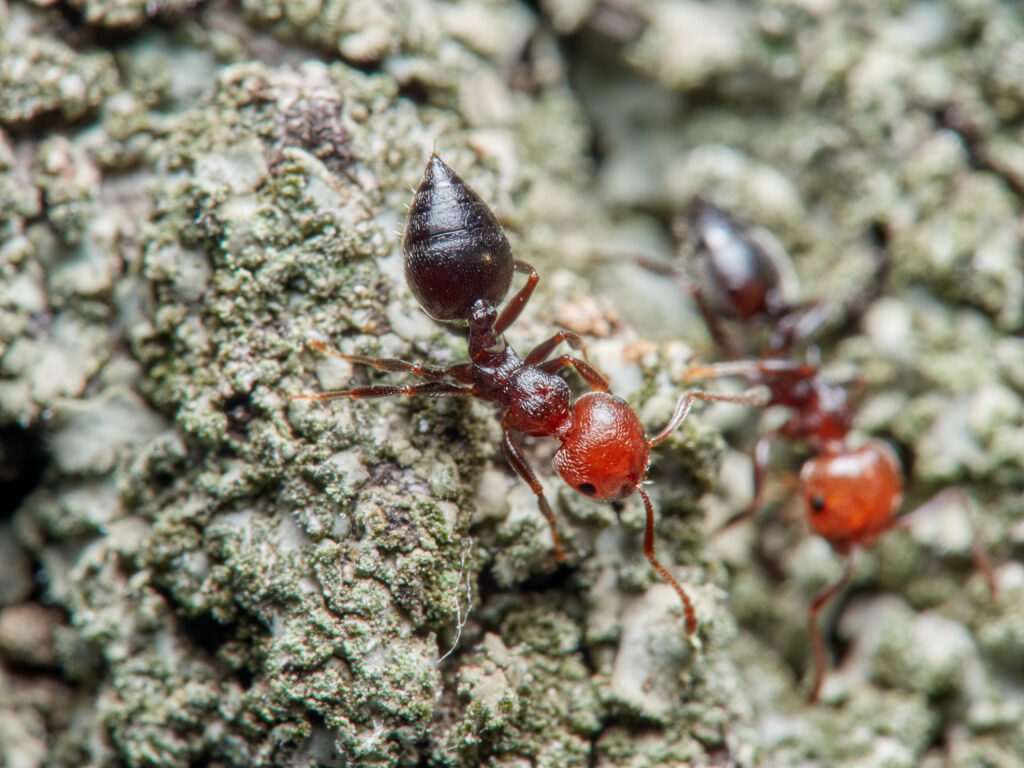
Acrobat ants are medium-sized and can resemble carpenter ants at first glance. But this species is distinguishable by dual pedicels (the two-segmented waist), uniform worker sizes, and two thoracic spines. If you see ants with those features near dead wood or stone, you are likely looking at an acrobat ant nest rather than a carpenter ant colony.
Where Acrobat Ants Show Up Around Homes
In temperate climates, acrobat ants seek warm, moist areas indoors. Wall voids, spaces under flooring, and areas near hot water pipes or heating systems are preferred nest sites for this species. Foraging worker ants may appear along consistent trails as they move between the nest and a food or water source.
Watch for lines of uniform-sized workers traveling along baseboards or near plumbing fixtures. Their presence in these warm, sheltered spots is a strong indicator that a nest is nearby within the structure.
Outdoor nests are typically found under stones, inside stumps, or within dead wood. Some species prefer elevated spots and make nests in trees.
How Acrobat Ant Nesting Problems Develop
Acrobat ants often catch homeowners off guard because their colonies can establish both outdoors and inside a structure. Understanding where these ants nest, what draws them in, and how they move helps you recognize a problem before colonies grow to several thousand ants.
Outdoor Nesting Areas Nearby
Ants usually nest in soil, and nest sites vary with species. According to UC IPM, colonies are often found next to buildings, along sidewalks, or close to food sources such as trees or plants that harbor honeydew-producing insects.
These outdoor colonies occasionally invade homes. They may follow trails from exterior nests under stones or in dead wood toward entry points where moisture or warmth is accessible. Gaps near pipes, utility openings, or areas where dead wood contacts the structure can serve as pathways from an outdoor nest into wall voids or under flooring inside.
Food Sources and Moisture
Worker ants may forage for food and water inside your home. Some foraging workers secrete pheromone trails that act as highways between colonies and food sources. Workers follow these trails through gaps in your home’s exterior, and the paths can lead deep into wall voids or wood. Once a reliable supply is found, workers carry food back to the colony and share it with other ants, including queens and brood.
Moisture is another strong draw. Acrobat ants can enter buildings in search of nesting sites or moisture and build colonies containing several thousand ants.
Increasing Ant Activity Around Homes
Ant colonies are mobile and can move to new locations when disturbed. Some species maintain more than one nest within a structure. Because colonies relocate, a nest you thought was only outside may shift indoors after yard work or other disruptions. This mobility makes pinpointing every colony difficult without professional help.
Risks From Acrobat Ants
Where acrobat ants choose to nest can tell you a lot about the condition of your home. Because these pests share nesting preferences with wood-damaging species, their presence may point to underlying moisture or decay issues that deserve attention.
Property Damage From Acrobat Ant Nests
Acrobat ants often target the same type of wood that attracts carpenter ants. That means they can establish nests in soft, moist wood, particularly weathered wood that has begun to decay. If it’s structural wood, these pests can worsen existing damage over time.
Food Areas and Acrobat Ant Activity
When acrobat ant nests are located near kitchens or pantries, foraging workers can become persistent indoor pests. Trailing ants move between the nest and food sources, creating visible lines of activity across counters and floors. The closer the nest is to food-preparation areas, the more likely you are to deal with ongoing intrusions from these pests.
When to Take a Closer Look at Acrobat Ant Activity
If you spot acrobat ants trailing indoors, it may be worth checking nearby wood for signs of moisture or decay. Pests drawn to soft, weathered wood can signal that a beam, frame, or other wooden component has begun to break down. Addressing the moisture source early can make the area less attractive to nesting pests.
Multiple trailing paths or repeated sightings in different rooms suggest there may be more than one nesting area. Monitoring these patterns helps you understand the scope of activity before deciding on next steps.
Professional Pest Control for Acrobat Ants
Dealing with acrobat ants starts with understanding where they hide. Nests in homes may be in roofs, underneath shingles, in fascia board or soffit voids, in floor or wall voids, and in similar locations. Because these spots are tucked away and hard to reach, a structured pest control approach is often necessary to locate and address the problem at its source.
How to Reduce Attractants for Acrobat Ants
Prevention plays a key role in limiting where acrobat ants can settle. Firewood and lumber stored near your home can harbor many ant species, so keep these materials well away from your buildings to reduce the chance of ants moving indoors. Removing these staging areas reduces the chances ants will move from outdoor harborage into your home.
Moisture problems also encourage nesting. When possible, replace rotted wood and correct moisture issues around your property. Addressing decayed wood removes the type of material acrobat ants favor for building colonies indoors.
Why Acrobat Ant Control Starts With Inspection
Locating and destroying the nest is the most important step in controlling ants nesting indoors. This is often challenging because nests are hidden and not easily discovered. Careful observations of worker ants will help you find the nest.
Watching worker ant activity along trails can reveal travel patterns that lead back to the colony. A pest control professional can help pinpoint the nest location when trails are difficult to follow. Baits work best when placed along foraging trails and near nest sites, so identifying these routes during inspection makes treatment far more targeted.
What to Expect From an Acrobat Ant Control Plan
A control plan that pairs treatment with structural corrections discourages re-nesting. As University of Minnesota Extension notes, the best way to control ants nesting indoors is to locate and destroy the nest, replace damaged or decayed wood, and address any moisture problems.
At Nextgen Pest Solutions, our Quality Pro-certified team uses products that competitors typically adopt 3–5 years later to address acrobat ant nest locations in your home. Baits are positioned along foraging trails and near nest sites for focused coverage, while any contributing moisture or wood-decay issues are flagged so you can make lasting corrections.
Bottom Line on Acrobat Ant Nests
Finding where acrobat ants nest is the most important step toward solving the problem. Around Johns Creek homes, these ants often spread through damp wood, wall voids, crawl spaces, and other hidden areas where moisture damage already exists. Because colonies can relocate when disturbed, surface treatments alone rarely solve the issue long term.
Effective control usually requires locating the nest, addressing moisture conditions, and treating hidden activity inside structural areas before the infestation expands. If acrobat ants keep returning around your home, Nextgen Pest Solutions can provide a detailed inspection, identify nesting areas, and deliver targeted ant control treatments designed to protect your property from ongoing ant activity.
Frequently Asked Questions
Why is it so hard to find acrobat ant nests?
Acrobat ant nests are often tucked inside wall voids, under stones, in dead wood, or within other concealed areas. Colonies can also have satellite nests apart from the main colony, which means there may be more than one location to address inside a single structure.
Should I try to treat an acrobat ant nest myself?
Minor outdoor activity may be manageable with basic prevention steps. However, when nests are inside walls or structural wood, it can be necessary to drill into voids and apply targeted treatments. A pest control professional has the skill and equipment to handle that work without causing unnecessary damage to your home.
What makes my home attractive to nesting ants?
Moisture problems and decaying wood are common contributing factors. Addressing leaks, improving ventilation, and replacing rotted wood can make your home less inviting to colony establishment.
Can the colony come back after treatment?
Ant colonies are mobile and may relocate when disturbed, so incomplete treatment can lead to the colony resettling nearby. Careful observation of worker ant trails helps confirm that every nesting site has been addressed, which is why professional follow-up can be valuable.