
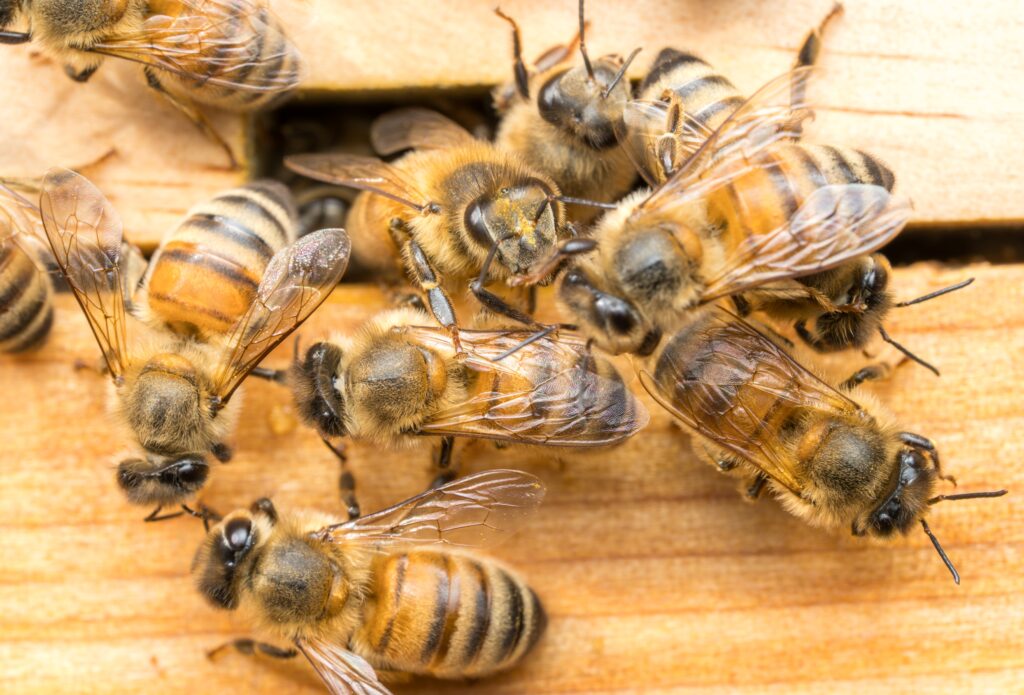
You step outside and hear a loud buzzing near the front porch, then notice thousands of bees clustered on a tree branch, mailbox, or fence post. A few days later, the group may disappear completely, or you may start seeing bees repeatedly flying in and out of a wall, soffit, or attic vent. Understanding the difference between a honey bee swarm vs hive situation helps you know whether the bees are temporarily resting or starting a permanent colony on your property.
In Georgia, honey bee swarms are often short-term clusters that form while bees search for a new nesting location. A hive, however, means the colony has already settled and started building comb inside a structure or protected space. Knowing which situation you are dealing with can help you avoid disturbing the bees and prevent larger problems around your home.
This guide explains how to tell the difference between a honey bee swarm and hive, when bees become a concern for homeowners, and what steps to take to handle the situation safely.
Key Takeaways
- A honey bee swarm is a temporary cluster that forms when bees leave an existing colony to search for a new nesting site, while a hive is an established colony with comb, brood, and stored honey.
- Swarming bees tend to be less defensive than bees protecting an established hive, so knowing which situation you are looking at helps you respond appropriately.
- A beekeeper may be able to collect a swarm, but an established colony inside a wall or structure often requires professional removal.
- Correct identification of a swarm versus a hive determines the right next step, whether that involves waiting briefly, contacting a beekeeper, or scheduling a professional assessment.
How to Identify a Honey Bee Swarm or Hive
Knowing the difference starts with understanding when and why each appears. According to UC IPM, the old queen and about half of the worker bees leave their former nest and seek a new home, usually in the spring but sometimes at other times of the year when local conditions permit. A swarm is a traveling cluster in transit, while a hive is the permanent nest the colony builds once it settles into a cavity.
How to Tell Honey Bee Swarms and Hives Apart
A swarm typically looks like a dense, ball-shaped mass of bees clinging to a tree branch, fence post, or other exposed surface. It is temporary. The bees are resting while scouts search for a suitable nesting cavity. There is no visible comb, and the cluster may move on within hours or a few days.
An established hive, by contrast, is hidden inside a protected cavity. Honey bees nest in cavities with a volume of at least four gallons, but prefer cavities with a volume of around nine gallons. Steady flight traffic in and out of a single opening is a strong indicator that you are looking at a hive rather than a swarm.
Honey Bee Swarms vs. Hives Indoor
Inside your home, the most common sign of a hive is bees entering and exiting through a gap in a wall, ceiling, or floor. You may also notice a faint buzzing coming from within a wall void. Some beekeepers rely on stethoscopes to find the edges of the nest, which gives them an idea of how difficult hidden nests can be to pinpoint.
A swarm rarely appears indoors. If you see a large cluster of bees gathering on an interior surface, they are most likely searching for a cavity to nest in and have wandered through an opening in the structure.
Why Honey Bee Problems Develop
Swarms are clusters of bees in transit, while hives are established colonies with combs already in place. Both can appear around your home, but they develop for different reasons and create different concerns.
Outdoor Nesting Areas for Honey Bees
Honey bees look for sheltered cavities when they transition from a swarm into a permanent colony. Common nesting locations include inside walls of houses, in or around chimneys, in outbuildings, fences, shrubs, water meters, utility boxes, barbecue grills, and soffits, or under decks. Swarms tend to gather on exposed surfaces nearby before relocating into one of these sheltered spots.
Food and Shelter That Attract Honey Bees
Once a colony settles, it can expand within weeks. An established colony may contain up to 100 pounds of honey, many adult and developing bees, and multiple beeswax combs. The stored honey and wax are what keep bees anchored to a site. Nearby flowers and water sources also encourage a colony to stay.
How Honey Bee Swarms Move Around Homes
A swarm typically lands on a branch, fence post, or exterior wall while scout bees search for a permanent nesting spot. If scouts find a suitable cavity on your property, the swarm can relocate there. Determining the exact location of the combs and size of the colony helps a professional decide the right approach.
Entry Points Honey Bees Use
Bees often enter structures through gaps in siding, rooflines, and soffits. Even a small opening can give a swarm access to a wall void or attic space.
Pay attention to gaps in siding, openings around chimneys and spaces beneath deck boards. These are the same types of access points honey bees use to move into a cavity and establish a nest. Watching where bees fly in and out during daylight hours helps you determine whether they have already settled in or are still scouting.
Risks From Honey Bee Swarms and Hives
Honey bee swarms may look alarming when thousands of bees cluster, but they are usually temporary and less defensive while searching for a new nesting site. The bigger concern begins when bees settle inside a wall, attic, soffit, or other enclosed area and start building a hive. Once comb and stored honey develop inside a structure, the risk of stings, defensive behavior, and property issues increases significantly.
Health Risks Linked to Honey Bee Swarms and Hives
For most Georgia homeowners, the biggest health concern is the risk of stings when bees feel threatened near an established hive. Swarming bees are typically focused on protecting their queen and searching for a new nesting site, so they are often less aggressive than bees defending brood and stored honey inside a colony. Once a hive becomes established around a home, however, defensive behavior can increase, especially near wall voids, rooflines, sheds, or outdoor gathering areas.
Multiple bee stings can cause severe pain, swelling, allergic reactions, breathing difficulties, and medical emergencies for people sensitive to bee venom. Pets and children are also at greater risk if they accidentally disturb an active hive, which is why ongoing bee activity around the same area should be evaluated quickly.
Property Damage From Honey Bee Swarms and Hives
A swarm is temporary and causes no structural damage on its own. Once bees become established, however, they build combs for rearing brood and storing food. That comb-building activity inside a wall void or other enclosed space is where property concerns begin.
Killing honey bees in place inside buildings, even with labeled products, often leads to undesirable consequences. An abandoned comb or stored honey left behind can create secondary problems, such as attracting other pests.
Professional Pest Control for Honey Bee Swarms and Hives
If a colony outgrows its current hive or the location becomes uninhabitable, bees swarm. A swarm clustered on your property is temporary and should be left alone while scouts search for a permanent home. If the bees remain and start building comb, they are no longer swarming. They are establishing a hive, and defensive behavior and property risks increase from that point forward.
A clustered swarm may appear frightening, but most swarm clusters are docile. Knowing whether you are looking at a temporary swarm or an established hive shapes what kind of help you need and how quickly you should act.
How to Reduce Attractants for Honey Bees
Sealing gaps in siding, rooflines, and soffits removes the sheltered cavities that scout bees look for when choosing a permanent nesting site. Checking vegetation around your home can also help you spot early activity before bees move in.
A swarm resting on a branch or fence post may leave on its own. An established colony inside a wall void or eave, however, is unlikely to relocate without intervention. Reducing access points makes your home less inviting to colonies searching for a long-term nesting location.
Why Honey Bee Control Starts With Inspection
At Nextgen Pest Solutions, the first step is a detailed inspection to determine exactly what you are dealing with. Our team examines high-risk areas like eaves, soffits, wall voids, attics, trees, and shrubs to locate all activity on your property. Distinguishing a docile spring swarm from a building colony changes the recommended approach entirely.
Beekeepers may be willing to collect swarms for free, but according to UC IPM, it generally is not worthwhile for them to remove established colonies without charge. In some areas, your only option will be to hire a structural pest control company. The inspection clarifies which situation applies to your home.
What to Expect During Professional Bee Treatment
Based on what the inspection reveals, our technicians at Nextgen Pest Solutions create a targeted treatment plan. For honey bees nesting inside wall voids or other hard-to-reach spots, we use specialized tools to address hidden nesting sites. Structure treatments may include injecting foams and dusts into attics, crawl spaces, wall voids, behind siding, and crevices.
Our technicians hold university-level pest control certifications and carry the protective equipment needed to handle bee situations up close.
What to Expect From a Bee Control Plan
After treatment, our team applies residual treatments to create a barrier around your home that discourages future nesting attempts. We also advise you on mechanical exclusion techniques, such as sealing structural gaps that could invite new colonies.
A swarm and a hive call for different levels of intervention. Swarms are often short-lived and docile, while established colonies typically require professional removal. A control plan from Nextgen Pest Solutions addresses both the immediate situation and longer-term prevention.
Honey Bee Swarms vs. Hives: Bottom Line
A temporary swarm is a cluster of bees in transit, while a hive is a permanent colony with comb, brood, and stored honey. Because the two situations call for different approaches, identifying what you are looking at is the first step. A beekeeper may help with a swarm, but an established colony in a structure often requires a pest control professional with hands-on removal experience.
If you spot honey bee activity around your home and are unsure what you are dealing with, contact Nextgen Pest Solutions for an inspection and assessment.
Frequently Asked Questions
How can I tell if bees on my property are a swarm or a hive?
A swarm typically appears as a large, visible cluster of bees resting on a branch, fence, or exterior surface. The bees are usually calm and temporary. A hive involves bees moving in and out of a fixed opening over an extended period. Repeated traffic at the same entry point is a strong sign of an established colony.
Will a swarm leave on its own?
Swarms are often temporary and may depart within hours or a few days. However, if the swarm settles into a wall void or another sheltered area, it can begin building a comb and become an established colony.
Should I try to remove bees myself?
It is best to leave bee removal to a professional. Nextgen Pest Solutions technicians are university-certified in pest control and have the protective equipment to handle the job with the right protective equipment.
Why is professional removal important for an established hive?
An established colony can contain a large amount of honey and beeswax comb inside a structure. If that material is not removed, it can attract other pests and cause additional problems. An inspection helps locate the colony so the removal addresses the full scope of the issue.