
You head into the basement to grab holiday decorations or laundry and spot a thin-legged pest hanging near the ceiling corner or water heater. A few more appear around storage bins, floor drains, or damp concrete walls after a stretch of rainy weather in Roswell. Many homeowners start searching for the meaning of daddy long legs in basements when these pests suddenly show up indoors.
In most cases, daddy long legs are attracted to cool, humid spaces that stay quiet and undisturbed. Basements often provide the moisture, shelter, and nearby insect activity they need to survive. Their presence can also point to excess humidity, clutter, or small gaps that allow pests to move inside more easily.
This guide explains why daddy long legs appear in Roswell basements, what conditions attract them, and how to make your basement less appealing to these long-legged pests.
Key Takeaways
- The name “daddy long legs” can refer to more than one type of arachnid, including cellar spiders and harvestmen, and knowing which one you have helps you understand what you are dealing with.
- Finding daddy long legs in your basement typically signals a dark, cool space that attracts these arachnids rather than a deeper structural concern.
- Reducing webs and addressing the conditions that draw them indoors are the core steps for managing daddy long legs in basement areas.
- Harvestmen are not true spiders, so the risks and habits associated with each group differ in ways worth understanding before you take action.
How to Identify Daddy Long Legs in Your Basement
When you notice long-legged creatures in your basement, the first step is figuring out exactly what you’re looking at. Several different arthropods are commonly called “daddy long legs,” but they do not all belong to the same group. Looking at the body shape and leg structure is usually the easiest way to tell them apart.
How to Tell Daddy Long Legs Apart in Your Basement
Harvestmen, often called daddy long legs, belong to the order Opiliones. According to the Mississippi State University Extension, harvestmen are not true spiders. Their bodies appear as one compact oval instead of two separate sections. They also have eight legs and are commonly found around foundations, crawl spaces, garages, and damp basements in Roswell.
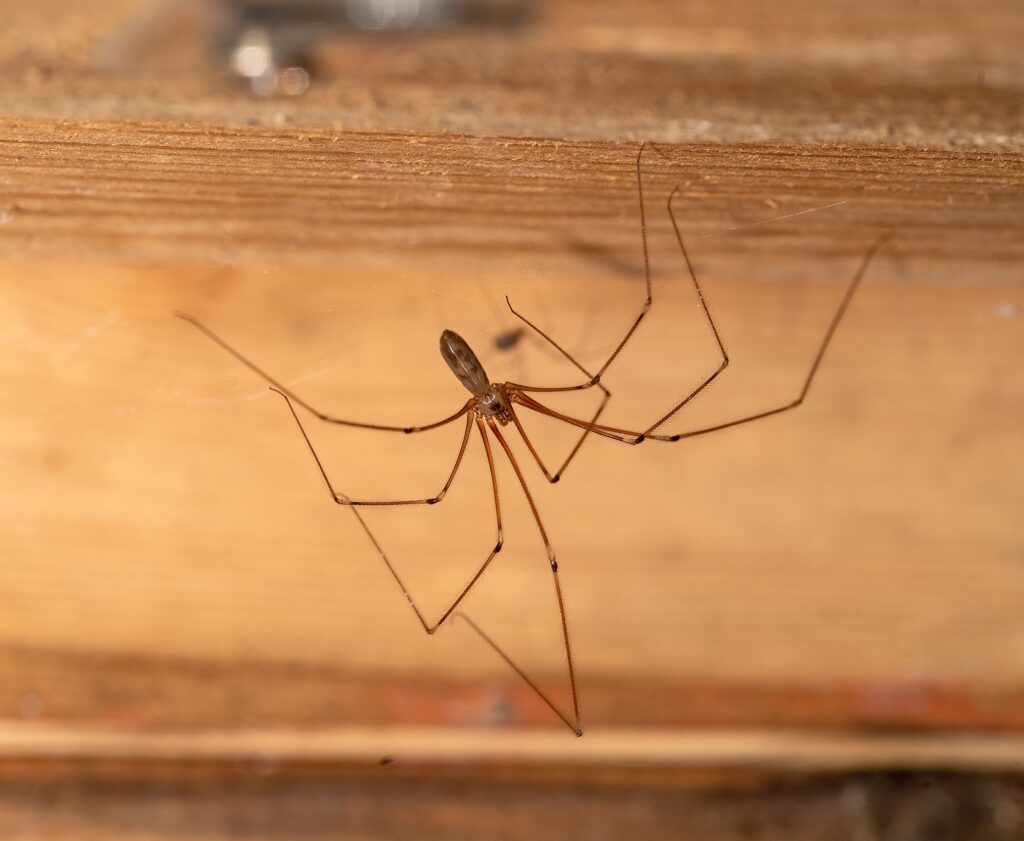
Cellar spiders are another basement dweller frequently referred to as daddy long legs. These spiders have two distinct body sections connected by a narrow waist and extremely long, thin legs. In Roswell homes, they commonly build loose webs around basement ceilings, storage areas, and quiet corners with excess moisture.
How to Spot Daddy Long Leg Activity Inside Your Home
Look for thin, wispy webbing in corners and along ceiling joists. Cellar spiders build loose, irregular webs that collect dust over time. Harvestmen do not spin webs, so finding a long-legged creature without any nearby silk is a clue you may be looking at a harvestman instead.
Body segments are the most reliable visual clue. If the creature’s body looks like one compact oval, it is likely a harvestman. If you can see a clear waist between two body segments, you are probably looking at a cellar spider.
Why Daddy Long Leg Problems Develop in Basements
When you spot daddy long legs in your basement, it usually means the space is providing exactly what these creatures prefer: darkness, cool temperatures, and shelter. Understanding what draws them in can help you figure out why they keep showing up.
Nesting Areas for Daddy Long Legs
Cellar spiders are most commonly found in basements, crawl spaces, and the corners of garages and other outbuildings. According to Mississippi State University Extension, cellar spiders also favor sheds, stairwells, and other dark, cool locations. These outdoor and semi-enclosed nesting areas sit close to your home’s foundation, giving daddy long legs easy access to basement-level openings.
Leaf litter, mulch beds, and stacked wood near the foundation create the kind of sheltered, moist habitat where harvestmen also gather before finding their way indoors.
How Daddy Long Legs Move Around Your Home
Daddy long legs cover ground with surprising reach. One species of cellar spider has a body measuring just 1/3 inch, and the round-bodied cellar spider is even smaller at about 3/16 inch, yet with legs spread, they can span more than two inches. That reach helps them navigate walls, ceilings, and corners throughout your basement. When disturbed, long-bodied cellar spiders shake and bounce in their webbing rather than flee, so they tend to stay put once settled.
Entry Points Daddy Long Legs Use in Basements
Daddy long legs gravitate toward the same dark, undisturbed spaces in and around your home. So, they follow the natural pathways connecting those areas. Any gap where a foundation meets a wall, or where utility access creates an opening, can serve as a route.
Risks From Daddy Long Legs in Your Basement
Finding daddy long legs in your basement can feel unsettling, but understanding the actual risks helps you respond appropriately. Cellar spiders often raise questions about venom and safety. A persistent myth claims these pests are extremely venomous. According to Kansas State University Extension, that myth is not true, and the bite of cellar spiders is not reported to be painful, nor is their venom toxic to humans.
They are also not known to cause structural or material damage to your home. Their main impact is a nuisance one. Cobweb spiders, which can also appear in basements, build webs where they hang upside down and bounce if disturbed. Over time, accumulating webs from these pests can make a basement look unkempt, but they do not harm surfaces or belongings.
When to Take a Closer Look at Daddy Long Leg Activity
A few daddy long legs in the basement are not unusual. When numbers increase, it may point to a higher population of small pests that cellar spiders feed on. Other spiders with long, fuzzy legs that may appear spiny, such as wolf spiders, can also turn up in basements and are sometimes confused with daddy long legs. Identifying which pests are actually present helps you decide whether conditions in the basement need attention.
Professional Pest Control for Daddy Long Legs
Finding daddy long legs in your basement usually points to conditions that attract spiders rather than a single, isolated visitor. Several species may be involved, and the right approach to control starts with understanding what you are dealing with and what is drawing them in.
Spider control efforts should focus on removing webs and hiding places. Basements tend to offer both in abundance, so clearing clutter, sealing cracks, and keeping corners free of webbing removes the conditions these spiders prefer.
Why Spider Control Starts With an Inspection
Not every long-legged spider in your basement is the same species. According to Mississippi State University Extension, there are several species, but the long-bodied cellar spider is the most common.
Other species can look similar at a glance. Mature spitting spiders are about 1/3 inch long, excluding their long, thin legs, and are light brown with dark, writing-like markings. Southern house spiders can reach up to 3/4 inch, excluding the legs. Females have robust, dark brown bodies and legs, but the area where each leg joins the body is silver.
A thorough inspection helps identify which species are present and where they are concentrated. That distinction matters because web placement, hiding spots, and control priorities differ from one species to the next.
What to Expect During Professional Spider Treatment
Nextgen Pest Solutions’ certified technicians begin by identifying the species in your basement, then target webs and hiding places throughout the space. Because we are Quality Pro certified and use cutting-edge products, we update our product lineup as new formulations receive EPA registration.
What to Expect From a Spider Control Plan
A control plan for daddy long legs in your basement addresses the conditions that support spider activity. Web removal paired with the reduction of hiding places is the core of ongoing management.
Your technician will note areas where webs rebuild and where cracks or crevices provide harborage for species like southern house spiders. Consistent follow-through on those areas helps keep basement spider numbers low over time.
Nextgen Pest Solutions is veteran-owned and operated, with roughly 60% or more of the team being veterans. Pricing is listed publicly on the Nextgen website, so you can review costs before scheduling service.
Daddy Long Legs in Basement: Bottom Line
Finding daddy long legs in your basement usually means the space has the moisture, shelter, and quiet conditions these pests prefer. In Roswell homes, harvestmen and cellar spiders are commonly drawn to damp basements, crawl spaces, and cluttered storage areas where they can stay hidden during the day. Reducing humidity, removing webs, and sealing entry points can help limit activity, but recurring sightings often point to larger moisture or pest conditions around the home.
If daddy long legs continue appearing in your basement, contact Nextgen Pest Solutions for a professional evaluation of your home. We can inspect your property, identify the source of the problem, and provide targeted solutions designed for long-term pest prevention.
Frequently Asked Questions
Are daddy long legs in my basement dangerous?
Daddy long legs found in basements are not considered a threat to people. They do not pose the same concerns as some other arachnids you may encounter indoors. Their presence is more of a nuisance than a safety issue for most homeowners.
Why do they gather in basements specifically?
Basements tend to be darker and cooler than other parts of the home. These conditions appeal to creatures that seek out sheltered, undisturbed spaces. Garages, crawl spaces, and sheds can attract them for similar reasons.
How can I reduce their spider population without professional help?
Removing webs and reducing hiding places are practical first steps. Lowering humidity with a dehumidifier and sealing gaps around doors, windows, and foundation cracks can also help make the area less hospitable.
When should I call a professional?
If you notice a persistent or growing population despite your own efforts, a professional can identify what you are seeing and recommend a targeted approach. A trained technician can also check for other pest activity that may be contributing to the problem.