
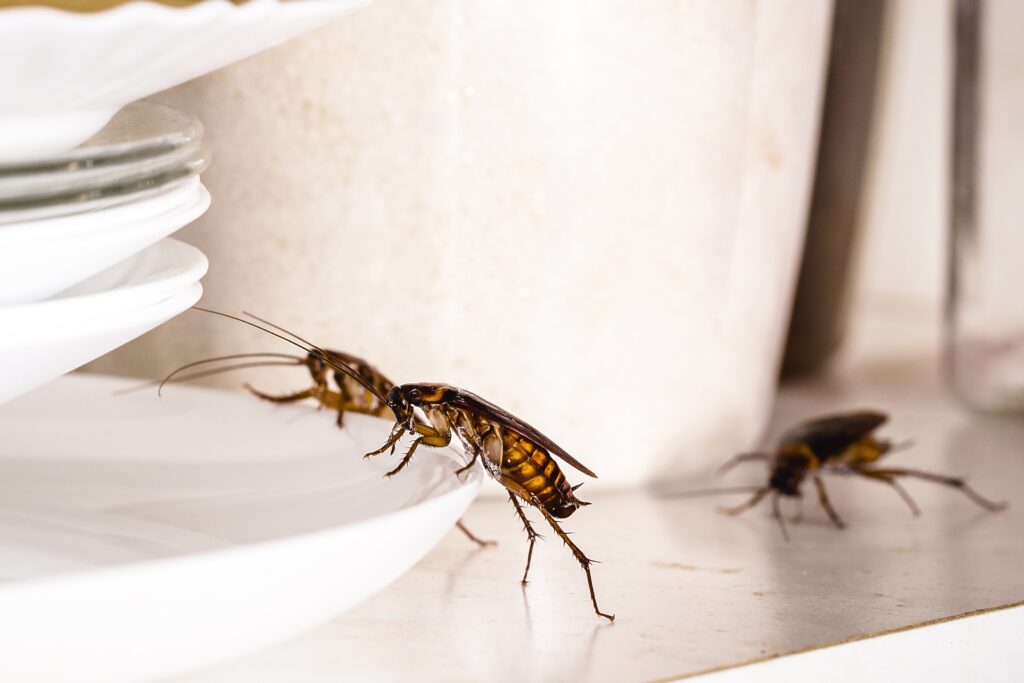
You walk into the kitchen late at night and hear a quick flutter near the cabinets or ceiling. A large roach suddenly glides across the room before disappearing behind the refrigerator or under the sink. In Sandy Springs, American roaches flying at night usually means the pests are searching for food, water, or shelter inside your home.
American roaches are more active after dark because they avoid light and prefer damp areas where they can move unnoticed. During Georgia’s warmer months, these roaches often enter homes through garages, drains, crawl spaces, and small exterior gaps. This page explains why they fly at night, what attracts them to Sandy Springs properties, and what you can do to keep them from coming back.
Key Takeaways
- American cockroaches become more active at night because they leave damp outdoor hiding spots to search for food, moisture, and shelter around homes.
- Large reddish-brown roaches seen near exterior lights, garages, kitchens, crawl spaces, or bathrooms after dark are often American cockroaches, though some flying roaches may be other species such as Asian cockroaches.
- American cockroaches can spread bacteria, contaminate food areas, and leave behind allergens, droppings, and debris in hidden parts of the home.
- When flying roaches appear repeatedly indoors, a professional inspection can help identify the species and address the source of activity.
What Causes American Roaches to Become Active at Night
American cockroaches are nocturnal. They hide during the day and come out at night to look for food, water, and moisture. That pattern means you may not notice a growing population until you flip on a light and see one scurrying across the room.
In Sandy Springs, warm evenings, humid air, and damp outdoor conditions around crawl spaces, mulch beds, and wooded lots create the type of environment that encourages nighttime movement around homes.
Outdoor Areas That Support American Roaches
American cockroaches usually begin outdoors before moving closer to the home at night. According to UF/IFAS Extension, they commonly hide in moist, shaded areas such as mulch, woodpiles, hollow trees, leaf litter, storm drains, and damp crawl spaces where humidity stays high throughout the day.
They are occasionally found under roof shingles and in attics. These hiding spots often sit close to exterior walls, garages, and patios. After dark, roaches leave those sheltered areas to search for moisture and food, especially after rainstorms or during long stretches of humid Georgia weather when outdoor populations become more active.
Food and Moisture That Attract Roaches Indoors
Food and water sources near the home make nighttime activity more common. Pet food left outside overnight, overflowing trash bins, grease near outdoor grills, and standing water around AC units or gutters can all attract roaches toward entry points around the structure.
Once indoors, American cockroaches usually settle near kitchens, laundry rooms, water heaters, bathrooms, and utility spaces where warmth and moisture collect. Even small plumbing leaks under sinks or condensation around appliances can create favorable conditions that support continued nighttime activity.
How American Roaches Move Through Homes at Night
American cockroaches spend most of the day hidden in tight, dark spaces where airflow stays warm and humid. They often shelter behind appliances, beneath storage boxes, inside wall voids, or around crawl space openings before emerging at night to travel between food and water sources.
Because they can fit into narrow gaps, small openings around doors, utility lines, attic vents, and weatherstripping can become regular travel routes indoors. A roach sighting late at night may seem random, but repeated activity in the same area often points to a nearby shelter and a reliable moisture source.
Exterior Entry Points American Roaches Use at Night
Any gap near an exterior light source is a likely pathway. Because most cockroach species are attracted to warmth and moisture, openings near kitchens, bathrooms, and utility rooms can funnel them inside. Larger species can fit through surprisingly small gaps, so even modest cracks around doors and windows deserve attention during your inspection.
How to Identify American Roaches Flying at Night
When a large cockroach suddenly glides across your porch, garage, or kitchen after dark, identifying the species is the first step toward solving the problem correctly. In Sandy Springs, homeowners often confuse American cockroaches with other large roach species because several types become more active on warm, humid nights and may appear near lights, entryways, or damp outdoor areas.
How to Tell American Roach Species Apart
Size and markings are the fastest way to separate species. The German cockroach is only about 1/2 to 5/8 inch long and carries two dark stripes on the front portion of its thorax. The Oriental cockroach is dark brown and measures roughly 1 to 1-1/4 inches depending on sex. The American cockroach is the largest species you are likely to find inside a building.
The Asian cockroach looks nearly identical to the German cockroach, yet its behavior sets it apart. According to the University of Georgia pest guide, the Asian cockroach flies toward light, a behavior rare among cockroaches, which is rare for a cockroach. If you see a small, striped roach flying directly toward your outdoor lights at night, you may be looking at an Asian cockroach rather than an American roach.
Where You’re Most Likely to Notice Roach Activity
Large roaches usually stay hidden during the day and become active after sunset when temperatures cool slightly, and moisture levels rise. Around Sandy Springs homes, homeowners often notice activity near outdoor lighting, garage doors, crawl space vents, water meters, or damp areas around the foundation where roaches shelter during the daytime.
Inside the home, activity often appears near kitchens, laundry rooms, bathrooms, or utility areas where warmth and moisture collect. Roaches may move along baseboards, behind appliances, or near sinks searching for water and food during the night. Seeing repeated nighttime activity in the same areas usually means conditions nearby are supporting an active roach population.
Risks Associated With American Roaches
Seeing a large roach move through your home after dark is more than just unpleasant. When American cockroaches become active indoors at night, they often travel through kitchens, utility spaces, garages, and other areas where moisture and food are available, increasing the chances of contamination and ongoing indoor activity.
Health Risks Linked to American Roaches
These insects move through drains, crawl spaces, garbage areas, and other unsanitary environments before entering homes. As they travel across countertops, cabinets, pet feeding areas, or pantry spaces at night, they can spread bacteria and other contaminants onto surfaces used daily by your family.
Their droppings, shed skins, and body fragments can also affect indoor air quality over time. In homes with ongoing activity, these particles may build up behind appliances, inside cabinets, or around hidden nesting areas where homeowners may not immediately notice the problem. For some people, especially children or those with asthma and allergies, prolonged exposure to cockroach allergens may contribute to respiratory irritation indoors.
When to Take a Closer Look at Roach Activity
A single flying roach does not always mean there is a large infestation, especially since American cockroaches often wander indoors from outdoor harborages. But seeing large roaches repeatedly at night around the same rooms, entry points, or moisture areas usually signals conditions that are supporting continued activity nearby.
You may also notice droppings near baseboards, a musty odor around hidden spaces, shed skins near appliances, or activity around pet food and trash areas after dark. When sightings become more frequent over consecutive nights, it is usually time to inspect both the inside and outside of the home more closely
Professional Pest Control for American Roaches
When American roaches take flight near open doorways after dark, it can be startling. Understanding what draws them in and how pest control professionals address the problem can help you take the right steps to protect your home.
How to Reduce Attractants for American Roaches
Sanitation is one of the core pillars of cockroach management. Keeping food prep areas clean, storing food in sealed containers, and removing standing water can make your home less appealing to American roaches that fly toward structures at night. Reducing potential entry opportunities near doors and windows can limit access.
Exclusion matters just as much as cleanliness. Sealing gaps around doors, windows, and utility entry points reduces the chances that a flying American roach lands near your home and finds its way inside. According to Texas A&M AgriLife Extension, cockroaches are best controlled through an integrated pest management process that combines inspection, sanitation, exclusion, and the use of low-toxicity products.
Why Inspections Matter for Roach Control
An inspection of harborage sites, entry points, and moisture sources identifies where American roaches rest during the day before flying at night. Homes in Sandy Springs with crawl spaces, mature trees, or dense landscaping often have multiple outdoor hiding areas that contribute to recurring activity. Identifying those locations early helps create a more targeted treatment plan instead of relying on temporary surface-level fixes.
A technician looks for moisture buildup, entry points, droppings, harborages behind appliances, and exterior conditions that may be allowing roaches to move indoors at night. Nextgen Pest Solutions technicians are certified through the University of Florida pest control programs. That training means inspections follow a structured approach, focusing on the specific areas where American roaches tend to harbor rather than guessing.
What to Expect During Professional Roach Treatment
Once inspection identifies harborage areas, targeted treatment follows. As UC IPM notes, treatment of harborage sites may be required when populations are high and roaches are moving into buildings. Gel bait formulations can be applied to manage cockroach species living inside structures.
Baits are commonly placed in hidden areas where roaches travel, such as behind appliances, near plumbing lines, and around wall voids. Unlike broad over-the-counter sprays, targeted applications focus on the areas where roaches actually shelter and move, helping reduce activity without unnecessary treatment throughout the home.
If sprays are ever used, all dishes, cookware, and utensils should be removed or covered beforehand. A professional approach avoids those risks by relying on precisely placed products.
Long-Term Prevention with a Roach Control Plan
A complete cockroach control plan ties inspection, sanitation guidance, exclusion recommendations, and targeted product application into one coordinated effort. Nextgen Pest Solutions is a Quality-Pro certified, veteran-owned company that uses products that run 3–5 years ahead of what most competitors use.
Because American roach populations can rebuild when harborage sites remain available, ongoing monitoring is part of a sound plan. Integrated pest management keeps the focus on long-term conditions rather than one-time fixes, addressing the root factors that bring flying American roaches to your property after dark.
Dealing With American Roaches at Night: Bottom Line
American roaches can catch homeowners off guard when they glide through the air after dark. Understanding that this behavior is tied to warm conditions and the species’ nocturnal habits helps you respond calmly and take the right steps. Combining good sanitation, sealing entry points, and reducing outdoor harborage sites gives you the best chance of keeping these roaches out of your living space. An integrated approach that includes inspection and targeted treatment tends to outperform any single tactic.
If you continue seeing large roaches around your kitchen, garage, bathrooms, or exterior lights at night, a professional inspection can help identify where the activity is starting and how the insects are getting inside. Nextgen Pest Solutions uses targeted treatment methods and integrated pest management strategies designed around the specific conditions supporting roach activity on your property. Our trained technicians can help you reduce nighttime roach activity and build a long-term prevention plan for your home.
Frequently Asked Questions
Why do these roaches fly mostly after dark?
Cockroaches are largely nocturnal, spending the majority of their time hidden during the day. When warm evening air provides favorable conditions, some adults may take short flights or glide toward light sources or new food and water sources.
Are all cockroach species capable of flight?
No. Some species have reduced wings or no wings at all. Oriental cockroach males, for instance, have short wings that do not fully cover the abdomen, while females are completely wingless. Other species, such as the Asian cockroach, fly and are drawn to light.
What is the best way to control them?
An integrated pest management approach that pairs sanitation and exclusion with targeted, low-toxicity treatments delivers consistent results. When populations are high and roaches are entering buildings, professional treatment of harborage sites may be required.
Could the flying roach be a different species?
It is possible. The Asian cockroach, for example, flies toward light and is attracted to it more than most cockroach species, which sets it apart from most cockroach species. Proper identification matters because treatment strategies can vary depending on the species involved.