
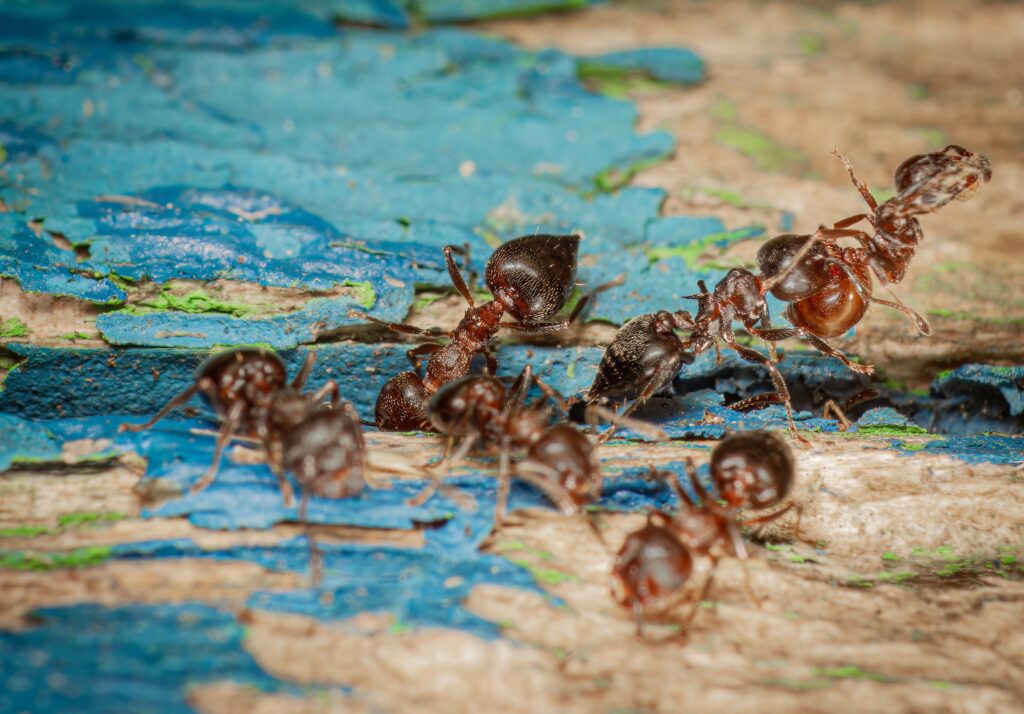
You clean the counters, take out the trash, and still notice small reddish-brown ants moving along windowsills, sinks, or baseboards. Those insects may be acrobat ants, a species commonly found around Sandy Springs homes where moisture, damp wood, and accessible food sources are present. While a few ants may not seem concerning at first, repeated sightings around the same areas can point to nesting activity inside walls, crawl spaces, or other hidden parts of the home.
Understanding what attracts acrobat ants indoors can help you recognize when simple prevention steps may not be enough. This article explains what draws these ants indoors, where they tend to hide, and when it may be time to consider professional ant control.
Key Takeaways
- Acrobat ants are drawn indoors by food sources such as honeydew from aphids and other insects, as well as a broad range of household food scraps.
- Moisture and decaying wood in or around your home can provide the nesting conditions acrobat ants look for when they move inside.
- Worker ants forage along consistent trails between outdoor colonies and indoor entry points, so spotting a few ants often points to a larger pattern worth investigating.
- Reducing moisture issues, managing indoor plants that may harbor aphids, and keeping food sources sealed are practical first steps toward making your home less attractive to these ants.
Why Acrobat Ants Enter Sandy Springs Homes
Acrobat ants usually move indoors when they find moisture, shelter, and easy access to food. Sandy Springs homes with window frames, rooflines, crawl spaces, and siding that stay damp for long periods may see more activity. Soft or water-damaged wood around these areas gives ants protected places to nest close to steady moisture.
Moisture
Leaking pipes, damp crawl spaces, condensation around windows, and water-damaged trim can all create suitable nesting areas. In Sandy Springs, long periods of humidity can keep these areas moist enough to support ant activity.
Food Sources
Outdoors, acrobat ants feed on insects and honeydew produced by aphids. But they feed on a wide range of foods, including sweets, meat, and other high protein food, which can keep workers returning once they find them indoors.
These insects may return to kitchens, pantries, or pet feeding areas once they locate food. Even small crumbs behind appliances or sticky residue near trash bins can attract workers.
Outdoor Conditions
Many Sandy Springs properties have shaded landscaping and wooded surroundings that hold moisture after rain. These conditions can support insects that acrobat ants feed on while also creating protected nesting areas.
Woodpiles are a common example. Firewood stacked directly against the home often stays damp and shaded, especially after storms. Decaying wood attracts insects, giving ants access to both food and shelter close to the structure.
Entry Points
Acrobat ants enter structures through small gaps. According to the University of Tennessee Extension, common entry points include window sills and door steps. Sealing these openings helps exclude ants from your living space. When a nest cannot be located, bait paired with a slow-acting control agent may help manage the colony by using a food source the ants carry back.
Paying attention to where you spot trailing ants can reveal the entry points they rely on most, giving you a clearer picture of how the problem is developing.
How to Spot Acrobat Ants
Acrobat ants are named for their habit of raising their heart-shaped abdomen over their body when disturbed. According to Texas A&M AgriLife Extension, the acrobat ant nests under stones, in stumps, or in dead wood and occasionally invades homes. Recognizing their appearance and preferred nest sites helps you catch activity early.
These ants are sometimes mistaken for carpenter ants because both species nest around wood. The difference is that acrobat ants usually settle in wood that is already damp or decaying. Indoors they nest in wall voids and rotted wood, especially window frames. Carpenter ants, by contrast, damage wood as they build their nests, often leaving behind sawdust piles.
If you find small ants with a heart-shaped abdomen near rotted window frames rather than sawdust debris, you are likely dealing with acrobat ants.
Common Areas Where Acrobat Ants Hide
Locating a nest can be challenging because nests are often hidden. Careful observation of worker ants can help. Check around wall voids, crawl spaces, attic framing, and damp wood near plumbing. Bathrooms, kitchens, and laundry rooms often provide the moisture conditions they seek.
Window frames are another common nesting area. Older windows with soft or water-damaged wood may allow ants to settle inside gaps around the frame. You may notice trails forming along the same windowsill after rain or during humid weather.
Outdoors, acrobat ants nest under stones, in stumps, or in dead wood. Some species make nests in trees. You may see workers entering and leaving the house using “highways” such as building edges, landscape bed borders, wires, fences, hoses, and plumbing systems. Following those trails can help you trace activity back to the nest site.
Signs Acrobat Ants May Be Nesting Nearby
A few ants indoors may not always point to a larger issue, but repeated activity in the same location can suggest a nearby nest. Acrobat ants often travel in visible trails along pipes, baseboards, utility lines, and window edges.
Some homeowners notice increased activity around sinks, dishwashers, or leaking outdoor faucets. Others see ants appearing after storms or during stretches of humid weather when damp wood becomes more common around the structure.
Risks Associated With Acrobat Ants Indoors
Understanding what attracts acrobat ants indoors can also help homeowners recognize the problems that may develop once these ants settle inside. They are mostly considered nuisance pests, but repeated activity insider your home can point to hidden moisture issues nearby.
Health Risks Linked to Acrobat Ants
Acrobat ants can bite if disturbed, though they do not sting and are not considered dangerous to most people. Bites are usually mild but can still become irritating when ants move through kitchens, pantries, or other living spaces where people spend time.
Property Damage and Acrobat Ants
Acrobat ants commonly nest inside wood that has already been damaged by moisture. According to Mississippi State University Extension, indoor ant activity around decaying wood often points to structural or plumbing leaks that create damp conditions inside walls or around windows.
Their presence may not mean severe structural damage, but it can signal moisture issues that should be addressed. Soft wood around window frames, leaking pipes under sinks, or damp crawl spaces can all create suitable nesting conditions if left untreated.
How to Make Your Home Less Attractive to Acrobat Ants
Indoor plants can be a hidden draw for ants. Aphids and other insects that feed on houseplants produce honeydew, which attracts ants looking for a food source. Check your indoor plants regularly and address any aphid activity you find on leaves or stems. Cleaning up crumbs, sealing pantry items, and avoiding overnight pet food can also help reduce indoor food sources.
Moisture is another major attractant. According to the University of Tennessee Extension, keeping wood at 10% to 12% moisture makes it less susceptible to ant infestation and related pest activity. If crawl space joists, subflooring, or insulation stay wet from condensation, a fan placed at the crawl space access opening can help as a temporary measure. Repair leaking pipes, roof leaks, and damaged gutters promptly. Replacing water-damaged wood may also help remove potential nesting sites.
Outside the home, trim tree branches away from the roof and keep mulch several inches from the foundation. Replacing rotted wood and correcting moisture problems removes the conditions acrobat ants seek out when they move into wall voids and structural gaps.
When Professional Ant Control May Be Needed
Spotting a few foraging workers may seem minor, but it can indicate a larger issue behind your walls. Because these ants often nest inside hidden wall voids or damaged wood, locating the colony is not always straightforward.essed.
Pay attention to repeated ant activity near bathrooms, kitchens, or any area where pipes run through walls. Consistent trails in the same location suggest a nest may already be established nearby. If acrobat ants continue appearing in your Sandy Springs home, a professional inspection may help identify the source of the problem.
Professional Pest Control for Acrobat Ants Indoors
Reducing what draws acrobat ants inside your home is the first step, but a lasting solution often requires professional pest control. Addressing moisture problems, removing attractants, and treating wall voids where acrobat ants nest all work together to resolve an infestation.
Why Ant Control Starts With Inspection
Before any treatment, a thorough inspection helps locate where acrobat ants are nesting and what conditions are supporting the infestation. Pinpointing exact entry points and moisture sources matters. Without that step, treatment may miss the core of the problem.
Nextgen Pest approaches technicians are certified through the University of Florida and University of Georgia pest control programs. That training supports accurate identification and targeted inspection, so the right problem gets addressed from the start.
What to Expect During Professional Ant Indoor Treatment
A pest control professional can apply dust into the wall void to reach the colony where it nests. This approach targets ants in areas that are difficult to access with surface treatments alone.
Indoor ant infestations may also be treated with aerosol sprays or ready-to-use trigger pump sprays containing active ingredients such as bifenthrin, prallethrin combined with tralomethrin, or pyrethrins combined with PBO and permethrin, as noted by Mississippi State University Extension. A professional can determine which product and application method fits your situation.
What to Expect From an Ant Control Plan
A complete control plan pairs treatment with the corrective steps that prevent re-infestation. That means replacing rotted wood, fixing leaks, and lowering moisture levels in problem areas like crawl spaces and wall cavities.
Nextgen Pest Solutions is a veteran-owned, Quality-Pro certified company that uses cutting-edge products. Their approach combines targeted treatment for the active infestation with guidance on reducing the attractants that brought acrobat ants indoors in the first place.
What Attracts Acrobat Ants Indoors: Bottom Line
Acrobat ants move indoors when they find moisture, decaying wood, or accessible food sources. In Sandy Springs, humid weather, roof leaks, crawl space moisture, and decaying wood can all create conditions that support nesting activity. Addressing those issues early may help reduce indoor ant activity before it spreads into hidden areas like wall voids or window frames.
Long-term control often requires a combination of targeted treatment, moisture correction, and sealing entry points to help prevent ants from returning. Nextgen Pest Solutions uses targeted Integrated Pest Management methods to identify nesting areas, treat active infestations, and help homeowners address the conditions attracting acrobat ants indoors so the problem can be managed more effectively over time.
Frequently Asked Questions
Why do acrobat ants come inside?
Acrobat ants typically forage indoors when food or favorable nesting conditions are available. Moisture problems from structural or plumbing leaks can create decaying wood that appeals to these ants as a nesting site.
Can acrobat ants bite?
Acrobat ants can bite, but they do not sting. When foraging workers enter a home, they are generally considered a nuisance rather than a direct threat.
How can I reduce moisture that draws acrobat ants in?
Fix plumbing leaks promptly, replace any rotted or water-damaged wood, and ensure proper drainage around your home’s foundation. Reducing excess moisture removes a key condition that can attract acrobat ants indoors.
Should I hire a professional for acrobat ants?
When acrobat ants are found nesting in wall voids or other hidden areas, professional treatment may be needed. A pest control professional can apply targeted treatments into voids and help identify the moisture or structural issues that allowed the ants to establish a nest.