
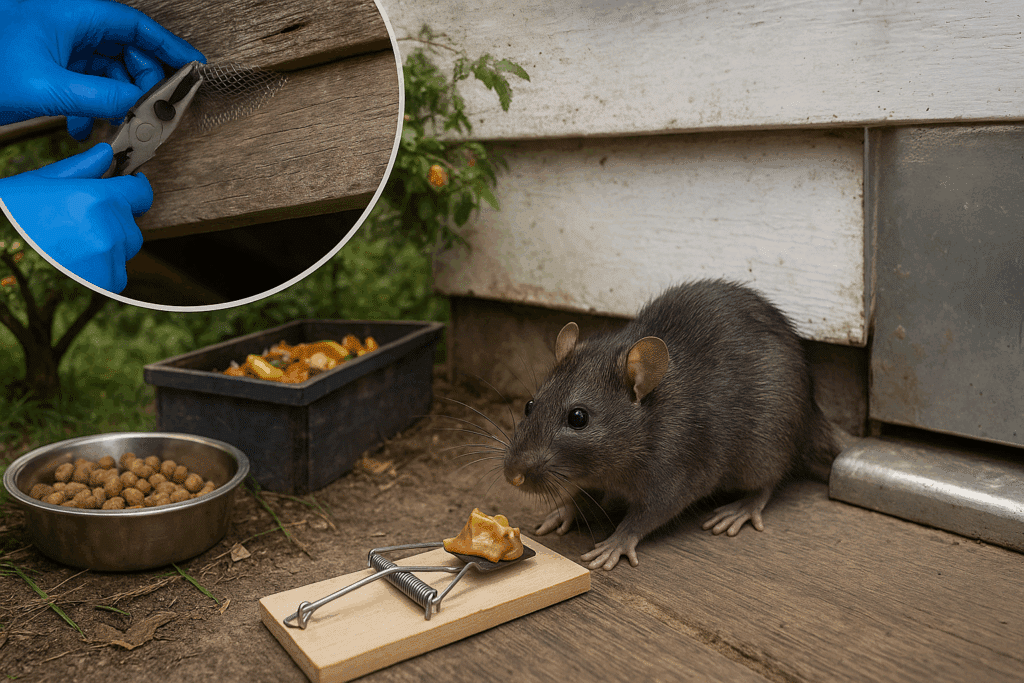
Hearing scratching sounds in your attic or walls late at night often means rats are present. If you find rats in your home, you need to act quickly and carefully. These rodents contaminate food, chew electrical wires, and damage insulation and plumbing. In Georgia, Florida, and Alabama, warm weather keeps rats active year-round, allowing infestations to spread quickly.
Rats rarely travel alone. One rat often indicates a larger infestation nearby in attics, crawl spaces, or basements. They reproduce fast, build hidden nests, and stay close to food and water. Small gaps around vents, pipes, and rooflines can allow rats inside.
Using the wrong methods makes rat problems worse. This guide shows you what to do when rats are in your home, how to avoid common mistakes, and when to use professional rat control to protect your family and property.
Key Takeaways
- Rats enter homes through small openings near roofs, pipes, and crawl spaces. When homeowners leave gaps unsealed, rats use them to get inside.
- Common signs of rats include droppings, gnaw marks, scurrying noises, and rub marks along walls. Spotting these early helps limit damage and reduces the risk of a growing infestation.
- DIY deterrents such as peppermint oil may temporarily deter rats, but they do not address nesting or breeding. Without removing the source of the problem, infestations often return.
- The fastest and safest solution is calling a licensed pest control expert. Professional treatment targets the infestation at its source and helps prevent future rat activity.
Video Guide: How to Identify What Type of Rat You Have
This video helps you tell roof rats from Norway rats by breaking down size, behavior, and nesting habits. Knowing which type of rat you’re dealing with makes it easier to identify where they’re hiding and what’s attracting them. Watch before setting traps or sealing entry points, so your next steps address the problem correctly.
Recognizing the Common Signs of Rats Indoors
If you suspect rats in the house, the first step is confirming activity. Common rat signs include droppings, gnaw marks, and teeth marks on wood, trim, or electrical wires. You may also see dark rub marks along baseboards where rats often travel. Many homeowners hear scurrying or scratching sounds inside walls or ceilings at night.
Some signs go unnoticed at first. In some cases, homeowners confuse rat activity with mice. Rats leave larger droppings and cause more damage than mice.
In the Southeast, Norway rats and roof rats are the most common species. Norway rats usually nest in basements and crawl spaces. Roof rats prefer attics, rafters, and upper levels of the home.
Because rats stay active at night, many infestations grow larger before homeowners notice. If you find droppings near food or smell a strong odor, the infestation may already be advanced.
Why You Should Act Fast to Get Rid of Rats
Identifying rats from mice is critical for effective rodent control. A rat problem is more than an inconvenience.
Rat droppings and urine can pose health risks, such as hantavirus, when contaminated dust becomes airborne. Rats also carry fleas that can spread throughout the home and affect pets.
Rats chew constantly to wear down their teeth. This behavior damages walls, furniture, insulation, and electrical wiring. Chewed wires increase fire risk and power problems. In attics and crawl spaces, rats may damage plumbing lines, which leads to moisture issues that attract other pests.
Waiting too long allows infestations to grow. Roof rats can reproduce several times each year, turning a minor problem into a widespread issue quickly.
What Not to Do When You Have a Rat Problem
When rats appear, many homeowners rush to buy traps or repellents. The wrong approach often makes the situation worse.
Sealing entry points too early can trap rats inside walls, forcing them to chew through insulation and wiring. Randomly placing traps without understanding rat behavior leads to poor results. Glue traps alone rarely fix a full rat infestation.
Improper use of rat poison can be risky for children and pets and often results in dead rats hidden inside walls or vents. Research from Loyola Marymount University shows that anticoagulant rat poisons harm wildlife and other animals that eat bait or poisoned rats.
Natural repellents like peppermint oil may offer short-term deterrence, but they won’t stop nesting or breeding.
A better plan includes identifying all entry points, reducing food sources, and placing snap traps, rat bait, or bait stations in the right locations. When done correctly, these steps work together to resolve the issue.
If DIY efforts haven’t worked, our technicians at Nextgen Pest Solutions can step in with a structured plan to safely eliminate the infestation.
Locating and Sealing Entry Points
Rats squeeze through tiny openings. Gaps the size of a coin can let rats inside. Inspect rooflines, foundations, vents, and pipe entry areas for holes or damage.
Steel wool combined with caulk works well for sealing small gaps because rats cannot chew through metal fibers. Larger openings may need mesh or repair materials. Crawl spaces and attic vents need close attention, especially with roof rats.
After sealing, watch for new rub marks or gnaw marks that suggest ongoing activity. Proper exclusion supports long-term rat control.
Removing Food and Water Sources
Rats stay where food and water are easy to find. Store pantry food and pet food in sealed containers. Clean crumbs and spills right away. Do not leave pet bowls out overnight.
Fix leaky pipes, faucets, and moisture problems in basements and crawl spaces. Outside, remove standing water and keep trash bins sealed and away from walls.
When food and water sources disappear, traps and bait stations work better. This step helps break the infestation cycle.
Setting Traps the Right Way
Rat traps only work well when placed in the right locations. Snap traps provide quick results. Bait stations help safely manage larger infestations.
Place traps along walls and known travel paths. Wear gloves when handling traps or bait to reduce human scent. Peanut butter, dried fruit, and pet food work well as bait.
Glue traps may help with light activity, but do not work well for established infestations. If you find a dead rat, wear gloves and disinfect the area to reduce exposure to droppings.
When to Call a Pest Control Expert
If rats keep returning, professional help becomes necessary. Finding nests in walls, attics, and crawl spaces often requires tools and experience beyond basic DIY methods.
Nextgen Pest Solutions’ approach to rodent control revolves around solving the problem at its source. We provide comprehensive pest control services that identify whether you are dealing with Norway rats or roof rats, and apply targeted treatments tailored to each species’s behaviors. Our rodent control plans include inspection, exclusion, trapping, sanitation, and long-term prevention.
If you’ve been dealing with a rodent problem for weeks or months, professional help can also uncover structural issues that allow rats to return.
We also reduce secondary risks like fleas, odor from dead rats, and exposure to hantavirus by handling cleanup properly.
Making the Right Rat Control Choice for Your Home
Rats in the house signal deeper issues that need more than a quick fix. While sealing gaps and removing food sources are good first steps, long-term protection comes from a complete approach.
At Nextgen Pest Solutions, we combine advanced trapping, exclusion repairs, and ongoing monitoring to stop infestations at the source. We locate hidden nests, safely manage bait stations, and put safeguards in place to prevent future rat activity.
If you’re hearing scratching sounds, noticing droppings, or seeing other signs of rodent activity, don’t wait for the problem to spread.
Contact us today for reliable rat control backed by experienced technicians, 24-hour availability, and a satisfaction guarantee.
FAQs
How do I know if I have rats or mice in my home?
Rats are larger, leave bigger droppings, and cause more damage than mice. Teeth marks on wood or wiring are often wider and more noticeable. In Georgia, Florida, and Alabama, roof rats are commonly found in attics, while Norway rats usually stay closer to the ground.
Are rat droppings dangerous to clean up?
Yes. Rat droppings can carry diseases like hantavirus. Always wear gloves and use disinfectant spray. Avoid sweeping or vacuuming dry feces. Nextgen Pest Solutions can professionally clean heavily contaminated areas.
How fast can a rat infestation grow?
Rats reproduce quickly, especially in warm climates like Georgia, Florida, and Alabama. A minor issue can grow into a serious infestation within weeks. Early professional rodent control helps prevent property damage and health risks.